









Labor, immigration and the roofing industry
By Emma Peterson.
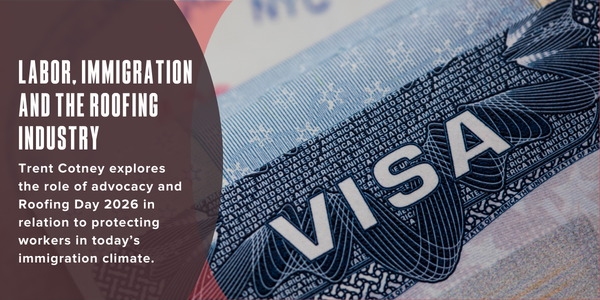
Trent Cotney explores the role of advocacy and Roofing Day 2026 in relation to protecting workers in today’s immigration climate.
The state of the labor force in roofing and construction has always been a top issue for the industry, but the immigration policy changes of the last year have made it more of a pressing concern than ever. Trent Cotney of Adams and Reese stopped by for a Coffee Conversations webinar to discuss what contractors can do to combat these concerns.
The state of labor and immigration today
Since January of 2025, there has been a huge uptick in ICE (immigration and customs enforcement) activity. In relation to roofing, we’ve seen ICE raids on every type of workplace in the industry, whether it's the job site, the office or the manufacturing warehouse. This has caused a level of deep fear and concern in employees and employers. Trent shared what he’s seen:
There's a lot of concern among contractors about how to help their employees and crews...And we have dozens upon dozens of contractors that are currently in the process of defending I-9 audits. These audits are when the government will issue a notice of inspection, and they'll ask to see your I-9s. Then, based on what they see, you could be subject to fine or, more importantly, they run the information and determine the status of your workers, and you could potentially lose workers as a result.
Protecting your workers and business
So, what can contractors do in 2026 to protect both their business and their crew? When it comes to protecting your crew, Trent’s advice is to make sure everyone knows their rights. He explained, “The goal is always to tell the truth and cooperate, but everyone also needs to know and assert their rights. Like, your crew has the right to remain silent, they've got the right to counsel, all those types of things. So, really helping your employees learn and understand that is one of the biggest things you can do for them.”
As for your business, it’s important to use contract provisions to clarify things like worksite access. Trent explained, “You can't have a contract provision or something that says that if I lose workers because of ICE, you should pay me more money. But one of the things you can do is make a provision that defines the worksite as a controlled access zone.” From there, if the owner of the site allows others onto the site that cause damages or delays to work, you can submit a claim or change order based on that provision.
While both pieces of advice from Trent are a step towards protecting your crews and business in the short-term, he is the first to point out that they are not long-term solutions to labor issues and immigration challenges. As he put it:
Overall, it’s a frustrating situation because the U.S. has an almost a zero-tolerance policy as it relates to immigration, but also doesn't a clear-cut way to bring workers in that makes common sense. The H-2B visa process is flawed, it's still seasonal and still requires at least 6 months lead time to kind of figure it out. And I’ve worked with contractors that have tried to do employer sponsorship, which is a very bureaucratic, confusing process that can span years. And the truth is we want legal, hard workers to come here, work and pay taxes and boost our economy.
Making long-lasting change, together
So, how do we get to that ideal place where hard-working people can legally come experience the American Dream for themselves and our industry gets the labor it needs? Group action in support of immigration reform – like what the National Roofing Contractors Association (NRCA) is doing with Roofing Day, which will be held April 14-15, 2026.
Roofing Day is an annual event that organizes members of the roofing industry into a group that goes to Washington, D.C. to advocate for the industry. And this year, NRCA has announced that one of the primary issues they’re going to talk about at Roofing Day is the need for immigration reform.
Trent, who has been to most of the events since its inception in 2015, shared a bit about how this type of collective action makes actual change:
I’ve been there, and in D.C., they don’t understand our industry. They think of roofers and imagine a guy in a pickup truck. They don’t realize that even the roof over their head was put on by a professional company. And so going there, showing them the actual people who make up our industry, telling them our stories and bringing our issues to them...It really makes a big impact. In the past, NRCA has been able to push for great tax reforms because of Roofing Day.
Listen to the episode or Watch the recording of this Coffee Conversation to learn more about the current state of the industry. And if you’re interested in attending Roofing Day 2026, RoofersCoffeeShop® is partnering with Elevate to give away a trip to D.C.! Learn more and enter for your chance to be a part of change.
Learn more about Adams & Reese LLP in their Coffee Shop Directory or visit www.adamsandreese.com.
The information contained in this article is for general educational information only. This information does not constitute legal advice, is not intended to constitute legal advice, nor should it be relied upon as legal advice for your specific factual pattern or situation.
About the author

Emma is the senior content developer at The Coffee Shops and AskARoofer™. When she's not working or overthinking everything a little bit, she enjoys watching movies with friends, attending concerts and trying to cook new recipes.
Recommended For You

Secrets to strengthening industry partnerships
Read More ...
Supporting the next generation while solving today’s labor challenges
Read More ...
Integrated solar reshapes roofing
Read More ...



Comments
Leave a Reply
Have an account? Login to leave a comment!
Sign In