











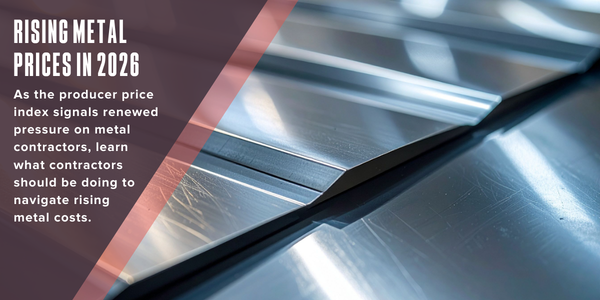
Rising metal prices in 2026
By Heidi J. Ellsworth.
As the Producer Price Index signals renewed pressure on metal contractors, learn what contractors should be doing to navigate rising metal costs.
According to Ken Simonson, chief economist for the Associated General Contractors of America, Producer Price Indexes (PPIs) for major construction inputs climbed sharply in January 2026, with aluminum up approximately 33% year over year, steel increasing about 20.7% and copper and brass rising nearly 15.7%. Ken noted that these are the largest year-over-year increases in several years, reflecting renewed pricing pressure across construction materials. For metal contractors, this data is not just an economic update. It is a call to evaluate risk, adjust strategy and lead conversations with customers from a position of knowledge.
These rising producer price indexes typically signal strong demand combined with supply constraints, tariff pressures or global market shifts. There are certain sectors such as data centers, manufacturing and infrastructure, demand remains active enough to absorb some of these higher costs. However, for many contractors operating on fixed price contracts or extended bid timelines, volatility at this level creates real exposure. A 20% swing in steel pricing can quickly erase projected margins on metal building systems, structural steel packages or architectural metal components if escalation language and procurement strategies are not aligned with current realities.
This is the moment to review contract language carefully. Escalation clauses, material allowances and clearly defined procurement timelines are no longer optional protections but critical business tools. Contractors should be working closely with legal counsel and project owners to ensure agreements reflect today’s pricing environment rather than last year’s assumptions. Without defined price protection mechanisms, contractors may be carrying disproportionate risk in an increasingly unpredictable materials market.
Addirtionally, supplier relationships become more important as volatility increases. Consistent communication about lead times, pricing validity windows and forward purchasing opportunities can provide greater stability. Contractors who maintain strong partnerships and stay informed on mill pricing trends will be better positioned to make proactive decisions instead of reactive ones. In fast moving markets, access to accurate and timely information often determines whether a project remains profitable.
Bidding strategy should also be reassessed. Shortening bid validity periods, clearly stating how long pricing is guaranteed and educating owners about material cost trends can shift conversations from tension to collaboration. When customers understand that aluminum has risen 33% year-over-year and steel more than 20%, they are more likely to appreciate the need for flexibility and timely decision making. Transparent communication backed by credible economic insight builds trust and reinforces the contractor’s role as a strategic partner.
It is also important to assess how these higher material prices impact cash flow. Increased upfront costs for steel and aluminum require careful attention to billing schedules, credit lines and deposit structures. Contractors should evaluate whether current payment terms adequately support rising material expenditures and consider negotiating faster draw schedules or front loaded material payments where appropriate. Managing cash flow proactively during periods of inflation is just as important as managing margin.
Ultimately, Ken's latest data underscores a simple truth for the metal construction market. Pricing pressure is real and significant, and ignoring it is not an option. While volatility introduces risk, it can also create opportunity for disciplined contractors who manage procurement strategically, communicate clearly and structure contracts wisely. Understanding what these numbers mean for your specific market segment is essential to protecting profitability. The firms that treat economic indicators as actionable intelligence rather than background noise will be best positioned to protect their backlog and profitability throughout 2026.
Stay up to date with the latest industry news when you sign up for the Coffee Shop eNews.
About the author

As CEO of The Coffee Shops, Heidi has been working and writing in the construction industry for over 30 years. She is active in many associations including founding National Women in Roofing and Roofing Technology Think Tank (RT3). She is passionate about helping to shine a light on the construction industry and creating win-win-win scenarios!
Recommended For You
Tips to Prepare for Business Post COVID-19
Read More ...
Essential Skills for Your Front-line Supervisor - Part Three
Read More ...
How staffing agencies tailor talent to meet industry challenges
Read More ...





Comments
Leave a Reply
Have an account? Login to leave a comment!
Sign In