









Anchoring rooftop performance beyond installation
By Jesse Sanchez.
Learn how rooftop attachment systems are evolving to address safety, code requirements and long-term performance across commercial roofing systems.
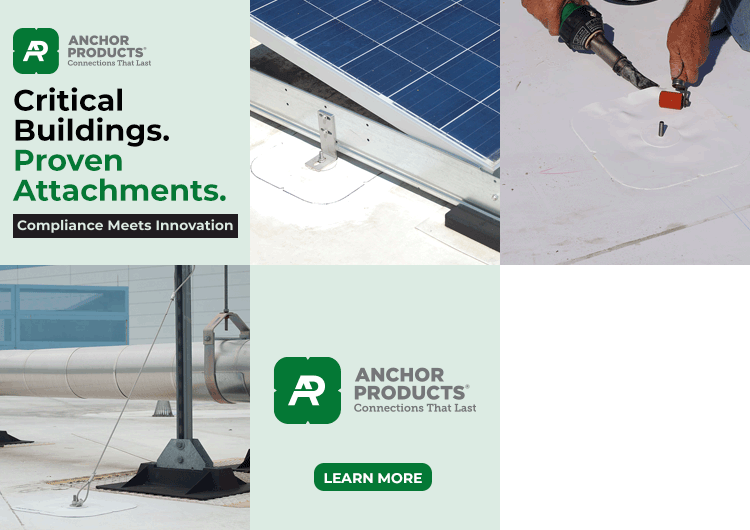
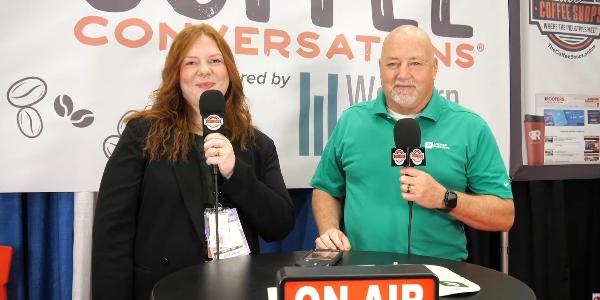
At the International Institute of Building Enclosure Consultants (IIBEC) 2026 show, a clear shift took shape in how roofing professionals are defining performance. Installation quality remains essential, but the conversation is moving beyond the membrane to focus on what happens after the roof is complete. Specifically, how rooftop systems and equipment are secured over time. That shift was at the center of this sound stage interview from The Coffee Shops™, where Megan Ellsworth spoke with Scott Carpenter of Anchor Products. Their discussion centered around a growing industry reality: long-term roof performance is increasingly determined by the stability of everything mounted on the system, not just the system itself.
“We've gotten really, really, really good at putting roofs on,” Scott said. “It's all those things that bounce across a roof in a wind or seismic event that gets us in trouble.” As severe weather events continue to intensify, rooftop materials and equipment are being exposed to greater forces. Scott pointed to recent storm footage showing large insulation bundles lifted and displaced, illustrating how quickly unsecured components can become a source of damage. When that movement occurs, the impact extends beyond isolated areas, often compromising the integrity of the entire roofing system.
In response, contractors are expanding their focus to include a broader range of rooftop attachments. Solar arrays, windscreens, snow retention systems and electrical equipment are now part of a more comprehensive approach to roof management. What was once treated as a secondary consideration is now directly tied to operational reliability, jobsite safety, and long-term risk mitigation. At the same time, evolving building codes are reinforcing this shift, placing greater emphasis on secure attachment as a requirement rather than an option.
This change is also influencing how projects are designed and specified. Instead of addressing rooftop attachments after installation, design professionals are integrating them into the planning phase, recognizing the liability associated with unsecured elements. Scott explained, “It is extra special to them because they're trying to figure out how they can write code into a lot of the specification because there's a liability that goes along with that.” As a result, attachment systems are moving from accessory status to a defined component of the overall roofing assembly.
Compatibility plays a critical role in that transition. Modern attachment solutions are engineered to align with existing roof membranes, allowing for integration without compromising performance. This enables manufacturers and contractors to present more unified solutions that reflect the complexity of rooftop environments.
Together, these developments point to a broader evolution in the industry. Scott noted, “There's a need for something and it's now code as well,” reinforcing how roofing performance is no longer measured solely at installation, but across the full lifecycle of the roof and everything it supports.
Learn more about Anchor Products in their Coffee Shop Directory or visit www.anchorp.com.
About the author

Jesse is a writer for The Coffee Shops. When he is not writing and learning about the roofing industry, he can be found powerlifting, playing saxophone or reading a good book.
Recommended For You
Curb Appeal Trends: Allure of Anodized Aluminum Enamors Today's Homeowners
Read More ...
JobNimbus launches Enterprise solutions for multi-location roofing operators
Read More ...
Peeking behind the curtain… How snow retention plans are created at Rocky Mountain Snow Guards
Read More ...




Comments
Leave a Reply
Have an account? Login to leave a comment!
Sign In