










Why roofing contractors must understand lightning protection
By Heidi J. Ellsworth.
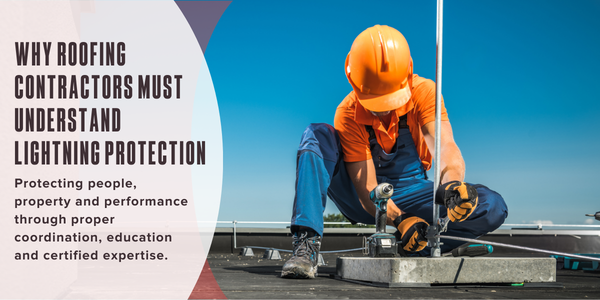
Protecting people, property and performance through proper coordination, education and certified expertise.
Lightning protection is one of the most overlooked, yet critical components of the building envelope and roofing contractors are right in the middle of it. Every roof system, whether residential or commercial, plays a direct role in how a building interacts with lightning. Yet too often, lightning protection systems are treated as an afterthought rather than an integrated part of roofing design, installation and long-term maintenance.
At its core, a lightning protection system is designed to safely intercept, conduct and dissipate lightning energy into the ground. These systems use highly conductive materials such as copper or aluminum to create a low-resistance path that directs electrical current away from the structure, preventing fire, structural damage and injury.
For roofing contractors, that means every penetration, attachment point, retrofit and reroof project has the potential to impact how that system performs. Roofing is where lightning protection lives. Air terminals, conductors and bonding components are all installed on or through the roof system. When roofing contractors are unaware of how these systems function, even routine work can compromise protection.
During reroofing projects in particular, the risks increase significantly. Removing and reinstalling lightning protection components without proper expertise can lead to system failure or non-compliance. In fact, re-roofing is rarely as simple as reinstalling existing components, and unqualified handling is a major source of substandard systems. Additionally, changes to rooftop equipment, foot traffic or weathering can degrade both the roof and the lightning protection system over time. Without coordination, roofing work can unintentionally break continuity in the system, reducing its ability to safely direct lightning energy.
For residential roofing contractors, the importance of lightning protection is growing as homes incorporate more technology, solar systems and complex roof designs. A properly installed system helps protect not only the structure but also electronics, appliances and occupants. On the commercial side, the stakes are even higher. Larger structures are more likely to be struck by lightning due to their size and height. A single strike can damage roofing systems, disrupt operations and result in major financial loss or safety risks. For facility managers, this makes coordination with roofing contractors essential throughout the life of the building.
One of the most important takeaways for roofing contractors is this: Lightning protection is a specialized trade. Working with certified lightning protection professionals is not optional, it is essential. Organizations like the Lightning Protection Institute (LPI), found at lightning.org, emphasize the importance of certified specialists who are trained in design, installation and inspection. And these professionals do more than install systems. They educate roofing contractors and facility managers on how to properly work around these systems during installation, service and reroofing. This includes understanding proper bonding, maintaining conductor continuity and ensuring that any rooftop additions are integrated into the system.
Industry leaders like Kelley Collins of the LPI continue to advocate for education and collaboration across trades. Through conferences and industry engagement, they help bridge the gap between roofing contractors, engineers and lightning protection experts. Lightning protection is not a one-and-done installation. Like roofing systems, it requires ongoing inspection and maintenance. Industry standards recommend regular visual inspections and periodic comprehensive testing to ensure continued performance.
For roofing contractors, this creates an opportunity to add value by working alongside certified lightning professionals during maintenance and service work. Whether replacing the roof, adding rooftop equipment or performing repairs, coordination ensures the system remains intact and effective. The message coming from industry organizations is clear. Collaboration between trades is critical. Roofing contractors, lightning protection specialists, engineers and facility managers must work together to ensure systems are properly designed, installed and maintained.
This is not just about compliance. It is about protecting lives, preserving property and ensuring long-term building performance. As roofing continues to evolve with new materials, technologies and system complexity, understanding lightning protection will only become more important. Contractors who take the time to learn, partner with certified professionals and integrate these systems into their workflows will be better positioned to deliver complete, high-performing roofing solutions. Because when lightning strikes, the roof is the first line of defense, and it has to be ready.
Stay up to date with the latest industry news when you sign up for the Coffee Shop eNews.
About the author

As CEO of The Coffee Shops, Heidi has been working and writing in the construction industry for over 30 years. She is active in many associations including founding National Women in Roofing and Roofing Technology Think Tank (RT3). She is passionate about helping to shine a light on the construction industry and creating win-win-win scenarios!
Recommended For You

Smart roofing choices for a stronger home
Read More ...
How to Prevent Moisture Damage
Read More ...
Surviving the Elements - What a Roof Goes Through
Read More ...





Comments
Leave a Reply
Have an account? Login to leave a comment!
Sign In