













Eliminating common efficiency bottlenecks
By Emma Richardson.
How to avoid the everyday challenges that slow roofing crews down.
In all seasons, managing roofing projects requires careful time management. Between meeting developer deadlines, accounting for weather and managing upcoming projects, unexpected delays can easily turn into bigger problems. The last thing contractors need is a delay in materials. Unexpected bottlenecks can influence customer satisfaction as well as delay other projects. In an article from Equipter, their team of experts break down five ways contractors can most efficiently plan for their material usage.
1 – Supply chain backlogs and material shortages
While large-scale global disruptions or shortages can derail the best made plans, it is possible to mitigate the damage. By investing in good inventory management systems, contractors can track their material usage and predict shortages. Having back-up suppliers and keeping scheduling flexible can help keep jobs on track when events outside your control impact your business.
2 – Outdated material handling practices
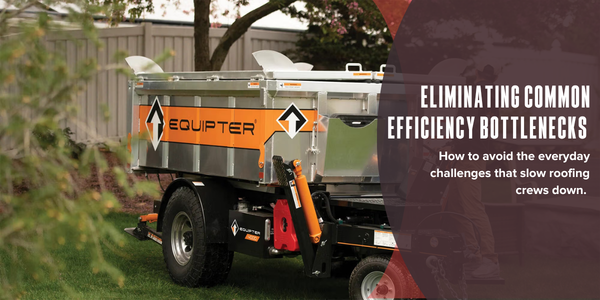
Roofing is a demanding job, requiring careful usage of energy. Small tasks like manual hauling or using wheelbarrows can quickly turn into big problems like a tire crew that works more slowly, or even lead to injury, causing further delays. Investing in equipment like the Tow-A-Lift or Equipter 4000 can speed up roofing jobs at every stage, from getting materials onto the roof to cleaning up once the job is complete.
3 – Delivery scheduling mishaps
A delivery arriving outside of the expected timeframe can cause a job schedule to collapse. Managers are often balancing many tasks and may not be able to answer their phone or check their email in time to compensate for a delivery arriving late or early. Additionally, if the crew is not ready when the delivery arrives, more time can be wasted. By using high-performing scheduling platforms like JobNimbus, roofing companies can be altered in real-time to any unexpected developments and the scheduling software can automatically compensate accordingly.
4 – Miscommunication between the field and office
As previously mentioned, keeping on top of phone calls or emails isn’t always easy for jobsite managers. Between delivery updates or material changes, a missed communication can easily disrupt the day’s work. Creating communication protocols and having multiple points of contact with mobile communication abilities ensures that everyone stays ahead of new developments.
5 – Inefficiencies amplified by lack of labor
As the labor shortage in the industry remains on-going, wasted time caused by any of these issues becomes a bigger problem. Crews compensating for jobsite bottlenecks are at risk of burnout. Longer hours can cause mistakes and even injury. In these instances, labor-saving tools like those offered by Equipter can mean the difference between a crew that is adaptable to changes and one that isn’t.
While some efficiency bottlenecks are unavoidable, many can be planned for. Having the right tools on hand can help keep roofing jobs on track when disaster strikes.
Learn more about Equipter in their Coffee Shop Directory or visit www.equipter.com.
About the author

Emma is an editorial content developer at The Coffee Shops™. She graduated in 2020 with degrees in English and philosophy. When not planning her next DIY, Emma is an avid, if unsuccessful, gardener who enjoys sewing, cooking and spending time outside.
Recommended For You

El juego infinito
Read More ...
Essential Skills for Your Front-line Supervisor - Part Three
Read More ...
The estimate doesn't end when the bid is submitted
Read More ...





Comments
Leave a Reply
Have an account? Login to leave a comment!
Sign In