











Beyond the fan
By Jesse Sanchez.
Attic Breeze brings nuanced strategy to attic ventilation and contractors are catching on.
In the heart of Texas, where rooftops bake under 100-degree skies, Attic Breeze isn’t just selling solar-powered ventilation. The company is offering roofing professionals a smarter, more strategic approach to keeping homes cooler and structures intact. “Not one size fits all,” said Austin McConnell, technical support expert at Attic Breeze. “So you really have to take a look at the pitch of the roof. You have to take a look at the square footage. And this is where our training comes in handy.” On this episode of Roofing Road Trips®, Austin detailed how Attic Breeze is shifting the conversation around active ventilation. He explained that without proper assessment of a home’s architecture and airflow dynamics, even the best fan won’t deliver meaningful results.
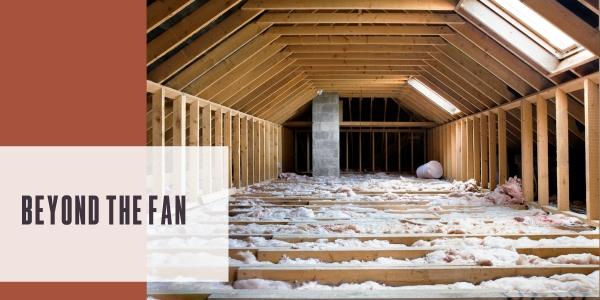
To address this, Attic Breeze developed its Design Studio, an online tool that calculates ventilation needs based on roof geometry and attic volume. “What you're trying to do is diagnose the house to the size of fan that you need and install that to where it's not just pulling air from one area, it's pulling air from all four sides of the house,” Austin said.
That level of precision is especially critical for complex roof designs. Austin pointed to high-pitched structures, eight-and-twelve or ten-and-twelve, as examples where a single fan often falls short. “There's a whole lot more cubic feet up there,” he said. “So, just one fan might not do it.” Contractors often push back on these recommendations, asking if they can simply upsize a single fan instead of installing two. Austin’s response? “It’s like bringing a knife to a gunfight.” Larger fans don’t solve the issue if the airflow isn't reaching all zones of the attic, where heat can still collect and compromise roof performance.
The result of undersizing isn’t just inefficiency, it’s hotspots, buckled shingles and premature roof failure. By understanding how to balance intake and exhaust and matching fan types to specific roof materials, whether shingle, metal or tile, roofers can build lasting solutions and stand out in a crowded market.
Listen to the podcast or Watch the conversation to learn more about how Attic Breeze helps contractors fine-tune ventilation strategies for every roofing style!
Manufactured in the USA using only the highest quality domestic and foreign parts.
Learn more about Attic Breeze in their Coffee Shop Directory or visit atticbreeze.com.
About the author

Jesse is a writer for The Coffee Shops. When he is not writing and learning about the roofing industry, he can be found powerlifting, playing saxophone or reading a good book.
Recommended For You

An underrated career path: Roofing
Read More ...
Marketing fundamentals still matter in an AI-driven world
Read More ...
Creating collaboration across a continent
Read More ...




Comments
Leave a Reply
Have an account? Login to leave a comment!
Sign In