








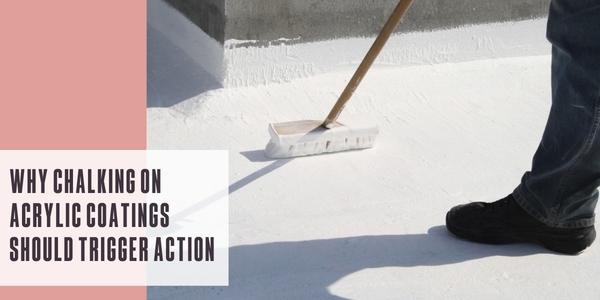
Why chalking on acrylic coatings should trigger action
By Jesse Sanchez.
How UV-driven chalking signals coating wear and informs proactive maintenance.
Roof coatings rarely fail without warning. More often, they wear down gradually, offering visible cues that protection is thinning. For acrylic systems, one of the clearest signs is chalking. During this CoatingsTalk webinar, Cameron Webb of MuleHide identified chalking as a practical field indicator that contractors should not overlook. In his view, it is not simply a cosmetic issue. It’s evidence that ultraviolet exposure is breaking down the coating surface and reducing its long-term performance.
“With acrylics, a lot of times what'll happen is you'll see some chalking in the coating and that can be an indication that it's had some UV degradation and we might want to look at cleaning that and doing a re-coat there,” Cameron said. Chalking typically appears as a powdery residue that transfers to the hand during inspection. While gradual surface breakdown is expected over time, it also signals material loss. As the film thickness decreases, so does the coating’s ability to shield the underlying roof system from UV degradation and weather exposure.
For that reason, Cameron cautioned contractors to evaluate both visible condition and system age. “You want to look at the term of years, because acrylics are going to lose some millage each year,” he advised. That perspective shifts the conversation from reacting to leaks to managing performance. A roof nearing the end of its warranty may still be serviceable if maintained. Conversely, a younger system with significant chalking may require earlier attention.
The solution, Cameron said, is structured maintenance. “A roof coating or a roof system is no different than a vehicle,” he said. “You want to have preventative maintenance.” He recommends two inspections per year to monitor drainage, foot traffic damage and surface changes. When chalking is tracked consistently, recoating becomes a planned maintenance decision rather than an emergency repair.
Listen to the podcast or Watch the webinar to learn more about roof coating selection and maintenance best practices.
Learn more about MuleHide Products in their Coffee Shops Directory or visit www.mulehide.com.
About the author

Jesse is a writer for The Coffee Shops. When he is not writing and learning about the roofing industry, he can be found powerlifting, playing saxophone or reading a good book.
Recommended For You

How innovation, service and performance come together
Read More ...
Composite roofing for the win
Read More ...
Seth and Ashley Pietsch and Jessica Hale - The 10 Things You Need to Know About Roofing Insurance
Read More ...





Comments
Leave a Reply
Have an account? Login to leave a comment!
Sign In