







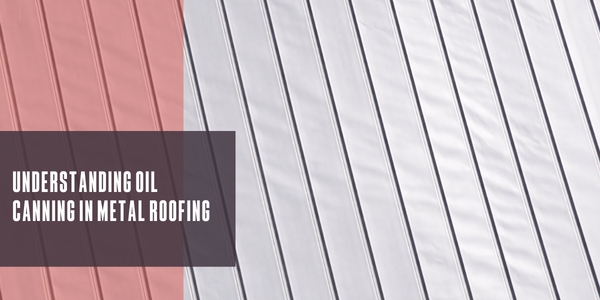
Understanding oil canning in metal roofing
By Jenny Yu.
Drexel Metals explains why oil canning is cosmetic and how contractors can minimize its appearance.
Metal roofing is widely recognized for its durability, longevity and architectural appeal, but like any premium building material, it comes with considerations contractors and building owners should understand. In the article “Potential Metal Roofing Issues and How to Minimize Their Impact: Oil Canning,” Drexel Metals breaks down one of the most discussed aesthetic concerns associated with metal roofing and how thoughtful planning can significantly reduce its appearance.
Oil canning refers to subtle waviness or rippling that may appear on the flat areas of metal roof panels. It is most noticeable when sunlight reflects across the surface, particularly in the afternoon. Importantly, Drexel Metals emphasizes that oil canning is not a structural or material defect. Instead, it is a cosmetic issue that does not affect the roof’s performance or weather resistance.
According to the article, oil canning can result from several factors throughout the manufacturing and installation process. Stresses introduced during coil production and roll forming, variations in panel width and metal gauge, irregular roof decks and over-tightened fasteners can all contribute to panel distortion. Because flat sheet metal is naturally sensitive to minor variances, oil canning should be viewed as an expected characteristic rather than a failure.
Drexel Metals outlines multiple best practices to help minimize oil canning. Increasing panel rigidity is one of the most effective strategies. This can be achieved by selecting heavier-gauge metal, reducing panel width and incorporating ribs or striations into the panel design. Proper deck preparation is equally important, as an uneven roof deck can telegraph through finished panels and create unwanted distortions.
Installation techniques also play a critical role. Avoiding over-tightened fasteners and allowing for proper thermal expansion and contraction helps reduce added stress on panels. In addition, choosing a low-gloss finish can significantly reduce the visual impact of any remaining waviness by minimizing glare and reflection.
Learn more about Drexel Metals in their Coffee Shop Directory or visit www.drexmet.com.
About the author

Jenny Yu is a writer for The Coffee Shops™. When she's not writing, she loves visiting cozy coffee shops & bookstores, playing basketball, learning about oral history and spending time with loved ones.
Recommended For You
Supporting roofing quality and professionalism
Read More ...
ATAS introduces two accessory items
Read More ...
SOPRA-XPS is Upping the Ante for Sustainable XPS Formulas
Read More ...

Comments
Leave a Reply
Have an account? Login to leave a comment!
Sign In