









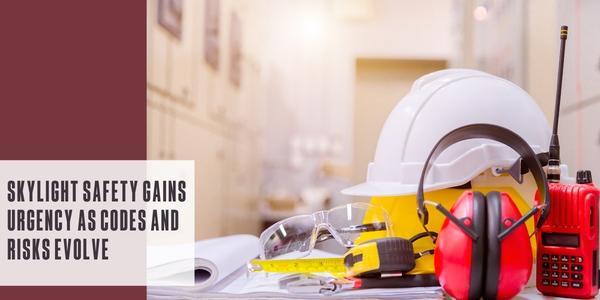
Skylight safety gains urgency as codes and risks evolve
By Jesse Sanchez.
Learn how changing building codes, aging materials and evolving safety standards are reshaping how contractors approach skylight protection on commercial roofs.
In this episode of Roofing Road Trips®, Megan Ellsworth spoke with Brian Grohe of VELUX® about a growing concern for contractors: skylight safety. Skylights are becoming a more prominent factor in jobsite planning, shifting from secondary design elements to critical components of fall protection and compliance. That shift is being driven by two converging forces. Brian pointed to stricter energy-efficiency codes and continued advancements in skylight technology as key reasons more daylighting systems are being installed. Brian noted, “Now that some of the building codes have not only been passed but have started to be enacted across the U.S., you're seeing a lot more daylighting being required.”
As installations increase, contractors are encountering skylights more frequently across maintenance, service and reroofing work. Many existing buildings still rely on aging units that may be degraded by ultraviolet exposure, compromised by prior repairs or no longer performing as intended. That combination creates a dual challenge: managing newer systems while addressing the risks tied to older materials.
On the roof, those risks are immediate. Skylights can create trip hazards and, in some cases, fall-through points if materials are brittle or unprotected. During tear-offs, when units may be removed, those openings become even more dangerous. At the same time, compliance has grown more complex. Brian explained that Occupational Safety and Health Administration (OSHA) standards now require roof openings to withstand twice the intended load, a threshold often defined by the building owner and influenced by people, equipment and materials. Brian stated simply, “There is no such thing as an OSHA approved product.”
As a result, contractors must evaluate each skylight based on condition, material and project scope, then select appropriate protection strategies such as screens, cages or impact-resistant systems. With skylights now a constant presence, safety planning must begin before crews ever step onto the roof.
Learn more about VELUX Commercial in their Coffee Shop Directory.
About the author

Jesse is a writer for The Coffee Shops. When he is not writing and learning about the roofing industry, he can be found powerlifting, playing saxophone or reading a good book.
Recommended For You
Advocacy remains a roofing priority
Read More ...
Building prosperous relationships with ROOFPRO
Read More ...
Hit the road for D.C. and Roofing Day 2026
Read More ...




Comments
Leave a Reply
Have an account? Login to leave a comment!
Sign In