











Operational excellence is not an accident — it is built every day

By John Kenney, Cotney Consulting Group.
The best roofing companies are the companies that prevent more emergencies from occurring in the first place.
After more than 45 years in the roofing industry, I have learned that successful roofing businesses rarely become successful because of one major decision. They improve because of hundreds of smaller decisions made correctly and consistently over time.
It is the decision to review a tender carefully before submitting it, to hold a proper project handover before work begins on site, to order materials early enough to protect the programme and to give the site team complete information instead of expecting them to work everything out after installation has started. It is also the decision to address a small problem before it becomes an expensive one. None of these actions appears extraordinary on its own, but together they create operational excellence.
I have worked with roofing contractors of different sizes, structures and specialities throughout my career. Some have focused on commercial roofing, while others have worked in pitched roofing, service, maintenance, waterproofing or specialist systems. Although terminology, contracts and regulations vary between markets, the operational challenges are often remarkably similar.
Companies struggle with incomplete information, projects are handed over too quickly, labour is scheduled without enough planning and materials arrive late or in the wrong sequence. Site teams are then asked to make decisions that should have been resolved before mobilisation, while commercial issues are sometimes identified only after the work has already been completed.
A lack of effort rarely causes these problems. Most roofing businesses are filled with hardworking people. The problem is usually that the company depends too heavily on effort and not enough on process.
Hard work cannot replace a reliable system
Many roofing companies operate through what I call organisational heroics. A few experienced people carry an enormous amount of knowledge in their heads. They remember the important details, solve problems quickly and step in whenever something begins to go wrong. The company appears to function because these individuals continually rescue it.
That approach may work for a period of time, particularly when the business is small. Eventually, however, the workload grows beyond what a handful of people can manage. Projects become larger, tender opportunities increase, clients expect faster communication and contract requirements become more demanding. At the same time, the number of operatives, suppliers, subcontractors and active sites expands.
At that point, experience alone is no longer enough. The business needs repeatable systems that enable experienced people to share their knowledge with the rest of the organisation.
A strong system does not remove judgement. It supports good judgement by ensuring that the same important questions are asked on every project, regardless of who is managing it. What did the estimator include in the tender? What was excluded or qualified? Which materials have long lead times? What access equipment and plant will be required? What labourresources were assumed? What information is still outstanding? What risks could affect the programme? What must be confirmed before the team arrives on site?
When these questions are built into a consistent process, the company becomes less dependent on memory and more capable of delivering predictable results.
Operational excellence begins before work reaches site
Roofing contractors often measure operational performance by what happens during installation. They review productivity, monitor labour hours, inspect quality and track whether the project is progressing to programme. All of that matters, but the site team's performance is often determined long before the first operative arrives.
A project that begins with incomplete information is already at a disadvantage. If the tender has not been properly reviewed, the project manager may not understand the assumptions underlying the price. If procurement starts too late, the programme may be affected before work begins. If access, storage or lifting requirements have not been coordinated, the site team loses time resolving preventable problems. If the contract documents contain conflicting information, those conflicts should be identified early rather than discovered during installation.
Operational excellence therefore begins during estimating and tender review. Estimating is not simply the process of calculating quantities and applying rates. It is the beginning of project management. The estimator is often the first person in the business to study the drawings, specifications, scope of works and site requirements in detail. The information gathered during that process must be transferred clearly to the people responsible for delivering the project.
Without that transfer, the business effectively starts again after the contract is secured. The same documents are reviewed twice, the same questions are asked again, important assumptions are lost and potential risks are overlooked. A proper handover protects the knowledge already created during the tendering process and gives the delivery team a much stronger starting point.
Consistency is more valuable than occasional brilliance
Every roofing company has excellent days. The tender is accurate, the materials arrive on time, the site team performs well, the client is satisfied and the project is completed profitably. The real question is whether the business can consistently produce that result.
One successful project does not prove that the company has a strong operating system. It may simply mean that the right people happened to be involved and conditions worked in the contractor’s favour. Operational excellence is measured by repeatability. Can the company deliver the same quality when several projects are active at once? Can it maintain communication when key members of staff are away? Can a newer project manager follow the process and produce a reliable result? Can the business identify declining performance before the financial damage becomes serious? Can lessons learned on one project improve the next tender and the next site?
The strongest roofing businesses do not rely on everything going perfectly. They develop systems that allow them to respond when conditions change. Weather affects the programme. A supplier changes a delivery date. The client revises access requirements. Existing conditions differ from the information provided. An operative becomes unavailable. A variation requires additional labour and materials.
These events are part of construction. Operational excellence does not mean preventing every problem. It means creating a business capable of identifying problems early, communicating clearly and responding in a controlled way.
Leadership creates the operating standard
Processes matter, but processes only work when leadership reinforces them. A company can write the best procedures in the industry and still achieve poor results if managers ignore them whenever the business becomes busy. In fact, busy periods are when systems matter most.
When pressure increases, people tend to return to old habits. Meetings are shortened, handover documents are left incomplete, site reports are delayed, procurement decisions are made verbally without proper records and commercial issues are postponed. Everyone focuses on the immediate problem in front of them. That is understandable, but it is also dangerous.
Leadership must make it clear that following the operating process is not additional work. It is how the work is controlled. This requires more than issuing instructions. Leaders must explain why the process matters. A complete site report is not paperwork for the sake of paperwork. It protects the contractor by recording progress, labour, delays, instructions, deliveries and site conditions. A tender review is not an administrative exercise. It helps the business assess whether the price reflects the project's risks and requirements. A pre-start meeting is not a formality. It allows the project team to resolve questions before those questions begin costing money.
People are more likely to follow a process when they understand how it protects them, the project and the business.
Improvement must become part of the routine
Operational excellence is not a final destination. No company completes one round of process improvements and remains efficient forever. Clients change, contract requirements change, materials and systems evolve, technology develops, the workforce changes and the business grows. Processes that worked when the contractor managed five active projects may not work when it manages 20.
For that reason, roofing businesses need a regular method for reviewing performance. The company should compare the estimate with the actual project cost, examine which activities used more labour than expected and review whether variations were promptly identified and valued. It should also ask whether the site team received the information it needed, what caused delays, what the client communicated during and after the project and what should be repeated or changed next time.
These conversations should not be used to assign blame. They should be used to improve the system. When people believe that every review is an attempt to identify who made a mistake, they stop sharing useful information. When the purpose is improvement, the company can turn individual experience into organisational knowledge.
That is one of the most valuable assets a roofing business can build.
Predictable performance is the real advantage
Roofing will always involve uncertainty. No operating system will eliminate weather, supply disruption, labour challenges, unexpected site conditions or changing client demands. What a strong system does is make the business less vulnerable to them.
It gives leaders better information, helps estimators understand actual performance, allows project managers to plan further ahead and gives site teams clearer direction. It also improves communication with clients and protects quality, programme and margin. Most importantly, it makes successful performance more predictable.
The best roofing companies are not necessarily the ones working the longest hours or solving the most emergencies. They are the companies that prevent more emergencies from occurring in the first place.
That does not happen by accident. It is built through disciplined planning, clear expectations, consistent communication and a willingness to improve how the business operates every day.
That is operational excellence.
 About the author
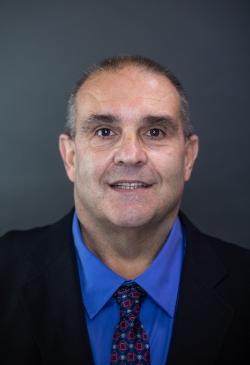
John Kenney has more than 45 years of experience in the roofing industry. His career has included every level of roofing operations, from field installation and estimating through executive leadership. He is the CEO of Cotney Consulting Group, a partner member of the International Federation for the Roofing Trades. He has earned the MIoR designation from the former Institute of Roofing in the United Kingdom. He works with roofing contractors to improve estimating, project management, operational performance, leadership and profitability.
Learn more about Cotney Consulting Group in their Coffee Shop Directory or visit www.cotneyconsulting.com.
Recommended For You

7 key practices to master change work orders
Read More ...
Embracing core values in the construction supply industry
Read More ...
Leadership built for the next phase
Read More ...





Comments
Leave a Reply
Have an account? Login to leave a comment!
Sign In