











How data is redefining commercial roofing prospecting

By Convex.
How smarter data, sharper insight and better timing are reshaping commercial roofing sales from the ground up.
In commercial roofing, prospecting has always demanded more than persistence; it requires precision. Sales teams are expected to identify the right buildings, reach the right decision-makers and deliver value before competitors even know an opportunity exists. For companies navigating that pressure, Convex has emerged as a trusted partner, helping commercial roofing professionals replace guesswork with clarity and transform how opportunity is identified, prioritized and pursued. As the market grows more competitive and time becomes the most valuable resource in the sales cycle, data is no longer a supporting tool; it is becoming the foundation of higher win rates and more confident selling.
Understanding prospecting in commercial roofing
How prospecting works in commercial roofing
According to Salesforce, the average sales rep spends 21% of their time on prospecting and lead research. If we consider a standard 40-hour workweek — though we know that many sales professionals often work significantly more — that’s the equivalent of 2+ hours per day, 4- 5 days per week.
Prospecting for commercial roof leads usually involves “driving for dollars” (canvassing commercial buildings) and making door-to-door visits. After that, you search LinkedIn for an org chart or a decision-maker to reach out to, use email formats and checking tools to figure out how to contact them and then just hope that what you say grabs their attention. Then, you do it all over again 100 times a week, hoping something sticks!
But if you’ve been in sales for a while, you know that prospecting isn’t just about finding leads — it’s about finding the right leads. And for commercial roofing, that means property managers, owners and decision-makers who actually need your services.
To make a sale, you need to know who to talk to, when to contact them and what to say to break through the noise — and for this, data is the key.
Why traditional prospecting falls short
A lot of commercial roofing companies still rely on outdated methods because they’re so familiar: driving around looking for properties, cold-calling random businesses or hoping word-of-mouth referrals save their quarter is “the way things have always been done.”
Sure, these tactics can work, but they require a lot of effort, are slow, inefficient and leave too much to chance. However, there’s another factor to consider: they also create an opportunity for your competitors to swoop in and seize the deal right from under your nose.
See, data-driven tools track things like buying signals (what a commercial property owner or manager is searching for), new permits on buildings and even if someone you’re prospecting is the current customer of a competitor.
These actionable insights can help you prioritize your outreach efforts, tailor your messaging to stand out from competitors and achieve higher win rates.
Using property data to improve your prospecting efforts
Data-driven tools like Convex combine property data, sales intelligence data and buying signals to give you a complete picture of the needs of almost 6 million properties across the United States. These tools help commercial services and building product sales teams save hours of research and travel by automating prospecting, simplifying lead generation and streamlining sales.
Today, our focus will be on how tools like Convex save time and drive higher win rates, but in other articles on our blog, we cover how these tools streamline the sales cycle and simplify the overall sales process.
Why data is the game changer
Think of data like a GPS for your sales efforts. Instead of wandering aimlessly, you get turn-by-turn directions to the best opportunities. In the case of Convex, this is actually true.
Built on a map interface, Convex allows you to see your entire territory, complete with all the buildings and property information that you need to know to make a sale.
This will allow you to:
1 – Find your target audience: Instead of pitching to everyone, zero in on building types and industries or even circle a region to identify buildings in that area that need your services.
2 – Personalize your pitch: Then, tailor your outreach to a decision-maker’s needs. When you can see buying signals on the account in addition to a property’s age, size and permit history, you can tailor your message to hit their pain points.
3 – Save time and resources: This allows you to focus your lead generation and sales efforts to spend less time chasing dead ends and more time closing deals.
4 – Map efficient sales routes: With an address list, you can map a route that maximizes the number of properties you see in a day; no more backtracking or missed opportunities.
5 – Track what works: With data, you’ll be able to see which strategies are bringing in new business and which need to hit the chopping block.
In Convex, sales leaders and business development managers gain a comprehensive view of the entire sales cycle. They can delegate leads or entire territories, assign dollar values to each lead and easily download the complete list to a CRM for segmentation or nurturing campaigns.
The data that matters (And how to get it)
Not all data is useful, so don’t waste time on fluff. Here’s the kind of information that can actually move the needle:
1 – Buying signals: Leverage buying signals to identify who needs your services and when. This includes frequently “searched” topics, interactions with your websites and social media profiles and other factors to pull what’s called “signal strength.” This works like a lead scoring tool assessing the account’s likeliness to buy.
2 – Property data & permit history: Accurate property data is key to knowing which properties need your services and what kind of work they require. This includes building size, age, type, condition and even permits for renovations or new constructions.
3 – Sales intelligence: This refers to the information you have on a company’s decision-makers—such as their job title and responsibilities—to gauge if someone’s interested in discussing potential projects with you.
4 – Territory visibility: Seeing all of your potential customers on a map with details like property data, buying signals and sales intelligence helps you identify opportunities you may have missed and plot an efficient course to capture every relevant opportunity.
5 – Decision-maker info: Names, job titles and contact details for decision-makers like property owners, managers, lead engineers and facilities directors get you past the gatekeepers and straight to the people who can say “yes.”
6 – Competitor insights: Getting insights on who your competition is and which accounts they’re working on can help you better visualize your market and tailor your messaging (and services) to stand out from the rest.
In other words, instead of blindly prospecting or relying solely on referrals, data-driven tools give you a competitive edge by helping you focus on high-value leads and close more deals.
How to get this data
The question isn’t whether you need data — it’s how you’re going to get it. Here’s the lowdown:
1 – CRM systems: If you don’t have a CRM (Customer Relationship Management) system, stop reading this and get one. Tools like Salesforce or HubSpot let you store and track all your lead info in one place—this is invaluable for building a database of customers that you can service, upsell, cross-sell and build relationships with.
2 – Public records and permits: Want to know who’s applying for roof repairs in your area? Check local building permit databases. It’s tedious, but it works.
3 – Property intelligence platforms: By far, the most efficient and effective solution (but we’re a bit biased) is Convex. As the only platform on the market built specifically to help commercial services sales reps, Convex gives you a treasure trove of info, from contact details to permit history, all in one spot, in 5 minutes or less. No more “Googling” names and hoping for the best.
4 – Social media and networking: LinkedIn isn’t just for job hunting. It’s a goldmine for finding decision-makers and understanding their needs.
5 – Website analytics: Tools like Google Analytics can show you who’s visiting your site and what they’re looking for. If someone is checking out your “Commercial Roofing Services” page, guess what? They’re probably a lead. You can set up notifications when these activities are happening, so you can call the account before anyone else does.
Turning data into action (Because data alone won’t pay the bills)
Here’s where the rubber meets the road. You’ve got the data — now what? Let’s make it work for you:
1 – Segment your leads: Not all leads are created equal. Divide them into categories like property type, geographic location or maintenance needs. For example, a hotel chain might need regular inspections, while an industrial warehouse could be overdue for a roof replacement.
2 – Personalize your outreach: Nobody wants a generic sales pitch. Use what you know about the property to craft a message that hits home.
Example:
“Hi [Name], I noticed your property on [Address] has a metal roof that appears to be around 15 years old. At (Company), we specialize in preventative maintenance for metal roofs to extend their lifespan and avoid costly replacements. Do you have 5 minutes to see if we can help save you some costs in the long run?”
3 – Follow-up like a pro: Most sales happen after the 5th or 6th touchpoint. Don’t give up too soon. Use tools like email automation or reminders in your CRM to stay on top of follow-ups.
4 – Measure and adjust: Track which strategies are bringing in business. If email campaigns are landing but cold calls aren’t, double down on what works.
Real-world wins: How data helps building products sales reps succeed
A large services company, ABM, faced a tough challenge: their prospecting methods weren’t cutting it anymore. Sales reps were wasting time driving around, Googling buildings and hoping for the best. Sound familiar?
The challenge: Wasted time, missed opportunities
Their traditional approach — dropping by buildings with business cards and making cold calls — had worked in the past, but the cracks were starting to show.
Reps were investing time in properties that didn’t need their services, missing out on opportunities to upsell existing customers and burning valuable hours on unqualified leads. Frustration was mounting for both reps and managers, with lower morale and higher turnover putting even more pressure on the team.
And here’s the kicker: while they were struggling, their competitors were starting to adopt modern tools and strategies to get ahead.
The solution: A smarter way to prospect
Enter Convex, a tool designed specifically to solve these problems. By giving sales reps instant access to property data — including building type, size, permits and owner information — Convex made it possible to qualify leads before reps even got in their cars. The team could:
1 – Quickly map out properties in their region to identify high-potential prospects.
2 – Filter buildings by type, size and age to focus on the most likely candidates.
3 – See existing and past customers in one place to identify upsell opportunities.
4 – Track progress with real-time dashboards that keep managers and reps on the same page.
The results: Efficiency that transforms sales
The transformation was immediate. Instead of spending hours driving around or piecing together information from Google Maps, spreadsheets and sticky notes, sales reps had everything they needed in one app. And the results spoke for themselves:
- 7x ROI in time savings alone. Reps spent less time researching and more time selling.
- Thousands of additional qualified prospects surfaced, dramatically increasing the team’s pipeline.
- Stronger collaboration between reps and managers, with leaderboards and progress tracking creating a shared sense of accountability.
- Boosted morale and reduced turnover, as reps were empowered with the tools they needed to succeed.
Here’s what one sales rep had to say:
“With Convex, I’m more efficient with my time and have all the information I need at my fingertips. It simplifies everything — no more juggling Excel lists, maps and random notes. If you want to reach more qualified customers quicker, this is the way to go.”
Building for the future
After the initial success, the company didn’t just stop there. Additional locations adopted the tool and the momentum kept growing. Reps were using Convex an average of five times per week and the leadership team was seeing opportunities they hadn’t even considered before.
This wasn’t just a shift in technology — it was a shift in mindset. By focusing on data-driven prospecting, the sales team wasn’t just hitting their targets; they were creating a scalable path for future growth. And that’s the kind of transformation every sales leader wants to see.
Tips to prospect like a boss
1 – Focus on quality over quantity: It’s better to have ten strong leads than 100 lukewarm ones.
2 – Keep your data clean: Outdated or inaccurate data wastes your time. Regularly update your CRM.
3 – Don’t be afraid to niche down: Targeting a specific industry or property type can make your efforts more effective.
4 – Leverage technology: Tools like Convex can save you hours of research and give you a competitive edge.
Conclusion: Start working smarter, not harder
Here’s the bottom line: If you’re not using data in your prospecting efforts, you’re leaving money on the table. The commercial roofing market is competitive, but with the right insights, you can outsmart your competition and close more deals.
Whether it’s looking at buying signals, pulling permit history, segmenting your leads or personalizing your pitch, every step you take puts you closer to success.
Original article source: Convex
Learn more about Convex in their Coffee Shop Directory or visit convex.com.
Recommended For You

A Boot Camp Just for Contractors
Read More ...
Optimizing Your Online Presence for a Seamless User Experience on All Devices
Read More ...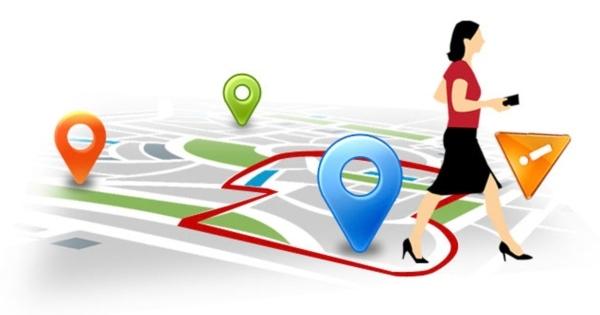
Marketing Insights: What is Geofencing and How Can it Work for You?
Read More ...





Comments
Leave a Reply
Have an account? Login to leave a comment!
Sign In