










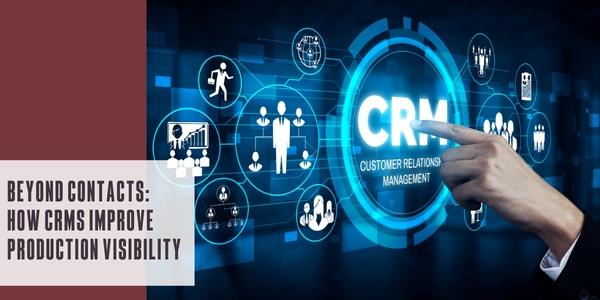
Beyond contacts: How CRMs improve production visibility
By Jesse Sanchez.
Learn how connected CRM systems help roofing contractors track production, reduce delays and improve profitability.
For many roofing contractors, customer relationship management systems (CRMs) such as Centerpoint Connect remain anchored in the sales process, used to store contacts, track leads and manage proposals. Once a job is secured, however, that system often falls out of daily use as production shifts into spreadsheets, emails or disconnected tools. What follows is not just a change in workflow, but a loss of continuity that limits visibility at the stage where execution determines results.
That separation carries measurable consequences. Profit is made or lost during production, not at the point of sale, and when sales and production operate independently, the flow of information begins to break down. Jobs can stall without immediate visibility; critical details are diluted during handoffs and costs rise before teams have the context to respond. Over time, those gaps compound, creating inefficiencies that are difficult to trace back to a single source.
A connected CRM resolves that fragmentation by aligning the entire job lifecycle within one system. When sales data, production updates and financial information are integrated, teams are no longer working from partial views. Instead, they share access to approved scopes of work, field notes and real-time job status. That continuity allows production teams to move forward with clarity, reducing errors, accelerating startup timelines and maintaining consistency across projects.
From there, visibility becomes an operational advantage. With real-time insight into production, contractors can identify bottlenecks as they develop, whether tied to material delays, scheduling conflicts or early signs of budget overruns. Rather than reacting after timelines are missed, managers can intervene while adjustments are still effective, preserving both schedule and margin.
At the same time, centralization reinforces accountability. A unified system clearly defines who is responsible for each stage of a job, when tasks are completed and where breakdowns originate. This transparency strengthens coordination between sales, production and management, while also supporting more accurate and reliable communication with clients.
In the end, visibility is not just about tracking progress; it is about improving outcomes. When contractors can evaluate production performance alongside sales and financial data, they gain the ability to refine job costing, strengthen forecasting and reduce unexpected losses.
Platforms like Centerpoint Connect demonstrate how this approach repositions the CRM as more than a sales tool. By connecting people, projects and performance in a single environment, it becomes the operational backbone that supports efficiency, accountability and long-term profitability.
Learn more about Centerpoint Connect Roofing CRM in their Coffee Shop Directory or visit www.CenterpointConnect.com.
About the author

Jesse is a writer for The Coffee Shops. When he is not writing and learning about the roofing industry, he can be found powerlifting, playing saxophone or reading a good book.
Recommended For You
JobNimbus launches NimbusLabs, an early access program for new features
Read More ...
Discover Solutions for Residential, Agriculture and Commercial Metal Roofing
Read More ...
Why metal roofing is a top choice for modern barndominiums
Read More ...




Comments
Leave a Reply
Have an account? Login to leave a comment!
Sign In