







Smarter prospecting, stronger profits

By Convex.
Contractors chasing growth can’t afford to waste time on the wrong leads.
In today’s crowded roofing and solar markets, hustle alone isn’t enough. Contractors are burning through time, energy and resources chasing prospects that were never a fit to begin with. Meanwhile, those leveraging data-driven prospecting strategies, powered by platforms like Convex, are pulling ahead, closing bigger deals, faster and with higher margins. This isn’t about working harder; it’s about working smarter. If you’re still relying on cold calls and gut instinct to find your next job, it’s time to upgrade your playbook for the digital age.
Understanding ROI-driven prospecting
ROI-driven prospecting is an approach that prioritizes return on investment when seeking out new sales opportunities, clients or projects. The goal is to eliminate high-cost, slow and inefficient strategies and replace them with tools, technology and tactics that can accelerate the sales cycle and drive growth.
Data is at the core of any effective ROI-driven prospecting strategy. For example, permit history data can provide insight into properties that are likely due for upgrades or replacements, enabling contractors to proactively reach out to homeowners or businesses before their competitors do. Buying signals can show you who’s actively looking for your services and property intelligence tools can create visibility into your entire territory, eliminating “windshield time” and canvassing.
The importance of effective prospecting strategies
The challenges of traditional prospecting
Let’s compare two prospecting methods to showcase the difference between traditional strategies and those focused on ROI.
For most sales reps, traditional prospecting looks something like this: Find a database of local property owners and managers, make 100 (or so) calls per week, check LinkedIn for actionable insights, drive around looking for new properties to drop by and hope that you can send enough relevant cold emails and make enough calls to generate sales.
According to Salesforce, a rep will spend 21% of their time performing lead research and prospecting and only 5- 10% of these outreach messages will even get a response.
How an ROI-driven approach helps you identify and close highly targeted leads faster
Conversely, with tools like Convex, reps can find and identify warm selling opportunities in 3-5 minutes per account. That means when they use Convex to research and identify leads for the same amount of time it takes to make one cold call, they can instead have 20- 30 warm conversations with businesses where selling is not only welcomed but expected.
This allows contractors to save a significant amount of time and resources that would otherwise be spent on traditional prospecting methods. Instead, they can focus on building relationships and closing deals with highly targeted leads who are more likely to convert into long-term customers.
Let’s take a closer look at how this works.
Identifying buying signals and intent data
Instead of beginning with “guesswork” (e.g., a building with a dilapidated roof or a LinkedIn post about energy efficiency from a local property manager), start with a prospect who’s already shown an interest in your services.
Intent data and more accurately, “buying signals,” are indicators that a prospect is actively seeking solutions or services. Examples of buying signals with lower intent could be Google searches like; “How much could solar panels save on energy costs.” Higher intent could be searches like; “Solar installers in (your city).”
But buying signals aren’t tracked on searches alone; they’re accumulated from many sources like website visits, social media interactions and other forms of engagement that showcase the likelihood of an account making a purchase.
Recognizing these cues allows contractors to engage prospects at the right moment, increasing the chances of conversion by presenting solutions that align with their current needs.
Harnessing the power of buying signals
Roofing and solar contractors can benefit tremendously from keeping an eye on these behaviors. If someone is actively looking up roofing materials or solar solutions, it’s a great time to reach out and open a conversation on the topic.
This eliminates the need to compete with other competitors who are only using traditional prospecting methods.
By using tools like Convex to pay attention to these signals, contractors can tweak their messaging to better address what those potential customers need and care about, boosting the chances of making a sale.
This is a far more personalized approach than cold outreach and not only makes communication more effective but also improves the customer’s experience with relevant and timely information.
Leveraging intent data for precision targeting
Intent data also offers a deeper understanding of a prospect’s journey toward making a purchase decision.
Understanding search intent enables contractors to strategically time their communications and offerings, ensuring they align with the prospect’s decision-making timeline.
Additionally, intent data allows for the personalization of marketing campaigns, as contractors can develop content that speaks directly to the interests and motivations of their audience.
By addressing specific pain points and highlighting relevant solutions, contractors can build trust and credibility, ultimately guiding prospects through the sales funnel more effectively.
Understanding the importance of permit history
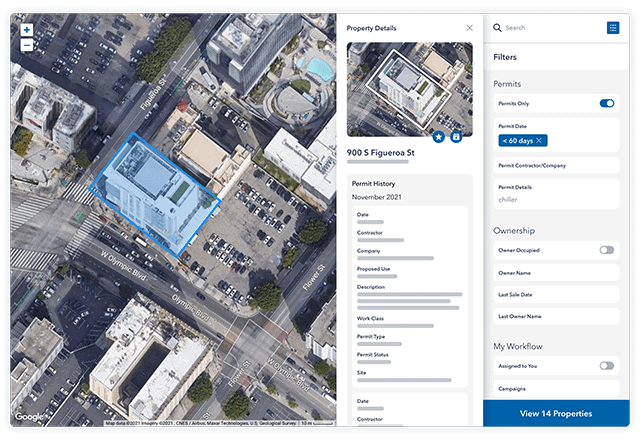
Permit history is also incredibly valuable. For years, the only way you could find this data was through your local library or county recorder’s office.
Today, permit history is available through property intelligence platforms and can be instrumental in identifying potential prospects for roofing and solar companies.
By analyzing permit records, contractors can gain insights into properties that have undergone recent renovations or installations. These installations may align perfectly with the needs of your target audience and trigger outreach events that drive sales.
For example, imagine that a historic property is going through a total renovation and the new management company has indicated an interest in energy efficiency. This would be the ideal time to reach out with information about roofing or solar solutions, especially if your business offers products specifically tailored to historic properties.
Such data-driven insights not only streamline the prospecting process but also enhance the efficiency and accuracy of lead identification and targeting.
Why permit history matters
Permit history allows contractors to pinpoint properties that have demonstrated a willingness to invest in their infrastructure. By leveraging this information, contractors can preemptively address potential client needs, showcase their expertise and establishing themselves as proactive service providers.
Utilizing property data for targeted prospecting
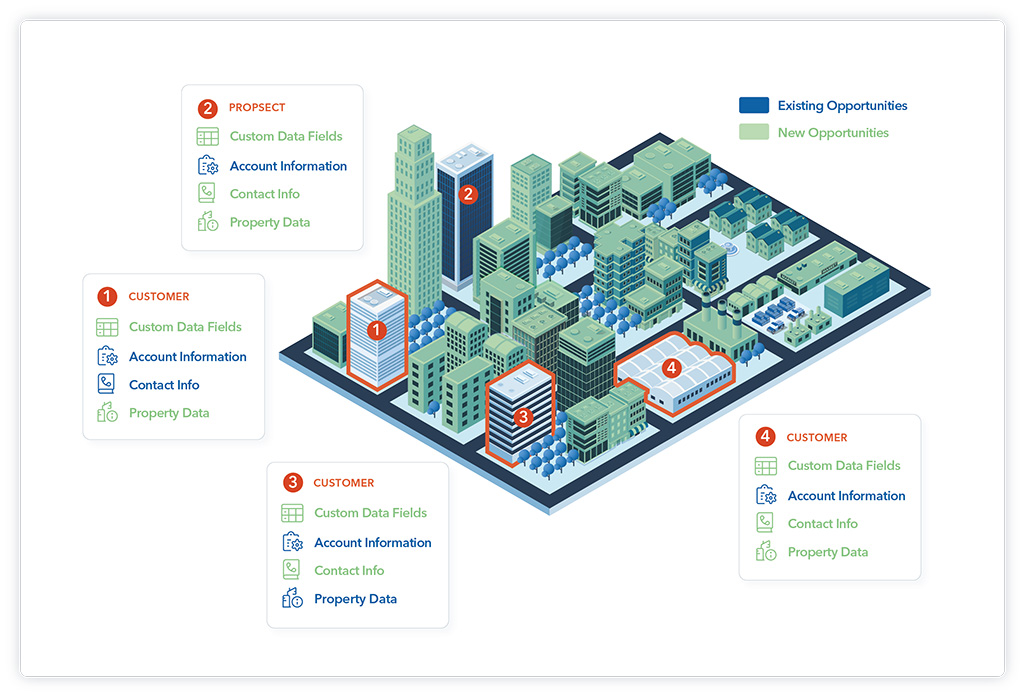
Property data is another great way to prospect. One customer, Comfort Systems USA, likes to focus on owner-occupied buildings, and they are doing incredibly well with their targeted approach.
Property data encompasses a wealth of information about commercial real estate assets, including ownership and management details, tenant information, property size and geographic location, helping reps identify targeted leads in their territory faster.
Roofing and solar companies can harness this data to fine-tune their prospecting strategies, ensuring they reach the right audience with relevant offers. This level of personalization not only increases the chances of conversion but also enhances customer satisfaction, as clients feel understood and valued.
By understanding the unique characteristics of each property, contractors can customize their proposals, presenting solutions that are tailored to the specific needs and potential of the property.
Segmenting prospects based on property data
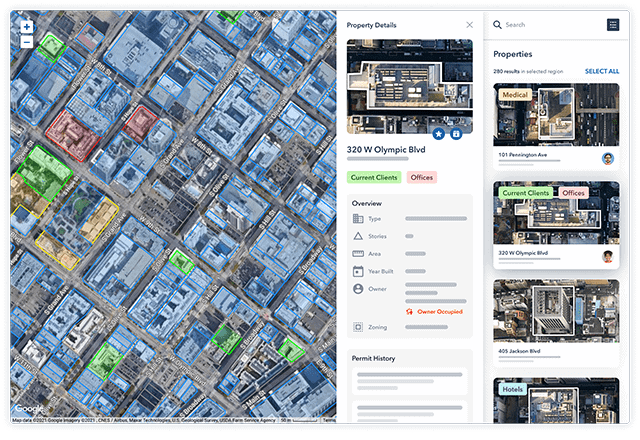
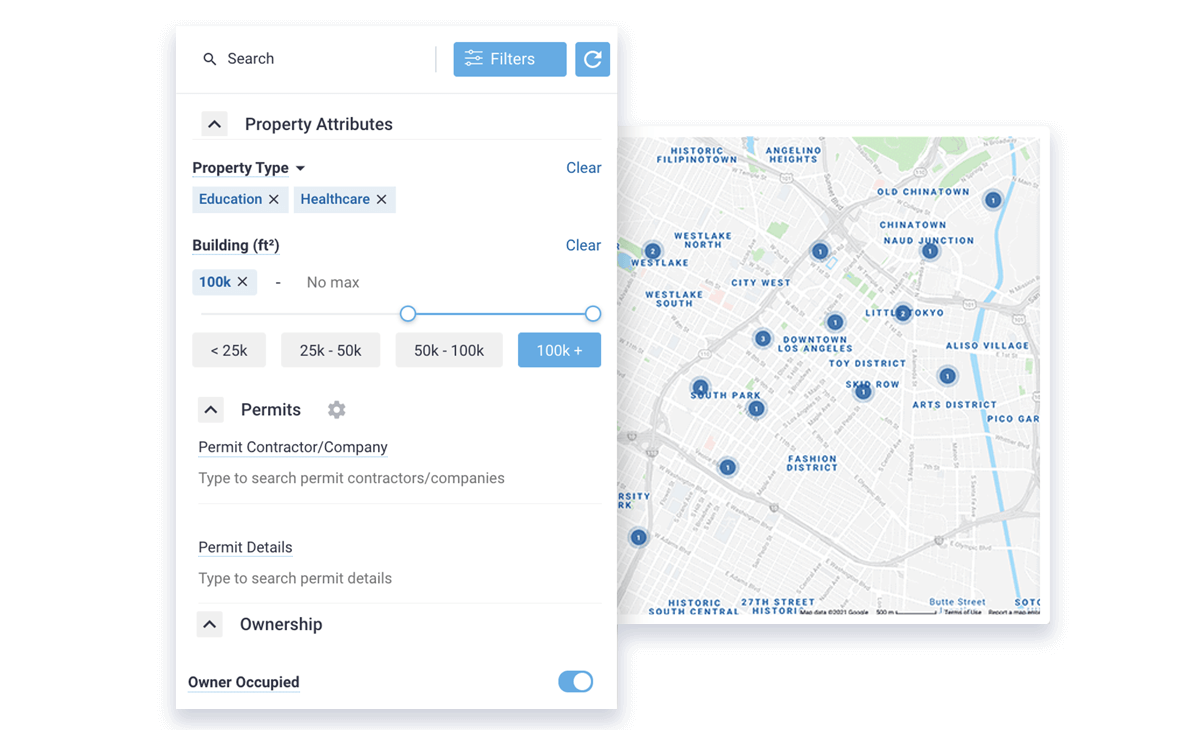
Convex allow you to segment properties according to property characteristics. For example, types of properties (e.g., hospitals, office buildings, manufacturing facilities or restaurants).
Similarly, roofing contractors can target areas with older properties that may require repairs or replacements.
This segmentation empowers roofing and solar businesses to optimize their marketing efforts, ensuring they deliver the right message to the right audience at the right time—allocating resources more efficiently.
Instead of using Google Earth or MapQuest to find properties in your territory, Convex allows you to outline an area and identify all of the properties within that area by your target segment. This enhances the lead quality and focuses your sales reps’ efforts on buildings that fit your market segment.
Enhancing lead qualification with property insights
Property data provides valuable context for qualifying leads, allowing roofing and solar contractors to assess the potential value of each prospect. This targeted approach ensures that sales and marketing efforts are focused on prospects with the highest likelihood of conversion, thereby improving overall efficiency and effectiveness.
Additionally, property insights enable contractors to anticipate potential challenges or objections, equipping them with the information needed to address concerns proactively and enhance the customer experience.
Integrating ROI-driven prospecting strategies into your business
To achieve high ROI in prospecting, roofing and solar contractors need the right tools to work smarter, not harder. Tools like Convex combine data from multiple sources to create a clear picture of your target market. This approach helps you focus on the best opportunities and close more deals. Here’s how:
Steps to build ROI-driven prospecting strategies
Combine data sources for better insights
Use tools like Convex that integrate:
- Permit history: See which properties are ready for upgrades.
- Buying signals: Identify prospects actively searching for services.
- Intent data: Understand who’s closest to making a purchase.
- Property data: Target the right buildings in your territory.
Together, these insights give you a complete view of your leads and help you reach the right people at the right time.
Use advanced analytics for smarter targeting
1 – Analyze buying signals and intent data to spot patterns and potential customer needs.
2 – Leverage property data insights to segment your market and prioritize high-value opportunities. Advanced analytics can help identify trends, such as properties with aging infrastructure or businesses expanding their operations, which could benefit from your services.
3 – Utilize data-driven insights to create personalized messaging and offers that resonate with your target audience (which is what we’ll cover next).
By leveraging advanced analytics, roofing and solar contractors can fine-tune their prospecting strategies, maximizing the potential for success and ROI.
Engage prospects with personalized outreach
Craft targeted campaigns that speak directly to your audience’s needs. For example:
- Send tailored emails to property owners or managers highlighting how your solutions address their specific challenges.
- Use trigger-based marketing to engage prospects following major renovations or upgrades reflected in the permit history.
- Offer case studies or testimonials that showcase how your services have helped similar properties achieve their goals.
- Build trust by offering tailored solutions, not generic pitches.
Personalized communication makes your outreach more effective and helps create loyal customers.
By combining powerful tools, analytics and personalized outreach, you can maximize ROI, secure more deals and grow your business faster.
Maximizing ROI through strategic prospecting
To see long-term sales success, roofing and solar contractors need to treat ROI-driven prospecting as a process — one that requires continuous improvement.
This means evaluating what works, adapting to market changes and refining strategies based on data.
When done right, this approach keeps your efforts aligned with customer needs and market demands, driving sustainable growth.
Monitoring and measuring success
To know if your strategies are working, track key performance indicators (KPIs) regularly. Some of the most important metrics include:
1 – Conversion rates: How many leads turn into paying customers?
2 – Cost per lead: Are you getting quality leads without overspending?
3 – Customer Acquisition Costs (CAC): Is your sales process efficient?
By reviewing these metrics, you can spot weaknesses and double down on what’s working. Set benchmarks and goals to measure progress over time. This keeps your team focused and ensures your strategies align with your business objectives.
Adapting to market changes and trends
The roofing and solar industries move fast, so staying flexible is critical. Contractors should:
- Stay informed: Keep up with industry trends and customer preferences.
Example: Rising interest in energy efficiency could signal opportunities for solar upgrades.
- Test and innovate: Experiment with new prospecting tactics and adjust based on results.
Example: Try targeted outreach campaigns for property types like hospitals or schools.
- Pivot when needed: If market conditions shift, adjust your approach to stay relevant.
Adopting a mindset of agility and experimentation ensures your strategies remain effective, even as the market evolves.
Fostering continuous improvement
The best contractors make prospecting a living, breathing part of their business by:
- Regularly reviewing their data and processes.
- Listening to feedback from their sales team about what’s working in the field.
- Investing in tools that streamline prospecting and deliver actionable insights.
Use data as your guide, remain agile and never stop improving to turn your prospecting efforts into a reliable growth engine.
By committing to ongoing improvement, you’ll stay ahead of competitors and build a sustainable pipeline of qualified leads that drive growth. Track your team’s results, adapt to market changes and refine your strategies so you can maximize ROI and future-proof your business.
Closing thoughts: Increasing ROI for roofing and solar contractors
For roofing and solar contractors, embracing ROI-driven prospecting is a game changer. It’s about leveraging the right tools to work smarter, not harder.
Success doesn’t come from a one-time effort; it’s built on continuous improvement. Analyze your results, adapt to market trends and refine your strategies to secure a steady pipeline of qualified leads.
When every prospecting effort is driven by data and aligned with customer needs, your business not only grows but thrives.
Original article and photo source: Convex
Learn more about Convex in their Coffee Shop Directory or visit convex.com.
Recommended For You
Building your customer base by being “The Professional”
Read More ...
Master the art of roof estimating in the new year
Read More ...
Leadership built for the next phase
Read More ...





Comments
Leave a Reply
Have an account? Login to leave a comment!
Sign In