










A roofing tradition that grows back
By Emma Peterson.
Discover 桧皮葺, the centuries-old Japanese roofing tradition that transforms sustainably harvested cypress bark into beautiful, long-lasting roofs.
When many Westerners think of traditional Japanese roofs, they might imagine pagodas and temples adorned with intricately carved tiles.
And while the ceramic tiles that this image conjures are a key part of Japan’s architectural legacy, it is far from the only part.

Another huge part of Japan’s roofing legacy is 桧皮葺 (Hiwada Buki) roofing.
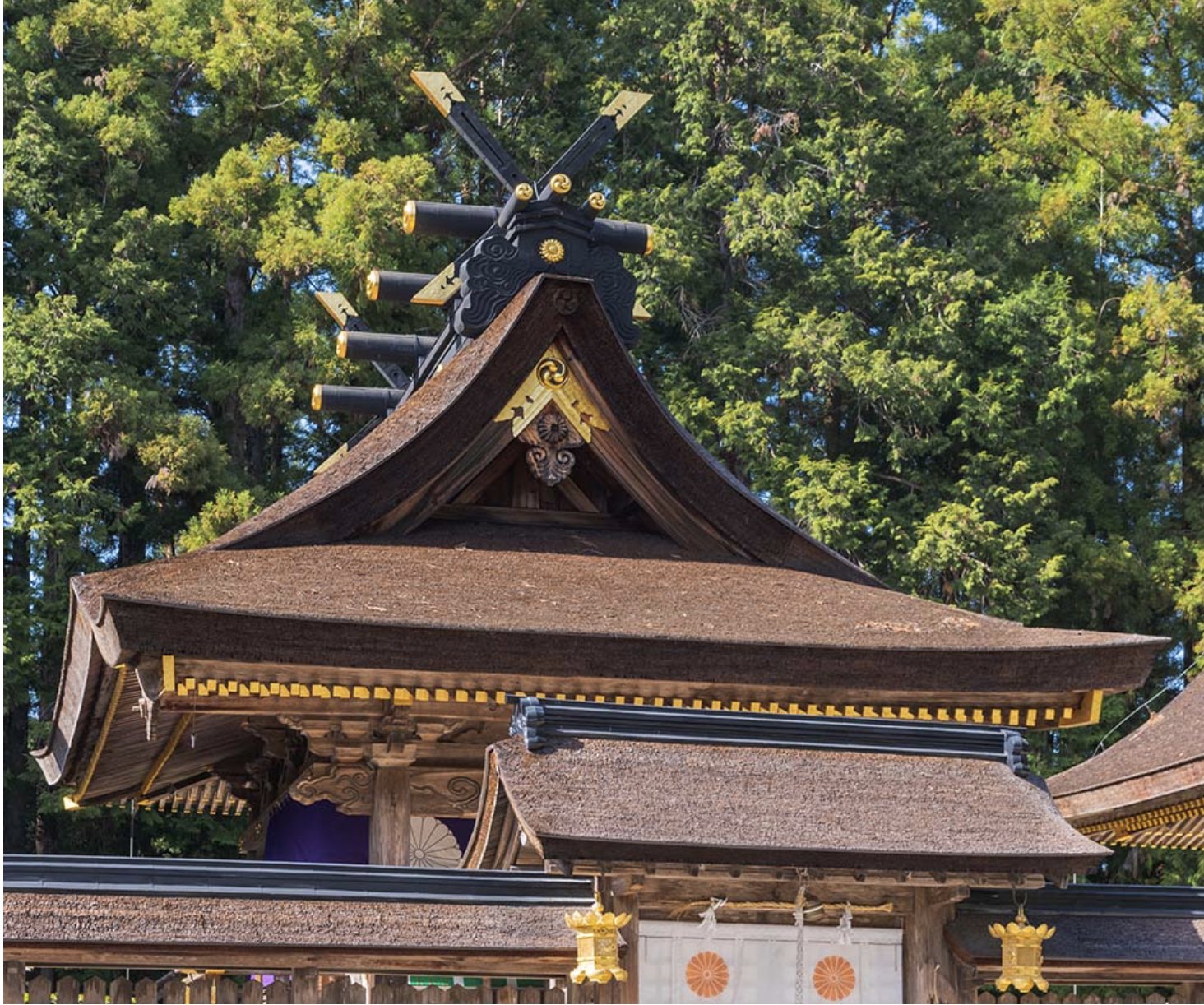 This type of roofing can be found across Japan. Most famously, the 熊野本宮大社 (Kumano Hongo Taisha shrine), which is the head shrine of the more than 3,000 Kumano shrines across Japan, home to the largest torii gate in the world and the spiritual heart of the Kumano Kodo (an ancient pilgrimage route that has been recognized as a UNESCO World Heritage Site), features Hiwaada Buki roofing. But what exactly is this roofing material?
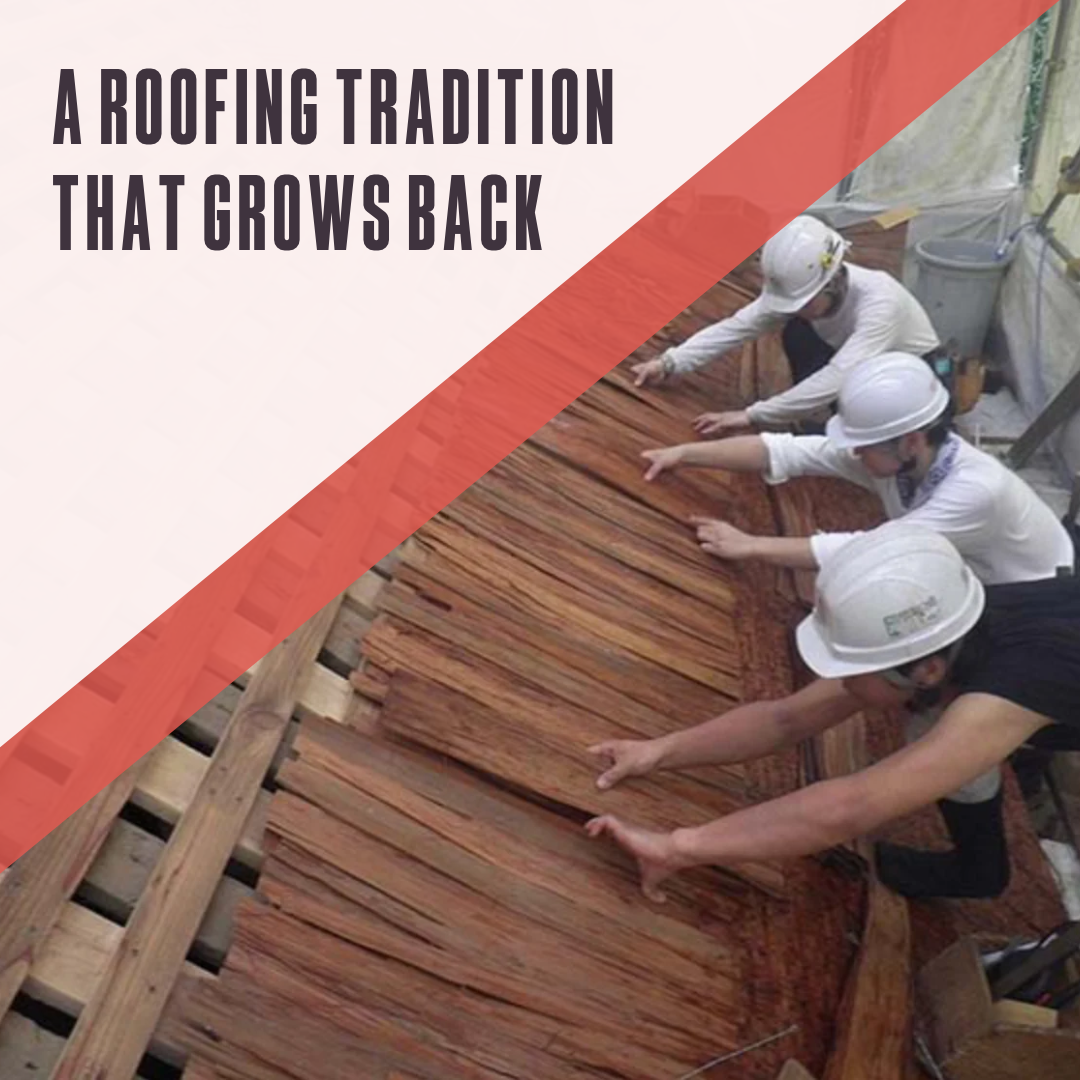
Hiwada Buki is a type of roofing made of layers of 桧 (Hinoki or Japanese cypress) bark. One of the most interesting things is that this is a sustainable practice – only the outer layer of bark is taken so that the tree can continue to grow and produce more materials. WebJapan, a site hosted by Japan’s Ministry of Foreign Affairs, described this process:
For this technique, the outer bark from a standing Japanese cypress nearly 100 years old is used. The bark is collected by a specialist called a 原皮師 (motokawashi) who inserts a bark spud at the base and peels the bark off from bottom to top. This is done without damaging the inner bark, so the outer bark will regrow in about ten years and can be collected again.
From there, the harvested bark is prepped for use on the roof by cutting it into 75 cm by 15 cm strips and soaking those strips in water. After that, the strips are tacked into place on the roof at 1.2 cm intervals. As you might imagine, at those sizes, it can take thousands of strips of bark to create one roof section.
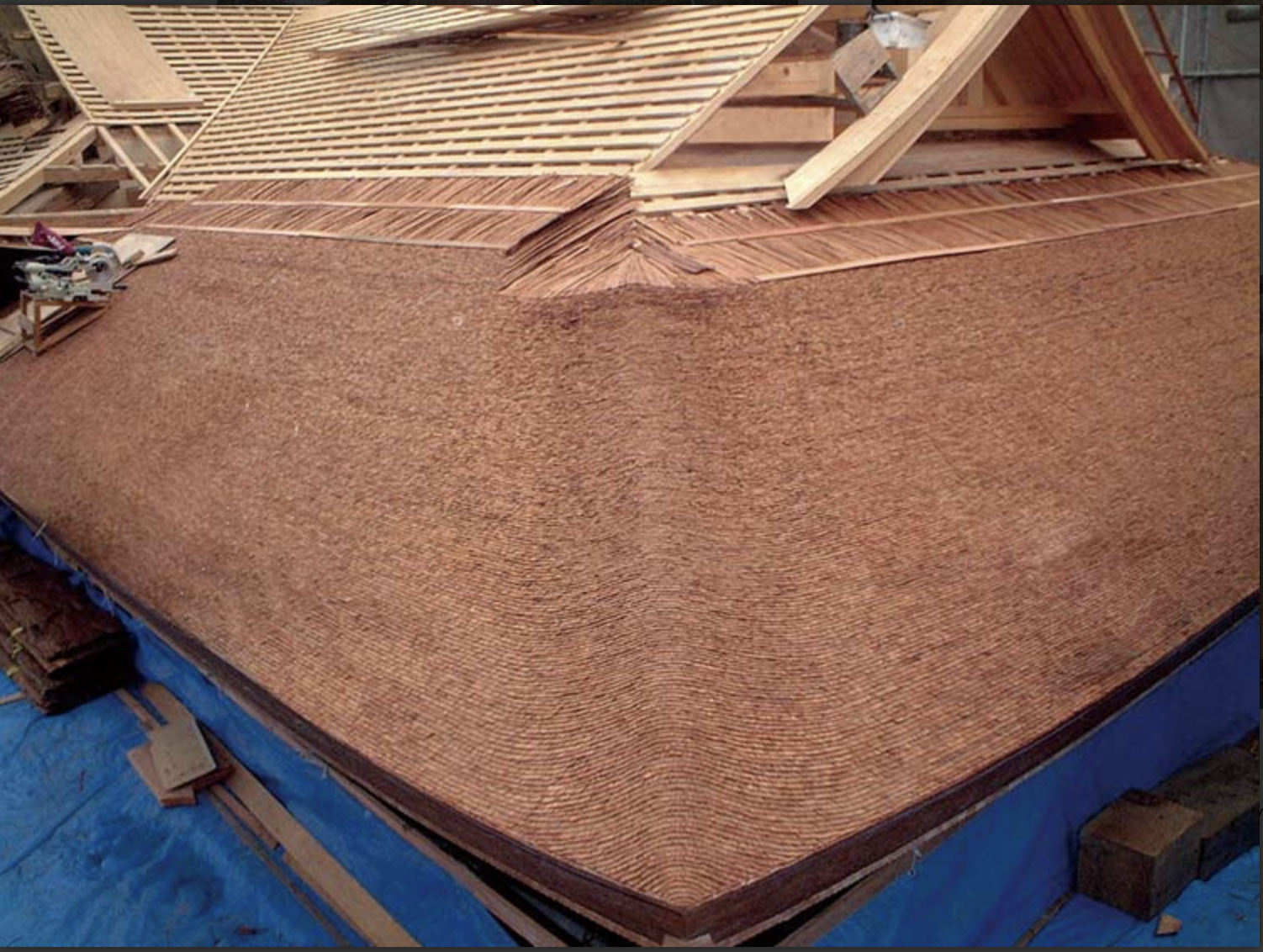 It is a long process that requires a lot of patience and craftsmanship. But the result is well-worth it. Hiwada Buki roofs last 30-40 years and are a testament to how human ingenuity can coexist peacefully with nature. As one writer describes, “The result is a thick, velvet-like surface that absorbs rain and muffles sound, creating a silence that feels sacred. Further, because bark is flexible, it allows for those iconic, graceful curves that mimic the natural slopes of the mountains [where the cypress grows].”
Original image source: WebJapan
About the author

Emma is the senior content developer at The Coffee Shops and AskARoofer™. When she's not working or overthinking everything a little bit, she enjoys watching movies with friends, attending concerts and trying to cook new recipes.
Recommended For You

Pioneering Towards a Greener Future
Read More ...
Duro-Last's commitment to sustainability shines through at IIBEC
Read More ...
Everything you Need to Know About Daylighting
Read More ...





Comments
Leave a Reply
Have an account? Login to leave a comment!
Sign In