




Why rooftop support matters
By The Coffee Shops®.
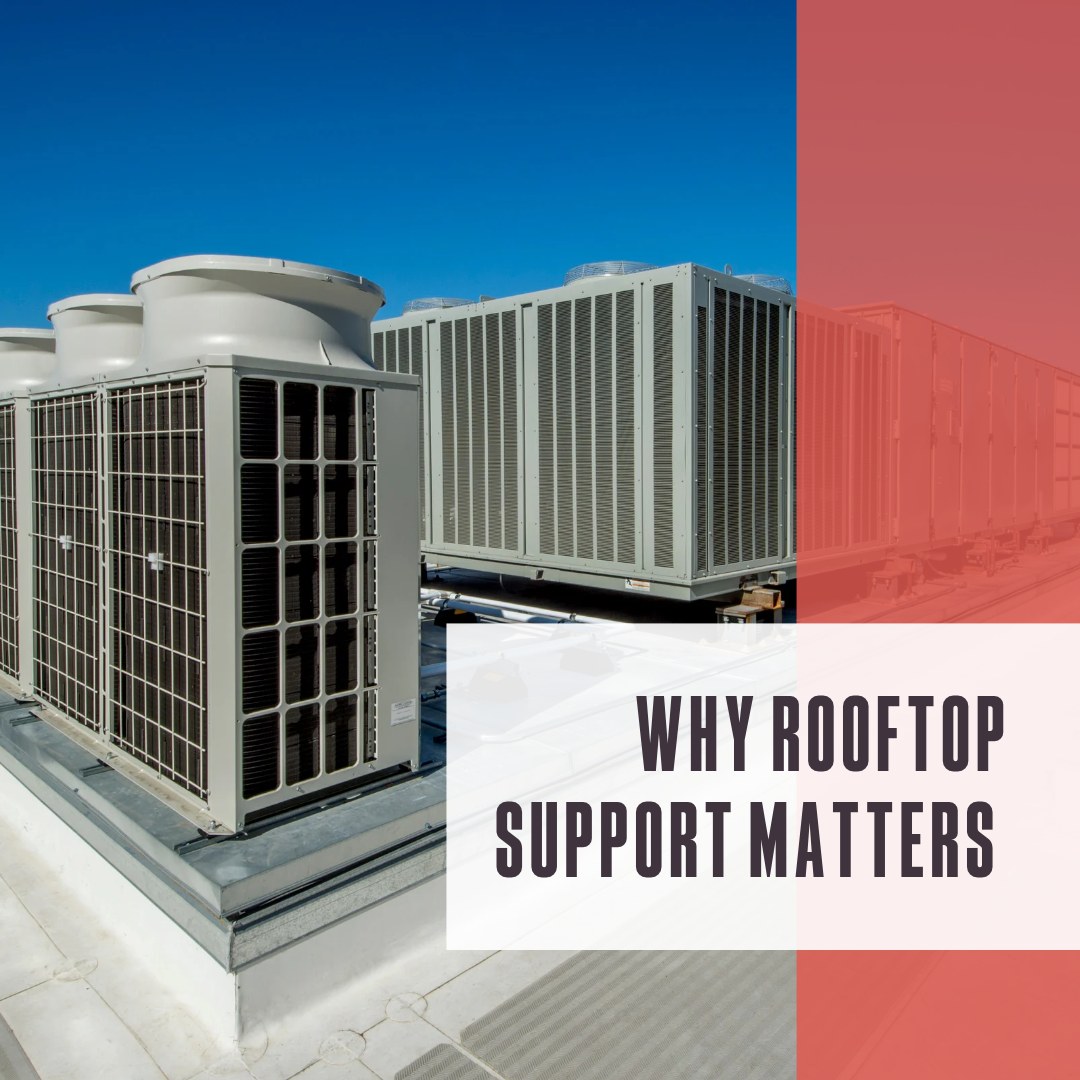
Rooftop support systems protect roofing assemblies while addressing the demands placed on rooftop HVAC equipment.
Commercial rooftops often have to accommodate heating, ventilation and air conditioning (HVAC) equipment, piping and ductwork, bringing roofing and mechanical contractors together on the same surface. In an episode of Roofing Road Trips®, Heidi J. Ellsworth spoke with Dana Castle, Kaitlyn Briggs and Candice Palansky of Green Link about why it matters how such equipment is supported.
Green Link designs and manufactures custom support systems for HVAC equipment, pipe runs and ductwork, with many applications located on commercial roofs. Kaitlyn explained that developing those solutions means considering project-specific information. “A lot of what we do on a day-to-day basis involves taking roof plans and mechanical schedules, along with things like ASCE wind reports, roof project types, goals, local codes,” she said.

That planning becomes particularly important because rooftop equipment faces environmental conditions contractors must account for. Wind can contribute to uplift and tip-over potential while snow can accumulate around equipment and restrict airflow. Kaitlyn explained that using a properly sized steel frame can widen an equipment unit’s footprint and make it more resistant to tipping.
Proper support also affects the roof itself. Kaitlyn noted that distributing equipment weight can help eliminate point loading while elevated supports allow water to move across the roof rather than collect around equipment. Reducing equipment vibration can also limit abrasion against the membrane.
According to Dana, problems can arise when contractors instead rely on wood for support. Deteriorated supports may turn what should be routine mechanical maintenance into a larger roofing and equipment issue.
The takeaway is straightforward: rooftop support deserves consideration as part of the building system rather than as an afterthought. Giving equipment a properly planned foundation can help roofing and HVAC professionals address the demands happening above the building.
Listen to the full podcast to learn more about rooftop support systems.
Learn more about GREEN LINK in their Coffee Shop Directory or visit www.GreenLinkEngineering.com.
Recommended For You
A library of knowledge at your fingertips
Read More ...
Turning innovation into practical jobsite solutions
Read More ...
The Most Metal Tradeshow Out There
Read More ...



Comments
Leave a Reply
Have an account? Login to leave a comment!
Sign In