










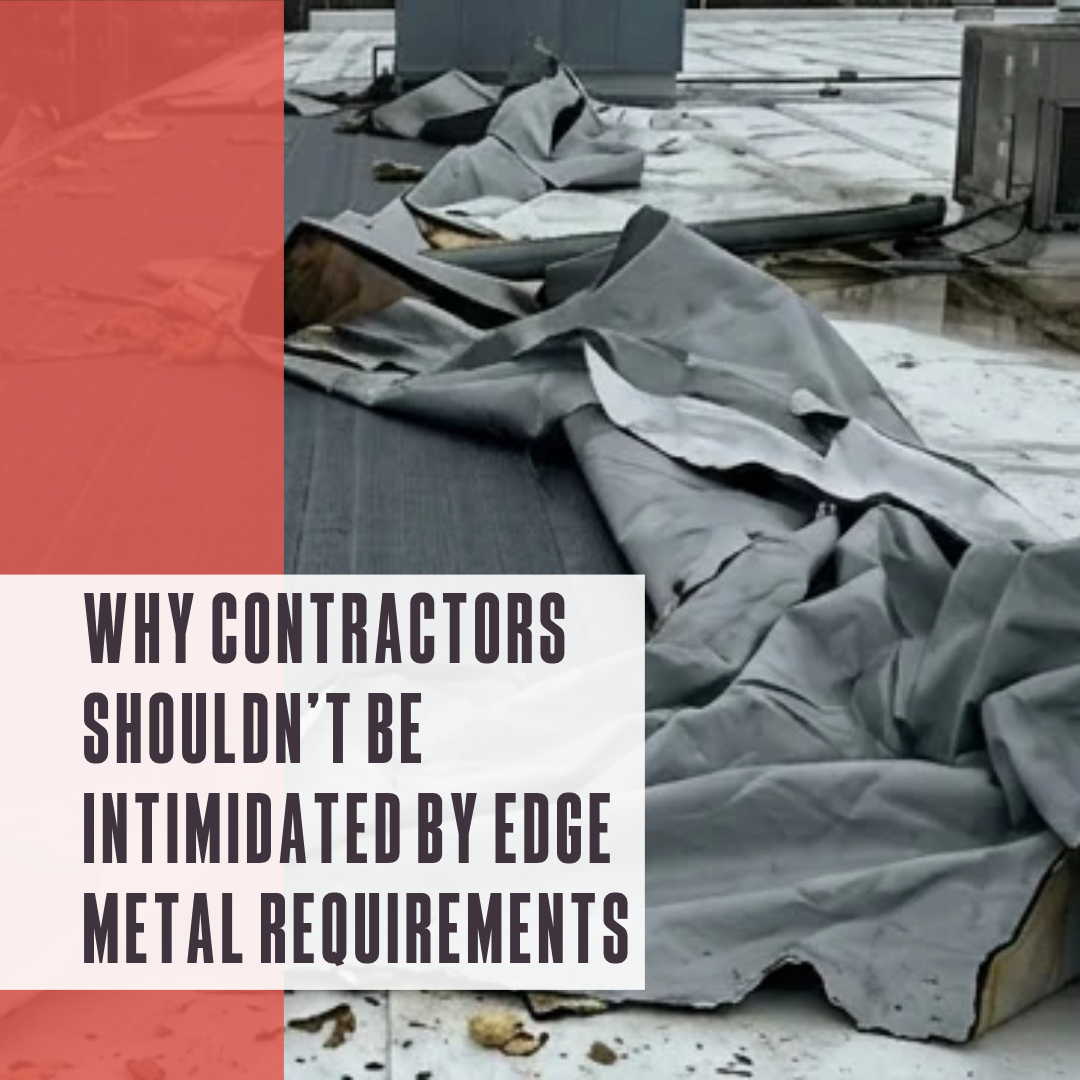
Why contractors shouldn't be intimidated by edge metal requirements
By The Coffee Shops®.
Turning edge metal into an opportunity, rather than a challenge.
In commercial roofing, it doesn't take long for technical terminology to create unnecessary confusion. References to testing standards, code compliance, uplift ratings and perimeter performance can make some contractors assume that ES-1 compliance is overly complicated.
As a result, many roofing professionals treat edge metal requirements as a challenge rather than an opportunity. In reality, one of the biggest misconceptions about ES-1 edge metal is that achieving compliance is difficult. The truth is that the process is often simpler than contractors expect.
The perception of complexity usually stems from a misunderstanding of who is responsible for what. Contractors are not expected to engineer edge metal systems, conduct laboratory testing or calculate structural loads. Those tasks have already been completed through the testing and design process. Manufacturers like FlashCo provide tested profiles, documented performance data and installation instructions that guide contractors through the installation process. According to the guide, compliance comes down to selecting a profile that falls within tested parameters and installing it exactly as specified.
That level of simplicity is often overlooked. Roofing contractors regularly install highly technical systems that involve insulation assemblies, membranes, attachment methods and flashing details. Compared to many aspects of commercial roofing, selecting and installing a tested edge metal profile is relatively straightforward. The challenge is less about complexity and more about following documented procedures consistently.
Clear installation instructions provide significant advantages in the field. Rather than leaving crews to make judgment calls, manufacturers outline requirements such as fastener spacing, attachment locations and expansion details. These instructions are designed to mirror the conditions used during testing, helping ensure the installed system performs the same way the tested assembly performed. This consistency reduces uncertainty and gives contractors greater confidence in the finished installation.
Simplified installation processes also support productivity. Labor shortages and tight schedules continue to challenge the roofing industry. Contractors are always looking for ways to improve efficiency without sacrificing quality. A tested edge metal system with clear installation procedures can help crews work faster while maintaining compliance. Instead of viewing ES-1 as another administrative burden, contractors can view it as a quality-control tool that simplifies decision-making and reduces risk.
There is also a competitive advantage to understanding roofing standards. Building owners, consultants and general contractors increasingly expect contractors to understand code requirements and explain how systems perform. A contractor who can confidently discuss ES-1 requirements demonstrates expertise and professionalism. That knowledge can help strengthen customer relationships and differentiate a company from competitors that simply follow specifications without understanding them.
Compliance does not have to be intimidating. ES-1 provides a clear path toward reliable roof perimeter performance. When contractors stop viewing it as a complicated requirement and start seeing it as a proven roadmap, they can improve installation quality, reduce future issues and deliver greater value to building owners.
Recommended For You

A surging silicone market
Read More ...
Delivering no-glare confidence on the roof
Read More ...
GREEN LINK Introduces Custom-designed Support Stanchions for Elevating Mechanical Equipment Off Roofs, Ground
Read More ...




Comments
Leave a Reply
Have an account? Login to leave a comment!
Sign In