











Which insulation do you choose?

By Hunter Panels.
The choice of insulation impacts performance, safety, and cost for years to come.
When it comes to commercial roofing, insulation plays a critical role in controlling energy costs, enhancing fire safety, speed of installation, and maximizing long-term ROI. However, not all insulation options are the same. Expanded Polystyrene (EPS) is a lightweight, rigid, thermoplastic insulation made from closed-cell foam. Polyisocyanurate (Polyiso) is also a closed-cell foam board, but it’s a thermoset material with a high-performance foam core sandwiched between two facers. Here at Hunter Panels, we want to help drive this convTersation forward with high-efficiency solutions built for today’s demands. Keep reading to understand the advantages and limitations of these two options and which option professionals focused on performance and value are choosing.
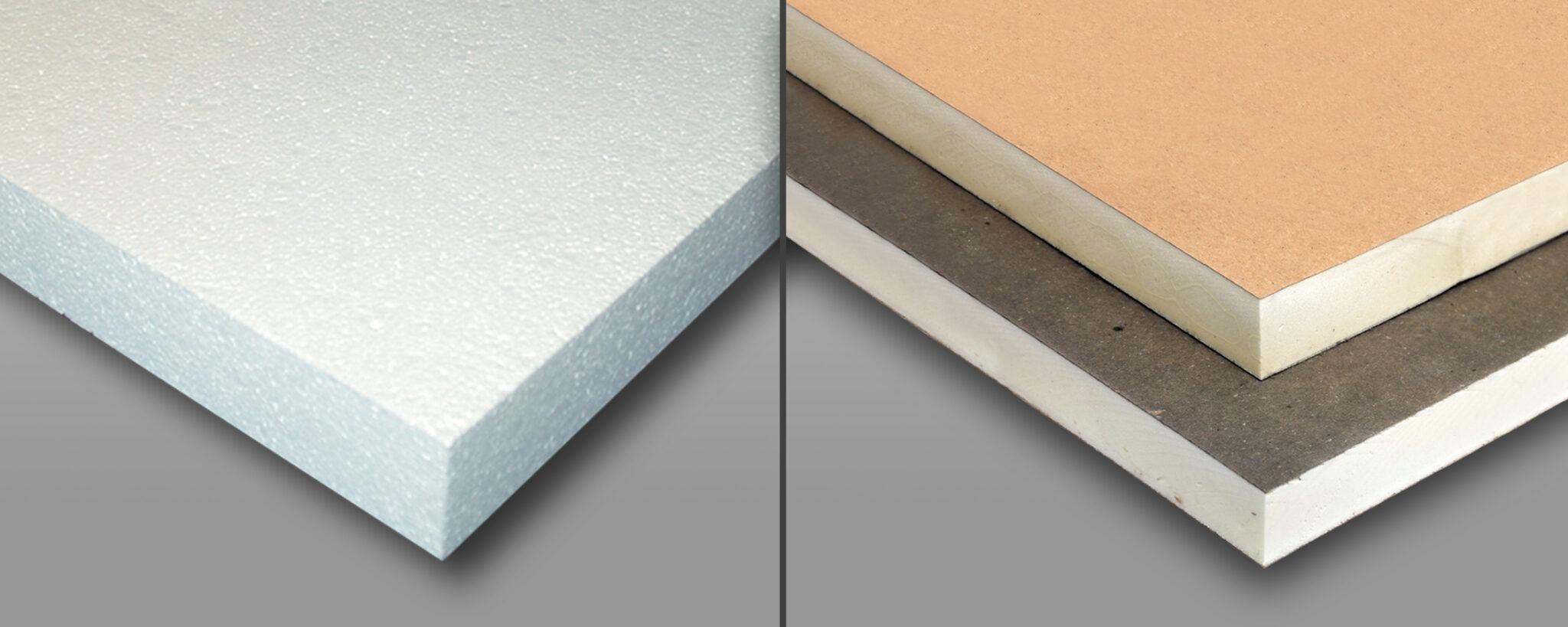
Advantages of polyisocyanurate over expanded polystyrene:
Long-term thermal resistance (LTTR)
Long-Term Thermal Resistance (LTTR) is a scientifically supported method to calculate the 15-year, time-weighted average R-value of closed-cell insulation products. Polyiso insulation has a high R-value per inch (5.7) compared to other insulation products on the market. EPS insulation’s R-value varies depending on the density of the foam and can range from 4 to 5. This performance characteristic allows polyiso insulation to deliver greater energy savings potential in thinner product thicknesses, which can be advantageous in height-restricted areas.
Flexibility in roofing assemblies
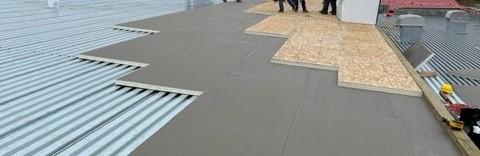
Polyiso insulation is compatible with most types of cladding and roofing materials, such as metal, brick, stone, wood, vinyl, asphalt shingles, etc. It can be attached with adhesives, mechanical fasteners or hot mopping. Polyiso is also lightweight and easy to cut and install. In comparison, EPS is not compatible with some types of cladding and roofing materials, such as adhesives, hot mopping or torch-down roofing, without the use of slip sheets or additional cover boards. It can be damaged by high temperatures or solvents and requires a protective layer or coating to prevent UV degradation. EPS can also be molded into different shapes and sizes to fit various design needs.
Fire resistance
Polyiso insulation is a thermoset material that does not melt or drip when exposed to flame (ASTM E84). In comparison, EPS is less fire-resistant; it melts and drips when exposed to high heat, which can spread the fire and create toxic fumes. Polyiso also offers a direct-to-deck attachment option for steel deck roofs (FM 4450/UL 1256).
Environmental and other attributes
Polyiso insulation contains blowing agents with zero Ozone Depletion Potential (ODP) and low Global Warming Potential (GWP), reducing buildings’ energy use and associated greenhouse gas emissions. It is also recyclable through reuse where permitted and contains recycled content, which varies by product. While EPS can also contain recycled content, polyiso insulation’s high thermal efficiency results in energy savings potential equal to 47 times the product’s embodied energy.
In conclusion, the choice of insulation material for a commercial roof system is a critical decision that directly impacts the building’s performance, energy efficiency and overall value. Polyiso insulation is the superior choice due to its exceptional thermal efficiency, fire resistance, ease of installation, environmental sustainability and long-term cost savings. Please see the links below from the Polyisocyanurate Insulation Manufacturers Association (PIMA) for unbiased manufacturer resources.
Original article and photo source: Hunter Panels
Learn more about Hunter Panels in their Coffee Shop Directory or visit www.hunterpanels.com.
Recommended For You

How to choose the right metal gauge
Read More ...
Do You Know Your Roof Coatings?
Read More ...
RAiNA’s 2026 Conference is a must-attend event for professionals
Read More ...



Comments
Leave a Reply
Have an account? Login to leave a comment!
Sign In