











What AI can see on the roof
By Karen L. Edwards.
Cameras and laser scanning offer different ways to identify roof damage, drainage issues and changes in roof conditions.
A photograph can tell an inspector a lot about a roof. A three-dimensional scan can reveal something entirely different. Researchers at Oak Ridge National Laboratory are exploring how both approaches, combined with artificial intelligence, could help automate portions of the roof inspection process.
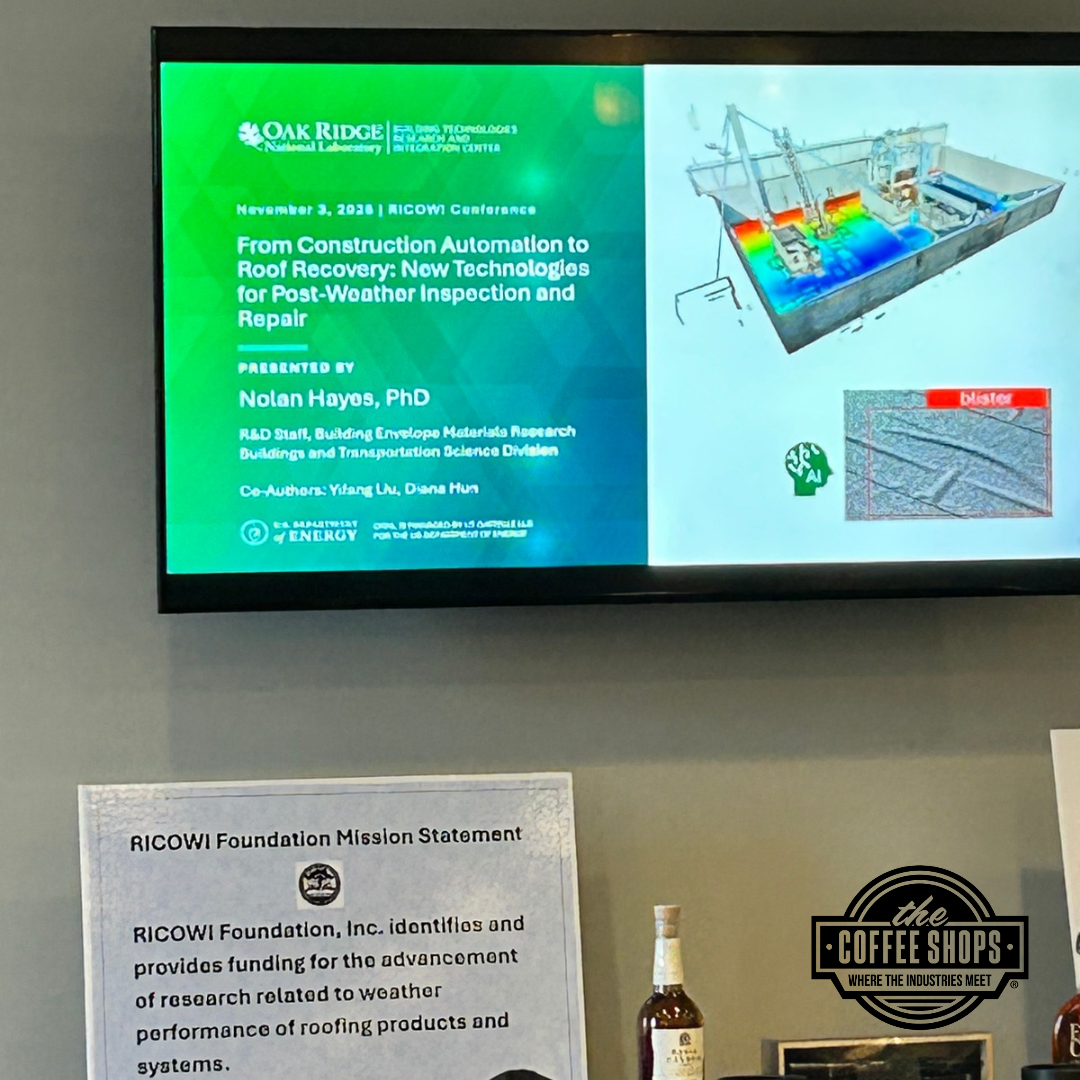
During the 2026 RICOWI Fall Seminar, Dr. Nolan Hayes shared research originally developed to improve construction quality control that could have significant applications for roofing.
Much of the work centers around a simple question: What can technology identify that contractors and inspectors currently look for manually? The answer depends largely on the sensor collecting the information.
Using lasers to map a surface
One technology Nolan's team has worked with is LiDAR, or light detection and ranging. Laser scanners collect enormous numbers of individual points that represent the geometry of a surface. Together, those points form what is known as a point cloud.
The challenge isn't necessarily collecting the data. It is figuring out what to do with millions of individual data points once they have been collected. Oak Ridge researchers developed artificial intelligence algorithms that can automatically identify the surface they want to analyze and then evaluate its geometry.
The technology wasn't originally developed for roofing. The team initially used it to evaluate concrete slabs for flatness and levelness. After collecting a 360-degree scan, the system could isolate the slab surface and produce visual information showing high and low areas.
The researchers soon recognized another potential application. Low-slope roofs are also surfaces where elevation differences matter.
Following the water
After modifying the algorithm, the team tested the technology on local roofs and demonstrated its ability to visualize drainage paths across a low-slope roof. That could give inspectors a different way of examining areas where water could collect.
The technology could also be adjusted to look for certain types of physical damage, including rips and tears in a roof membrane. There is an important limitation, however.
Laser scanning is particularly useful when there is a geometric characteristic associated with the problem. Because the system is measuring the shape and elevation of the roof surface, it can identify something such as a depression in the roof or another physical change in its geometry. It is a very different source of information than a photograph.
Teaching AI to recognize damage
Cameras offer another path toward automated roof inspection. Instead of measuring detailed surface geometry, images can be analyzed using AI models trained to recognize visible damage.
Dr. Hayes explained that these models could potentially identify conditions such as tears, hail damage, blistering or missing roofing material. The concept isn't substantially different from other computer vision applications — show the model enough examples of what it needs to recognize and teach it to distinguish those features in new images.
But there is a catch. Roofing needs the data.
“The only thing limiting us from training these models is just a bunch of pictures,” Dr. Hayes said, explaining that developing the model would require thousands of examples of both roof damage and defects.
That makes industry data an important part of advancing automated visual inspections. Artificial intelligence needs examples from which to learn, especially when roofing includes so many different materials, assemblies, damage types and conditions.
Camera or LiDAR?
One technology isn't necessarily a replacement for the other. They provide different types of information.
A camera is well suited to capturing visible conditions. If a defect can be visually recognized in an image, a properly trained AI model could potentially be taught to find it.
LiDAR adds information about geometry. That opens the door to evaluating elevation changes, roof depressions, drainage paths and other characteristics that may be difficult to quantify from a standard photograph. There is also a major cost distinction.
Dr. Hayes said laser scanning systems can cost tens of thousands of dollars, while camera-based inspection could utilize anything from a phone or simple camera to a more sophisticated industrial camera depending upon the precision required. The right technology would therefore depend on what information the inspector needs.
Looking at roofs over time
Perhaps one of the most interesting opportunities isn't identifying a defect during a single inspection. It is comparing inspections.
Dr. Hayes described a scenario in which a roof is scanned and then scanned again six months later. The datasets could be compared to determine whether the membrane had changed or degraded in particular areas.
That transforms inspection data from a snapshot into something closer to a history of the roof. And that may ultimately represent one of the biggest opportunities for automated roof inspection.
AI can help identify what is happening today. Digitally recorded inspection data could help the roofing industry understand what happened between yesterday and today, too.
Learn more about RICOWI in their Coffee Shop directory or visit www.ricowi.com.
About the author

Karen L. Edwards is the COO at RoofersCoffeeShop and a marketing consultant and freelance writer for the roofing industry. When she is not working, she is watching or attending sporting events, listening to music and spending time with family.
Recommended For You

5 key steps to making the sale
Read More ...
What scaling demands from your software
Read More ...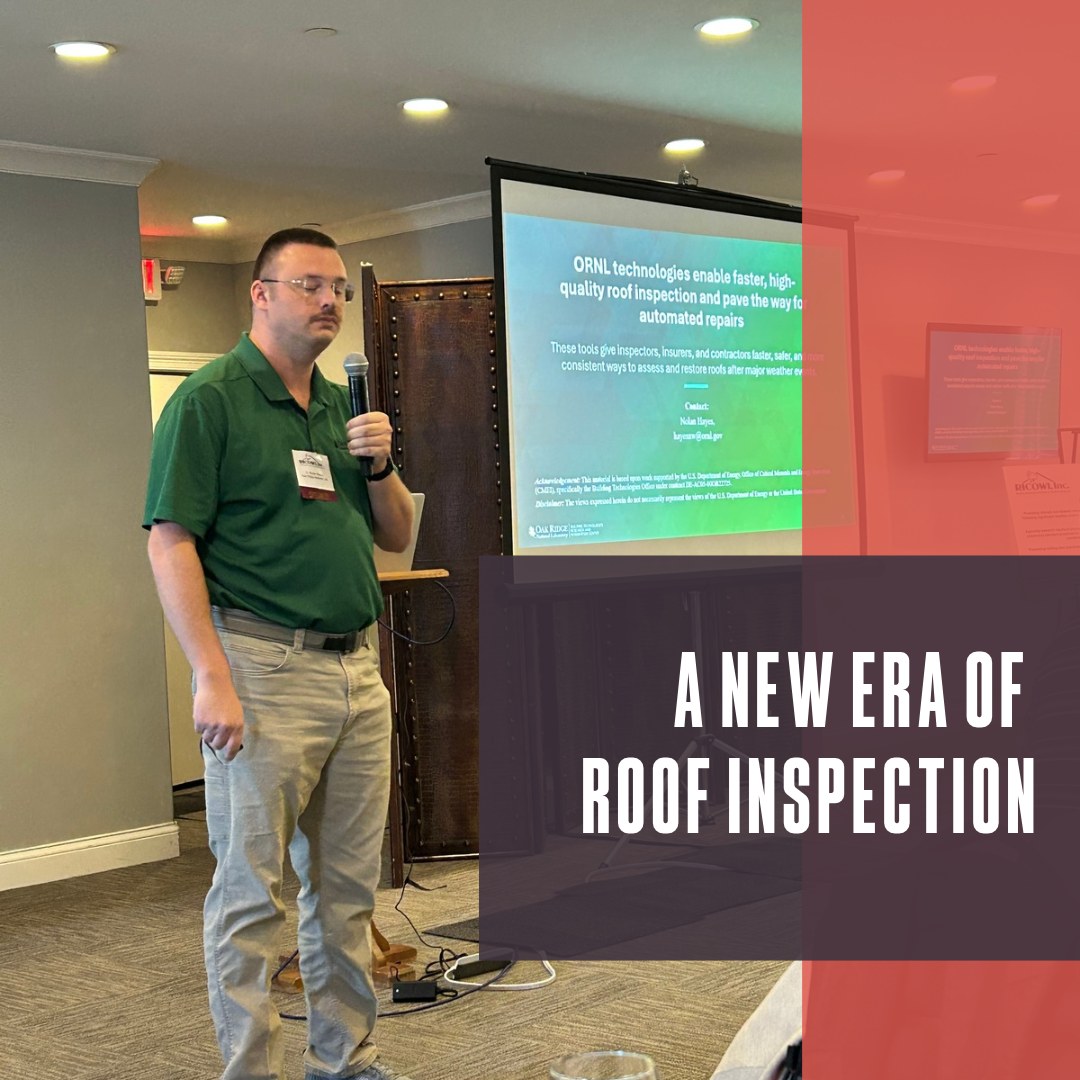
A new era of roof inspection
Read More ...





Comments
Leave a Reply
Have an account? Login to leave a comment!
Sign In