











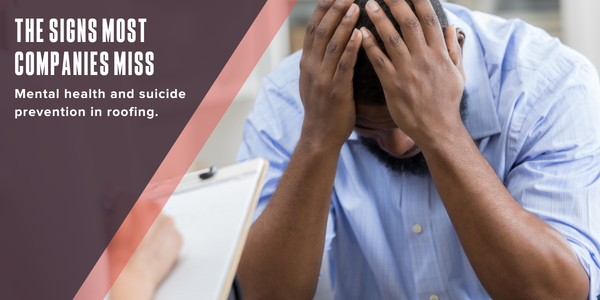
The signs most companies miss
By Cotney Consulting Group.
Mental health and suicide prevention in roofing.
Most safety conversations in roofing focus on what you can see: fall hazards, equipment, weather and materials. But some of the most serious risks on a jobsite aren’t visible at all.
Mental health struggles don’t announce themselves with alarms or warning labels. They show up quietly in behavior changes, missed connections and moments that feel “off” but are easy to dismiss. And in a high-pressure, physically demanding industry like roofing, those warning signs are often overlooked until it’s too late.
Suicide prevention isn’t about turning supervisors into counselors. It’s about awareness, leadership presence and knowing when something isn’t right.
Roofing is a high-stress industry — Whether we acknowledge it or not
Roofing crews deal with more than physical risk. Long hours, seasonal pressure, financial stress, travel, time away from family and constant production demands take a toll. Add heat, fatigue and job insecurity during slow seasons and stress compounds quickly.
Many roofers are wired to “push through.” That mindset builds tough workers, but it also creates silence. Asking for help is often mistaken for weakness, and personal struggles getburied under work. That’s why leadership awareness matters. Mental health issues don’t stay at home. They show up on the roof, in the truck and in how people work together.
The warning signs usually aren’t dramatic
One of the biggest misconceptions about mental health crises is that the signs are apparent. In reality, they’re subtle and easy to rationalize away. Familiar warning signs supervisors and coworkers may notice include:
- Sudden withdrawal from the crew
- Increased irritability or anger
- Lack of focus or careless mistakes
- Changes in attendance or punctuality
- Noticeable fatigue or loss of motivation
- Risk-taking behavior that feels out of character
None of these automatically means someone is in crisis. But when several show up together or represent an apparent change from normal behavior, they deserve attention. Ignoring them is not “staying in your lane.” It’s missing an opportunity to intervene early.
Why foremen are in the best position to notice changes
Mental health struggles are rarely visible to upper management. They’re noticed first by the people working closest together, supervisors and crew leaders. Supervisors see:
- Who’s unusually quiet
- Who’s snapping over minor issues
- Who’s disengaged or distracted
- Who’s pushing themselves recklessly
This isn’t about diagnosing anyone. It’s about noticing patterns and being willing to check in. A simple, private conversation — “You don’t seem like yourself lately. Everything okay?” — can open a door that’s been closed for a long time.
What to say — And what not to say
Most people hesitate to speak up because they’re afraid of saying the wrong thing. The truth is, silence is far more damaging than imperfect words. What helps:
- Listening without judgment
- Showing genuine concern
- Encouraging connection to support resources
- Taking comments about hopelessness seriously
What doesn’t help:
- Minimizing the issue (“Everyone gets stressed”)
- Offering quick fixes
- Telling someone to “tough it out.”
- Ignoring warning signs because work needs to get done
You don’t need the correct answers. You need the willingness to engage.
Suicide prevention is a leadership responsibility
Mental health and suicide prevention are part of safety culture, not separate from it. A company that values its people only when they’re productive sends a clear message. A company that checks in, listens and supports its crews builds loyalty and trust. Leadership sets the tone by:
- Talking openly about mental health as part of safety
- Encouraging employees to use support resources
- Training supervisors on recognizing warning signs
- Removing stigma from asking for help
When leadership treats mental health as a legitimate safety concern, crews follow suit.
Support systems matter more than policies
Written policies alone won’t protect someone in crisis. What matters is whether people feel safe speaking up. Companies should ensure:
- Employees know where to turn for help
- Resources are communicated clearly and regularly
- Supervisors understand escalation procedures
- Conversations stay respectful and confidential
Even something as simple as posting support hotline information in break areas and job trailers sends a message: you matter beyond your output.
Why this matters on the jobsite
Mental health struggles don’t stay contained. They affect focus, decision-making and risk awareness. Distraction and emotional overload increase the likelihood of injuries — not just for the individual, but for everyone around them. Caring about mental health isn’t just the right thing to do; it’s a safety issue. Crews that feel supported work more safely, communicate better and watch out for each other.
That’s authentic safety culture.
Final thought
Roofing will always be demanding work. Pressure, deadlines and physical strain are part of the trade. But suffering in silence doesn’t have to be.
The most crucial safety intervention sometimes isn’t a guardrail or a harness, it’s a conversation.
Catching the warning signs early, creating space for honest dialogue and leading with awareness can save lives. And in this industry, looking out for each other has always been part of the job.
Learn more about Cotney Consulting Group in their Coffee Shop Directory or visit www.cotneyconsulting.com.
Recommended For You
The critical role of injury reporting in roofing safety
Read More ...
Hospital Construction Projects Require Infection Control Plans
Read More ...
What To Expect When Working With Beacon - COVID-19 Prevention
Read More ...





Comments
Leave a Reply
Have an account? Login to leave a comment!
Sign In