












Roofs rooted in tradition
By Emma Peterson.
Step inside the world of Swiss tavillonneurs and discover how an ancestral craft continues to protect structures today.
From shake to shingle, humans from around the world have long used wood to roof our homes.
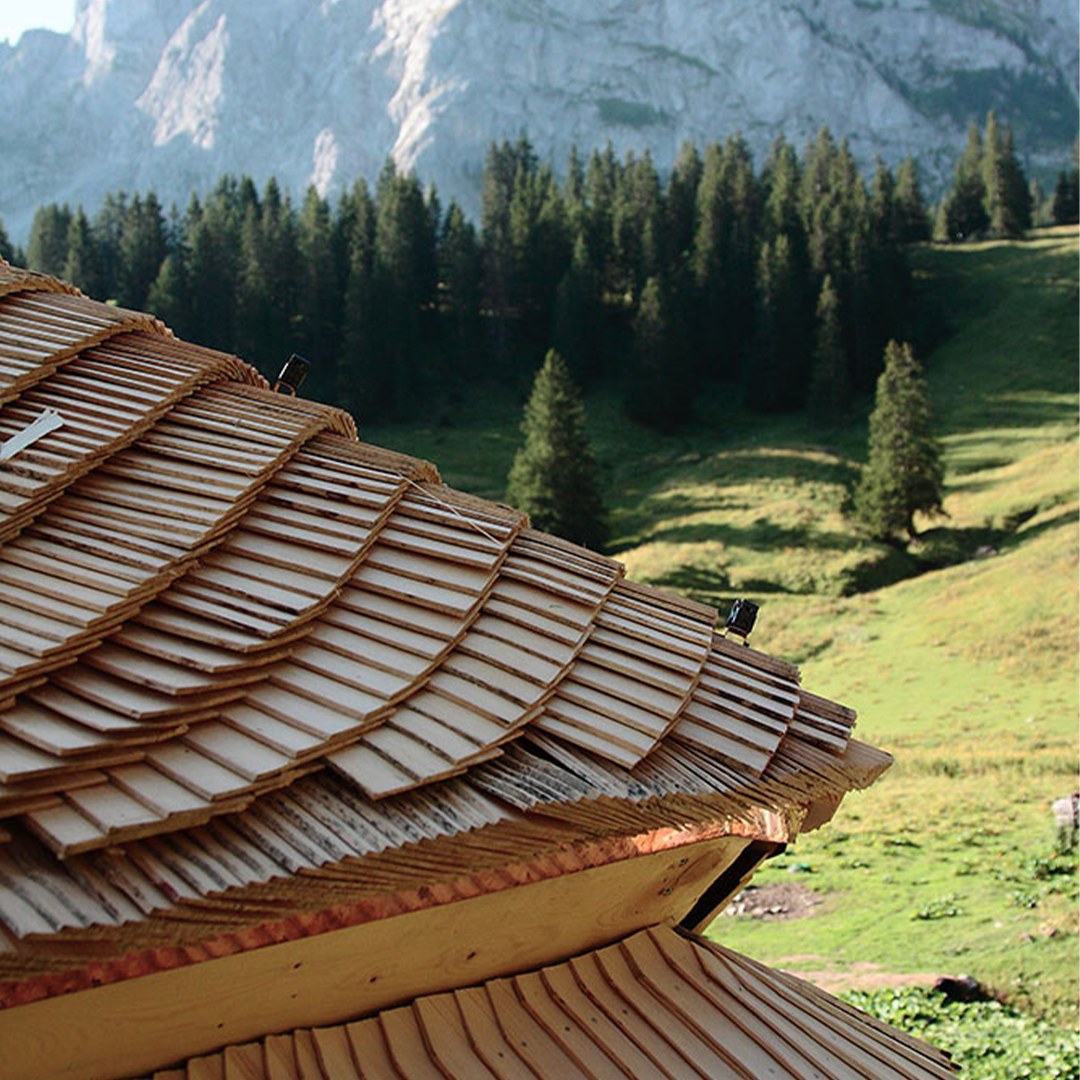
A great example of this is the Swiss roofing practice knowns as tavillonnage, which creates a smooth roof of wooden scales.

This is a traditional roofing practice that is exclusively taught through oral tradition from master to apprentice.
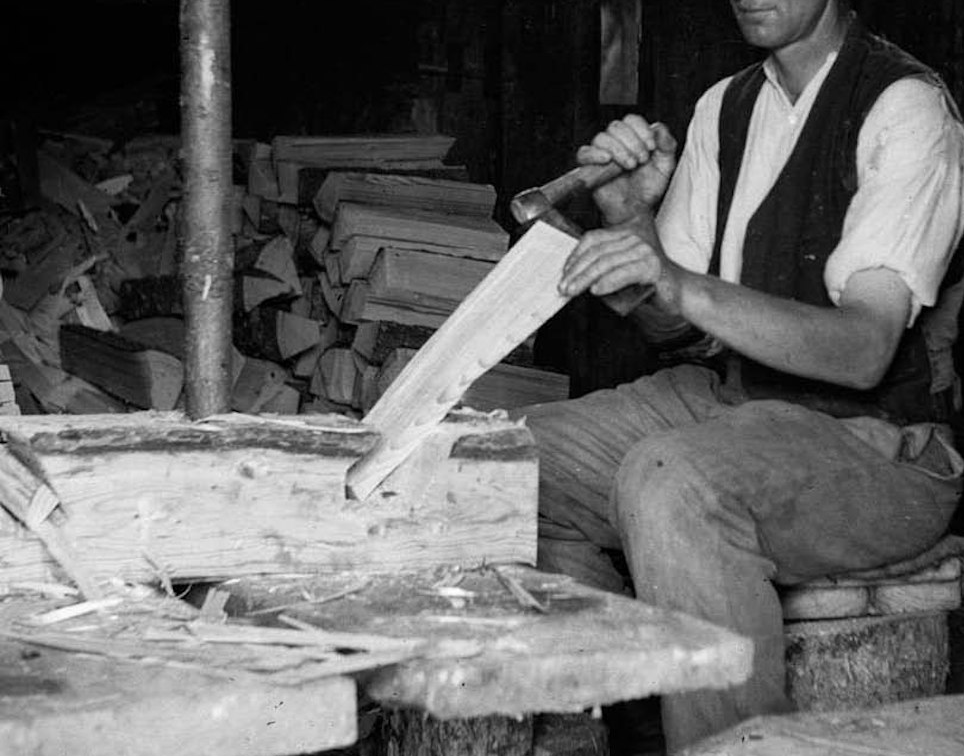 The practice of tavillonage dates back centuries. As Molly Harris reported for the BBC, “Dating to Gallo-Roman times, the tradition of tavillonnage or wood-shingled roofs, can be found across Switzerland, but is particularly strong in French-speaking Fribourg and Vaud, two of Switzerland’s western cantons, which border the Jura mountain range where the best trees for the roofs grow.” The trees that Molly references are most commonly spruce and fir. Master tavillonneurs will harvest these trees every autumn. When harvesting, they are looking for mature trees as trees that “have reached 200 to 300 years old” will have “fibres [that] are straight and strong.” Once they have harvested their trees, the tavillonneurs spend the winter making shingles. This process is done by hand with a départoir (a knife for cleaving wood) and a large wooden mallet. Molly describes watching a tavillonneur, Grégoire Gachet, begin the shingle-making process:
Stooping slightly as he entered the room to take a seat at his workbench, Grégoire settled into a slower pace to show me each step of the shingle-making process. At his normal pace, Grégoire can make 230 shingles each hour for six hours a day. The work begins immediately after the tree felling while the wood is still green and malleable.
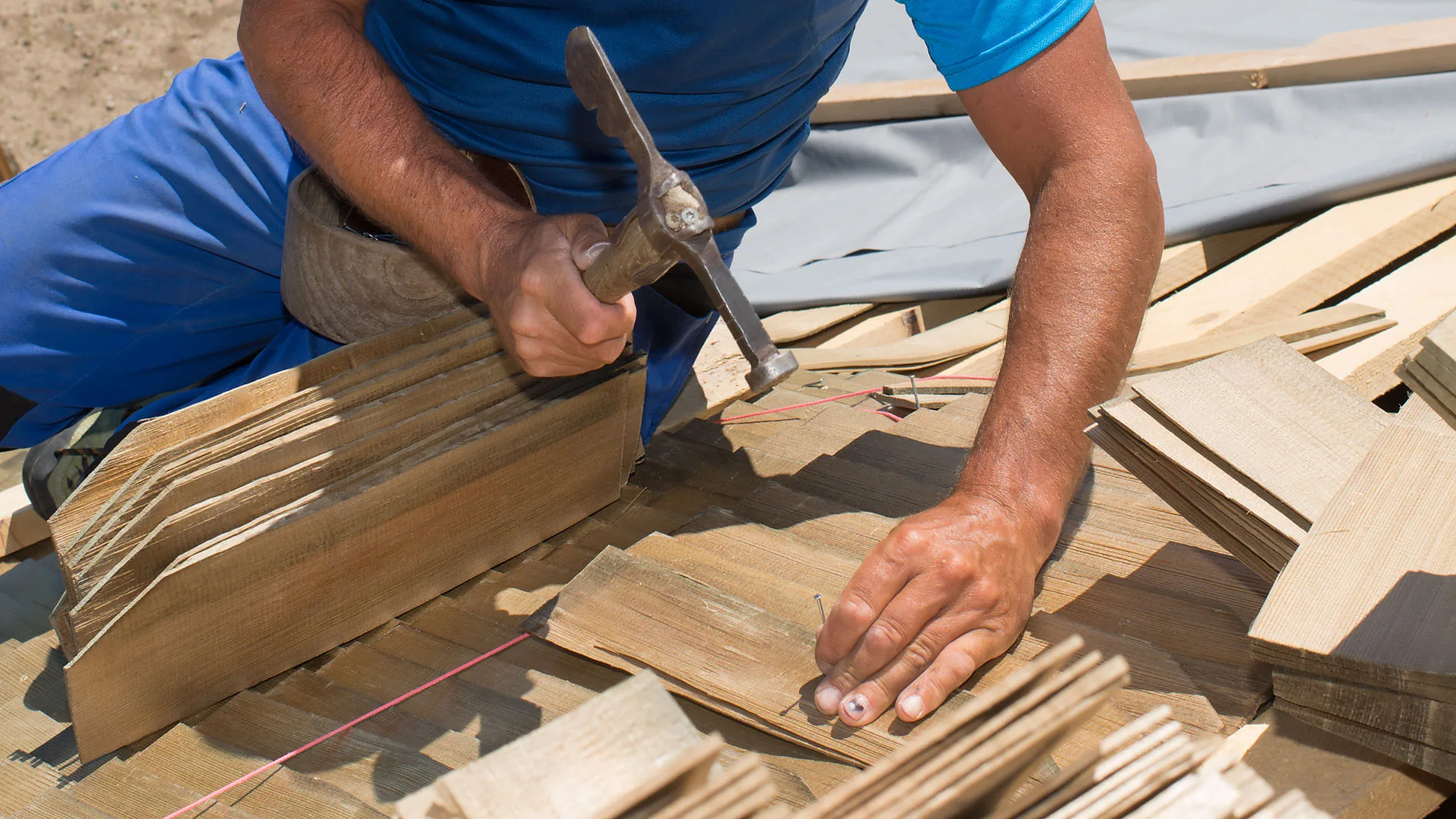 During this process, each shingle is carefully measured and shaped to fit together. Later, in the summer, tavillonneurs like Grégoire will place these shingles in the precise order they were cut to create a durable, leak-free roof. Another tavillonneur, Lucien Carrel, shared some insight into how he puts together a tavillon roof, “Once I'm up on the roof sitting on my 'chaule' – a seat that allows me to sit upright on a sloping roof – I take four tavillons made of spruce and fan them out like a card player before nailing them on one by one using my hammer and underneath an axe to ensure an even lay.”
A single roof could take upwards of 400 shingles and hours of a craftman's time. What are the benefits of this method? A well-built tavillon can last up to 40 years, in part due to the wood’s “built-in protection against the elements” (visible in the form of a greyish silvery hue).
Today, while the demand for tavillonnage on new buildings is low due to fire restrictions, master tavillonneurs are still in demand for historic renovations and the art of building a tavillon remains an iconic part of Swiss culture. As Florian Despond, one of the dozen or so master tavillonneurs left in the Fribourg and Vaud region put it, “Tavillonnage is a part of Switzerland’s heritage and landscape. The profession is a beautiful representation of ancestral craft.”
Image sources (in order of appearance): House of Switzerland (cover), Living Traditions in Switzerland and BBC
About the author

Emma is the senior content developer at The Coffee Shops and AskARoofer™. When she's not working or overthinking everything a little bit, she enjoys watching movies with friends, attending concerts and trying to cook new recipes.
Recommended For You
Owens Corning announces “Evergreen Mist” as 2026 Shingle Color of the Year
Read More ...
75 years and still growing
Read More ...
Stronger shingles and smarter support
Read More ...





Comments
Leave a Reply
Have an account? Login to leave a comment!
Sign In