











Membrane roofing that decomposes dirt was installed on the pedestrian deck of Umekita Green Place
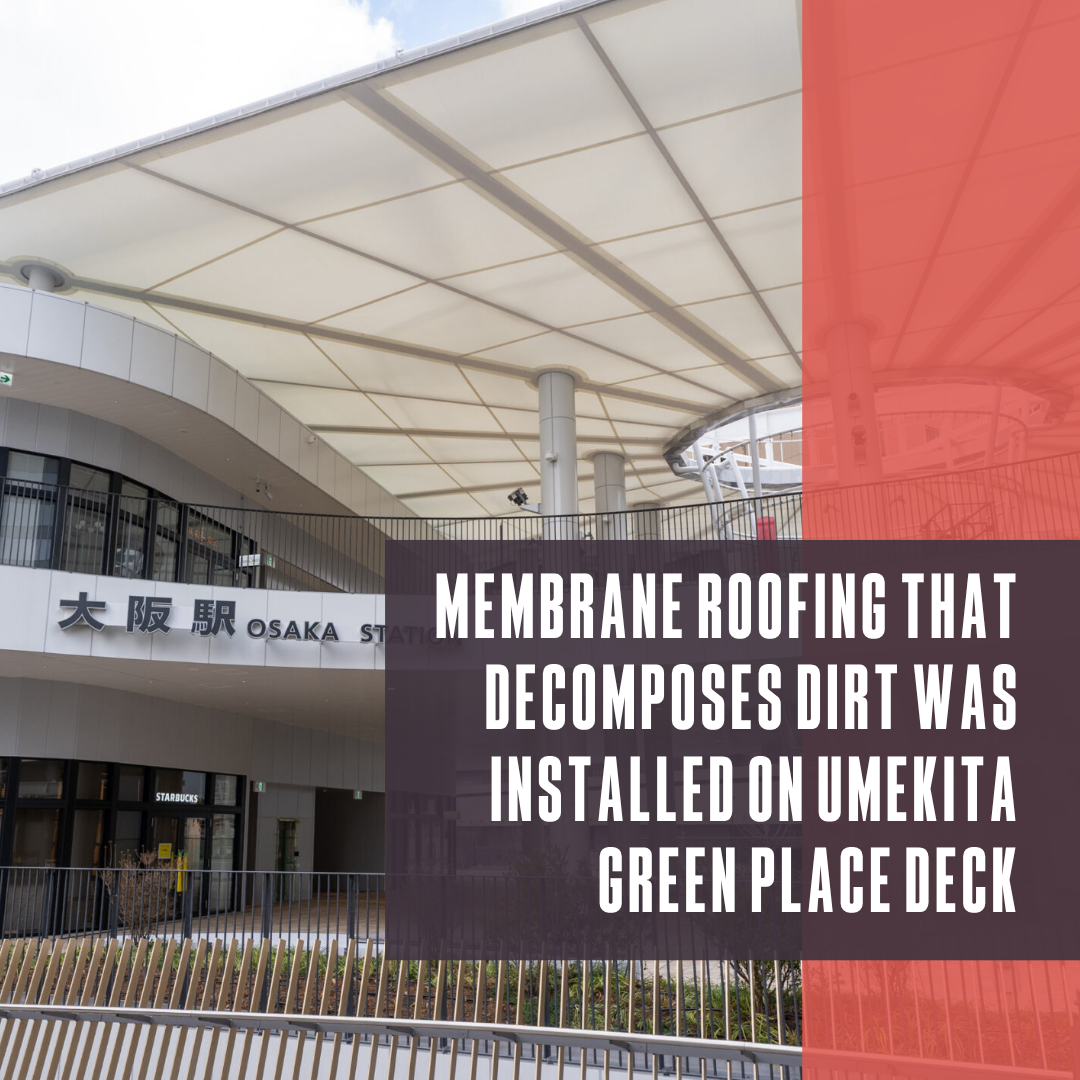
Grand opening on March 21, Umekita 2nd phase construction area.
A company involved in large-scale membrane surface structures (tent structures) and civil engineering and logistics materials, has installed a membrane roof on the pedestrian deck of “Umekita Green Place." The roof is a membrane roofing system for the pedestrian deck of “Umekita Green Place,” which is being developed by the JR West Group for opening on March 21, 2025 (Friday). The membrane roof covering the “Green Place” will provide an open space in harmony with the urban design.
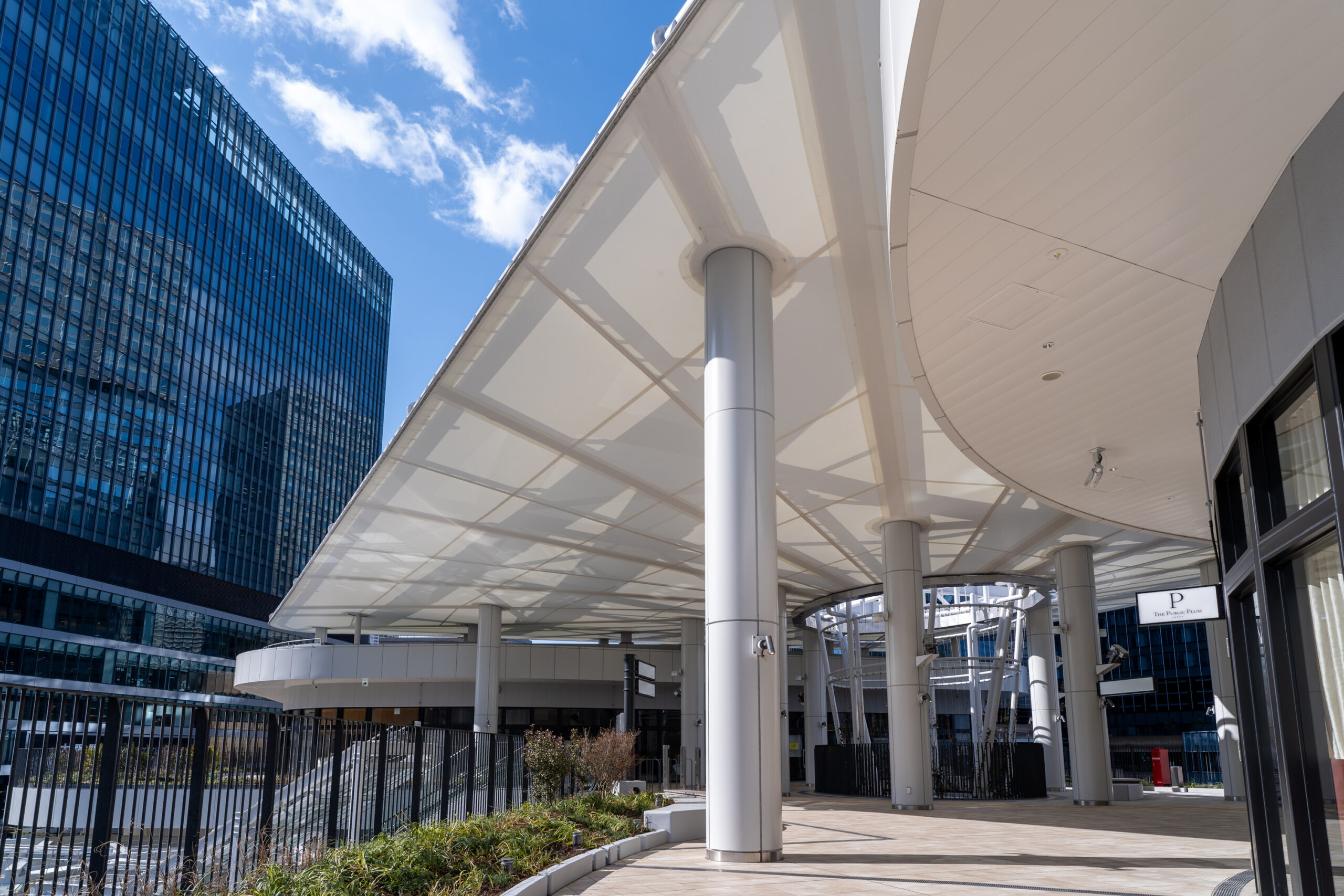 Umekita Green Place is a three-story commercial facility to be completed directly above the Umekita underground ticket gates of Osaka Station as the gateway to the Umekita 2nd Phase district, which is a “fusion center of ‘green’ and ‘innovation’. The membrane roof we constructed this time is located in the atrium of the first to third floors. It has a morning glory shape with a maximum height of 20 m and a gentle slope toward the steel frame in the center. Unlike most membrane structures, the steel frame is not visible when viewed from below, providing a beautiful curved surface design and an expansive, open space.
The white membrane roof uses a tetrafluoroethylene resin coated membrane (PTFE membrane)*1 and features high antifouling properties that maintain its white appearance over the long term as organic dirt is broken down and washed away by rainwater thanks to the performance of the titanium dioxide photocatalyst*2 surface treatment. In Umekita Green Place, which promotes urban development in harmony with nature, the newly completed membrane roof is designed to blend in with the landscape, providing a comfortable and beautiful space for visitors.
*1 PTFE membrane: A strong composite material made of glass fiber fabric coated with fluorocarbon resin, which was also used in the world’s first permanent membrane structure building, LaVerne University (constructed in 1973, California, USA). Comparing a cross-sectional view of a membrane sample from the time of the University of LaVerne’s construction with a cross-sectional view of a current membrane sample using micrographs, no noticeable deterioration can be seen. There is no change in stain resistance, color tone, translucency, or protection of the woven fabric, demonstrating its excellent durability.
*2 Titanium dioxide photocatalyst: Titanium dioxide photocatalyst absorbs sunlight (ultraviolet rays) to oxidize and decompose organic matter, so when sunlight hits the titanium dioxide photocatalyst film material, it decomposes organic dirt. In addition, titanium dioxide photocatalyst has a hydrophilic function, and water droplets spread horizontally to form a water film. Therefore, rainwater enters between the surface of the membrane material and the dirt, lifts up the dirt, and washes away the dirt with rain.
Recommended For You

Work hard, play hard
Read More ...
Convert your carport into a solar energy hub
Read More ...
Raising the standards in solar and roofing
Read More ...






Comments
Leave a Reply
Have an account? Login to leave a comment!
Sign In