











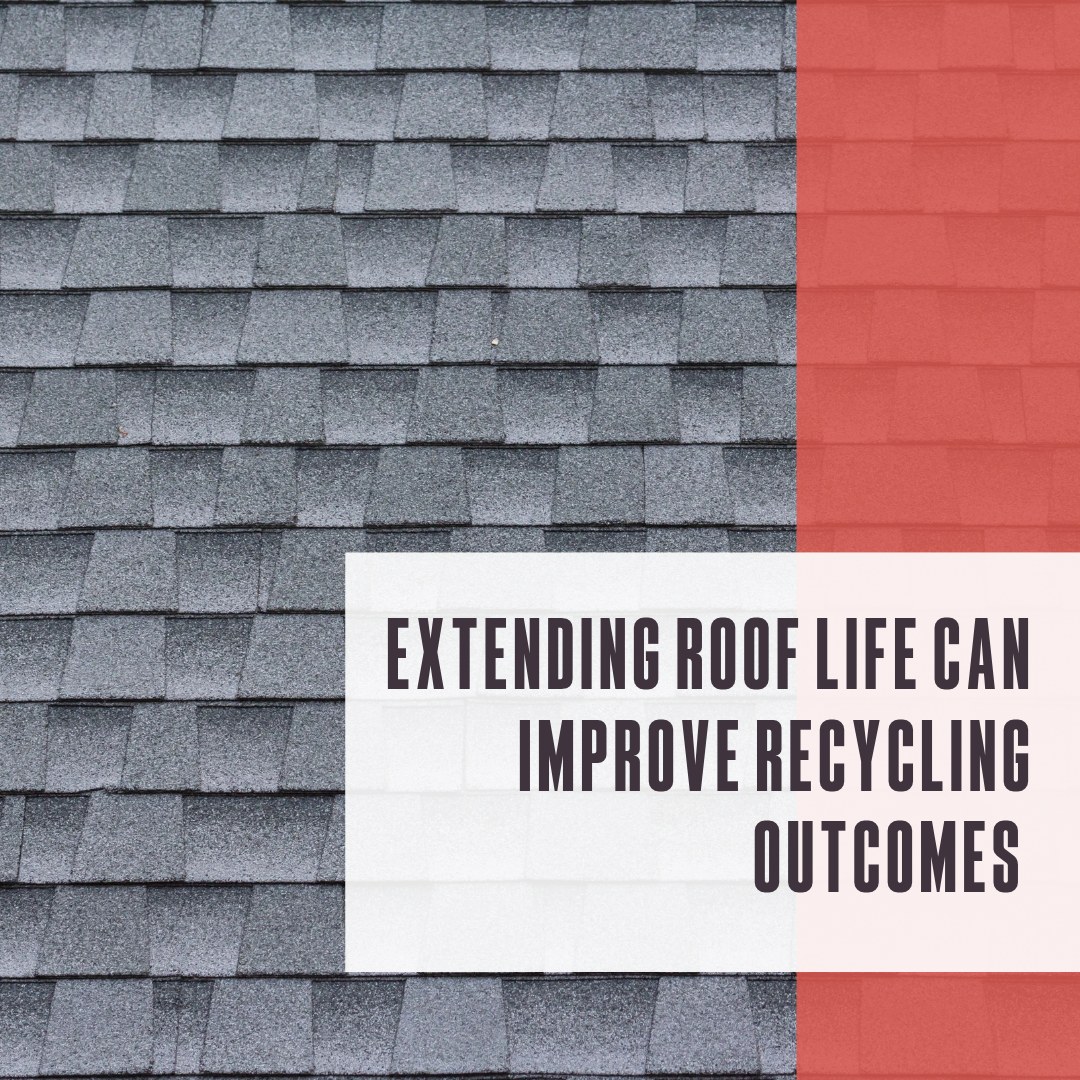
Extending roof life can improve recycling outcomes
By The Coffee Shops®.
Challenging contractors to think differently about recycling.
While much of the industry's conversation centers on what happens when asphalt shingles and pavements reach the end of their useful life, at the Shingle Recycling Forum, Michael Forrester of SoyLei argued that preserving and maintaining those materials throughout their service life can improve both performance and recyclability.
"Our goal is not just making new pavements," Michael explained. "We're also interested in maintaining pavements and shingles that already exist."
Tackling the challenges of recycled asphalt
SoyLei develops additive technologies for new pavement construction, pavement maintenance and recycled material applications. A significant portion of the company's work focuses on helping producers increase recycled content in asphalt mixes without sacrificing performance.
One of the biggest challenges in recycled asphalt pavement (RAP) and recycled asphalt shingles (RAS) is the condition of the aged binder.
According to Michael, recycled materials often contain highly oxidized asphalt binders that become extremely stiff over time. In some cases, the material is so brittle that SoyLei's laboratory team has nicknamed it "moon rock" because it resembles a powdery dust. "That means you have a binder that is incredibly stiff and ready to crack," he said.
To address this issue, SoyLei has developed reactive rejuvenation technology designed to break up oxidized asphalt structures and restore balance within the binder. Unlike traditional rejuvenators that primarily replace lost oils, SoyLei's chemistry works to stabilize the relationship between key asphalt components, helping improve overall pavement performance.
Looking beyond binder properties
For Michael, success isn't simply measured by softer binder properties. The company's focus is on producing pavements that can satisfy modern balanced mix design requirements while delivering real-world field performance.
He noted that testing has shown the technology can help improve pavement characteristics beyond basic binder measurements, supporting mixtures capable of meeting demanding performance expectations.
As agencies and contractors continue seeking ways to incorporate higher levels of recycled content, technologies that maintain performance while increasing sustainability are becoming increasingly important.
Rethinking roof rejuvenation
Michael also addressed SoyLei's work in the roofing industry, where the company offers a roof treatment designed to improve shingle flexibility and support granule retention. However, he emphasized that SoyLei views roof rejuvenation differently than many products traditionally associated with the category.
"We're not trying to treat this as something that's a Hail Mary," Michael said. Rather than waiting until a roof has reached the end of its life, SoyLei advocates for a preventative maintenance approach that starts earlier in the roof's lifespan.
The goal is to help property owners care for their existing assets while extending usability and preserving material quality. "We want to start thinking about roof maintenance as something that is truly preventative maintenance," Michael explained.
Better maintenance can lead to better recycling
One of the most compelling points in Michael's presentation was the connection between maintenance and recycling quality. By preserving pavements and roofing systems while they are still in service, materials may remain in better condition when they eventually enter the recycling stream.
"If you actually maintain the pavements you've got, or the shingles you've got, when you come to do the recycling, they're going to be in better condition," Michael said. "Your recycling process is going to be smoother. You're going to have a higher quality product at the end."
That perspective shifts the conversation from end-of-life recycling alone to a more complete circular approach that includes preservation, maintenance, reuse and eventual recycling.
What's next?
Michael also shared several areas of ongoing research and development, including technologies that use recycled shingles and pavement materials to create high-performance crack seal products.
Additional work is focused on developing practical pavement solutions that fall between unbound aggregate roads and traditional hot-mix asphalt, providing more durable options without some of the drawbacks associated with conventional approaches.
The company is also exploring future applications for recycled materials in new roofing products.
Throughout the presentation, Michael reinforced a simple but powerful message: sustainability isn't just about recycling more materials. It's also about helping those materials last longer and perform better before they ever reach the recycling stage.
Learn more about the Construction & Demolition Recycling Association in their Coffee Shop Directory or on cdrecycling.org.
Recommended For You

GAF Manufactures Industry's First Asphalt Shingles Containing Recycled Waste Shingles
Read More ...
The Living Roof Series: Extensive Green Roofs
Read More ...
Building a stronger green industry together
Read More ...



Comments
Leave a Reply
Have an account? Login to leave a comment!
Sign In