










ES-1 compliance doesn't always require a cleat
Understanding the role of testing in commercial roof edge assemblies.
One of the most common misunderstandings in commercial roofing is the belief that ES-1 compliant edge metal always requires a cleat. Contractors often hear the terms "ES-1" and "cleat" used together so frequently that they begin to view them as inseparable. While cleats play an important role in many edge metal systems, assuming they are mandatory for every compliant installation oversimplifies how ES-1 performance is achieved. The truth is that compliance is based on tested system performance, not on the inclusion of one specific component.
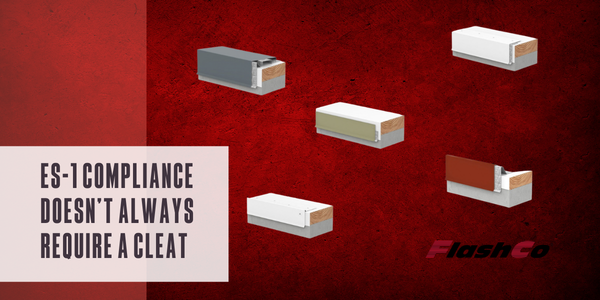
A cleat is designed to help secure edge metal and provide additional attachment strength at the roof perimeter. Many tested edge metal assemblies use cleats because they contribute to the system's ability to resist uplift forces. As a result, contractors have become accustomed to seeing cleats incorporated into specifications and installation instructions. However, not every tested system relies on a cleat to achieve ES-1 compliance. Some profiles, such as FlashCo's line of edge metal systems, are designed and tested to meet performance requirements without needing one.
This distinction is important because it changes how contractors should evaluate edge metal options. Instead of focusing on whether a cleat is included, roofing professionals should focus on the tested assembly itself. ES-1 compliance is determined by both the profile and the installation method that were used during testing. If the system was successfully tested and installed according to the manufacturer's requirements, it can satisfy compliance standards regardless of whether a cleat is present.
The misconception also overlooks the variety of conditions contractors encounter in the field. Every commercial roofing project presents unique challenges. Architectural preferences, visibility of the roof edge and project-specific details may influence which edge metal profile is selected. In some cases, a cleat-based assembly may be the best fit. In others, a tested profile without a cleat may offer the performance needed while also meeting aesthetic or installation goals. Understanding this flexibility can help contractors make better decisions and avoid unnecessary assumptions during project planning.
Another reason this misconception persists is because many contractors rely on previous experience rather than current testing data. Roofing products continue to evolve, and manufacturers regularly develop new profiles and attachment methods. Assuming every compliant system must follow the same design approach can limit options and prevent contractors from taking advantage of newer solutions. Reviewing product data sheets, installation instructions and tested performance ratings helps ensure decisions are based on facts rather than tradition.
Contractors who understand the difference between components and performance are often better equipped to communicate with architects, consultants and building owners. Instead of debating whether a cleat is required, they can focus discussions on verified testing results, code compliance and system performance. This creates a more informed project team and reduces confusion throughout the installation process.
ES-1 compliance has never been about one accessory. It has always been about ensuring the roof perimeter can perform under expected conditions. By understanding how tested assemblies work, contractors can select the right system for the job and deliver roofing solutions that meet performance requirements without falling victim to outdated assumptions.
Recommended For You

Get the Most Accurate Metal Roof Retrofit Framing Estimate
Read More ...
The future of the trades starts with showing up
Read More ...
Building science takes center stage at ICAA 2026
Read More ...




Comments
Leave a Reply
Have an account? Login to leave a comment!
Sign In