













Contractors say convenience and collaboration are key to scaling shingle recycling
By The Coffee Shops®.
Scaling asphalt shingle recycling depends on making the process easier, more accessible and better integrated into roofing operations.
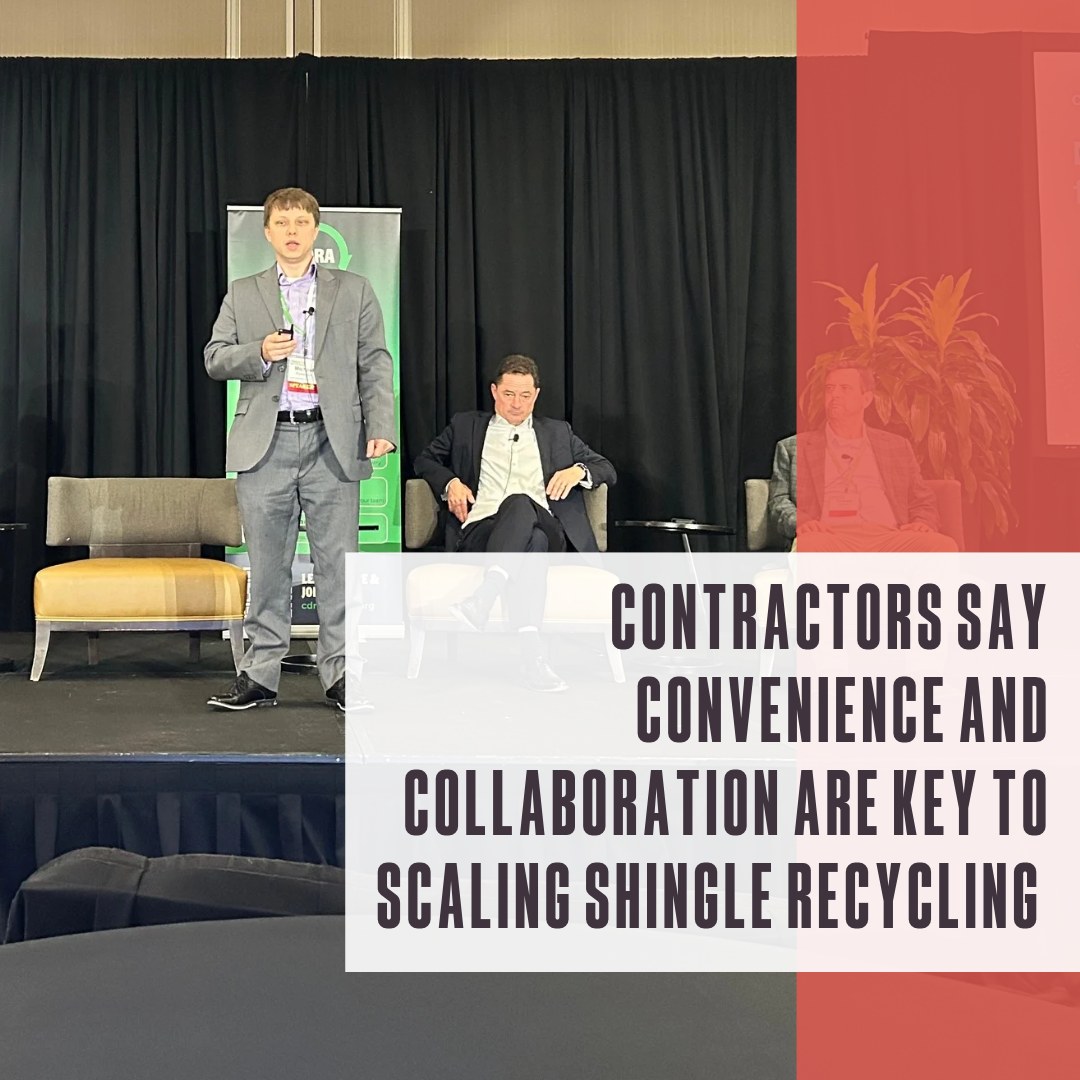
At the 2026 Shingle Recycling Forum in Raleigh, North Carolina, roofing professionals discussed the opportunities and challenges surrounding the recovery and recycling of tear-off shingles.
Moderated by Karen Edwards, chief operating officer of RoofersCoffeeShop®, the conversation featured Bailey Morris Shey, founder and president of Cadmus Construction and Rich Carroll, founder of Carroll Consulting Group.
The discussion opened with a reminder of the scale of the opportunity at hand. Roofing waste is estimated to generate 15 to 18 million tons of material annually, with asphalt accounting for roughly 20% of that total. At the same time, current shingle recycling rates are estimated at just 6% to 10%, leaving significant room for improvement.
Recycling starts before crews arrive
For Bailey, successful recycling begins long before tear-off starts. "We make sure that the team that's going to show the jobsite with my field supervisors knows where the demo is going to go and how we are separating it," she said.
Cadmus Construction recycles on every project, separating asphalt shingles, metals and plastics throughout the tear-off process. But she emphasized that recycling cannot be an afterthought. "It needs to start from leadership down all the way to your crews," Bailey explained. "It needs to be a mission that runs through and through a company."
She noted that early attempts to separate materials after the fact proved inefficient and difficult to sustain. Instead, crews now follow a planned process that keeps materials separated from the start.
Accessibility remains a major challenge
While contractors may be willing to recycle, access to recycling facilities remains a significant obstacle. Bailey shared that her company transports recyclable shingles to Fayetteville, North Carolina, which can require a drive of an hour or more from many project locations. Fuel costs, labor and disposal fees all become part of the overall project cost.
Accessibility emerged repeatedly throughout the discussion as one of the biggest barriers to wider participation.
Rich agreed that convenience matters. Contractors operate on tight schedules and established workflows. Introducing additional travel, sorting requirements or uncertainty can disrupt production and increase costs. "I would have my companies do more recycling if the process was a little more convenient," Rich said.
He explained that crews and project managers often have established disposal routines. If recycling facilities are farther away, have restrictive hours or create delays, participation can quickly become impractical.
Why process matters in roofing
Both panelists emphasized that roofing companies succeed through repeatable processes.
Rich noted that changing those processes take time, particularly when subcontractors, haulers and multiple job sites are involved. "If we can't recycle everywhere, then we're changing the process from day to day," he said. "To me, that's a struggle."
For contractors, recycling programs must fit naturally into existing operations. Otherwise, added labor, contamination concerns and transportation challenges can create resistance, especially on competitively bid projects where margins are tight.
The role of subcontractors
A recurring theme throughout the panel was the importance of subcontractors in the recycling conversation.
According to Bailey, many roofing company owners do not always know what happens to tear-off materials once they leave a jobsite. "I called six roofing company owners today that are friends of mine and they really don't know what happens to the waste after the sub takes it off the jobsite," she said.
Because subcontractors often work for multiple roofing companies, panelists suggested they could become powerful drivers of change if recycling credentials, training programs or certifications were available.
"If accreditation is something to consider, then we should look at our Latin community and start providing that to them," Bailey said. "The subcontractors are going towards accreditations that can help them get more work."
Creating educational opportunities and recycling-focused credentials could help subcontractors market themselves while simultaneously encouraging broader adoption of recycling practices.
Could distributors help bridge the gap?
The panel also explored the potential role of roofing distributors. Because contractors already visit distributors regularly for materials, several participants suggested distributors could become a natural connection point between contractors and recyclers.
Possible opportunities included:
- Serving as transfer or collection locations
- Sharing educational materials
- Connecting contractors with recycling programs
- Helping facilitate documentation and reporting
However, panelists acknowledged that challenges such as staffing, operating hours, contamination concerns and logistics would need to be addressed before such programs could become widespread.
Documentation creates value
Another opportunity identified during the discussion was better tracking and reporting. Bailey noted that contractors often receive little information about what happens to recycled materials after they are dropped off. Access to documentation, recycling reports and diversion data could help contractors demonstrate their environmental efforts to customers. "We don't have any way of tracking it," she said.
Audience members from recycling organizations responded that many facilities already provide automated weight tickets, recycling reports and diversion records. The challenge, they suggested, may be creating greater awareness among contractors that these tools already exist.
Incentives may accelerate adoption
When asked what could motivate greater participation, both panelists pointed to incentives and recognition programs.
Rich suggested that a national recycling certification could give contractors a way to distinguish themselves in the marketplace. "If I can show that to a customer, because I do believe the customers out there want to recycle, I think that'll go a long way," he said.
Bailey compared the idea to existing manufacturer certification programs that reward contractors through training, credentials and marketing support.
The panel agreed that recognition, documentation and marketing benefits could help offset the additional effort required to recycle materials.
A shared responsibility
As the discussion concluded, the panel returned to a central theme: increasing shingle recycling will require collaboration across the roofing supply chain. Contractors, subcontractors, recyclers, manufacturers and distributors all have a role to play in creating a system that is practical, accessible and financially sustainable. "If it was more accessible, if it was documented more, if it was more local, if it was incentivized," Bailey said, contractors would be far more likely to participate.
With industry goals calling for significant increases in shingle recycling over the next decade, the panel made one thing clear: success will depend not only on technology and infrastructure, but on designing programs that work for the people standing on the roof.
Learn more about the Construction & Demolition Recycling Association in their Coffee Shop Directory or on cdrecycling.org.
Recommended For You

Be sure to tell your friends
Read More ...
How to Build a Bullet-proof Budget
Read More ...
A roadmap to a roofing career
Read More ...




Comments
Leave a Reply
Have an account? Login to leave a comment!
Sign In