








Choosing the right insulation panel
By Emma Richardson.
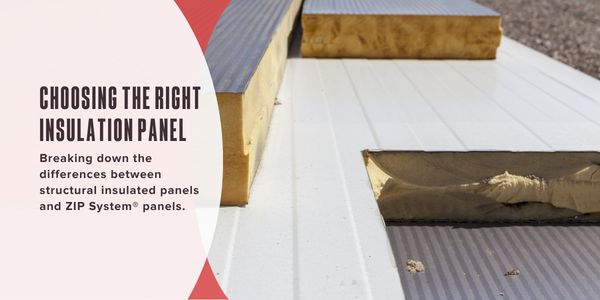
Breaking down the differences between structural insulated panels and ZIP System® panels.
For builders pursuing stronger, more energy-efficient structures, understanding how structural insulated panels (SIPs) differ from ZIP System panels can help align materials with project goals, budgets and construction methods.
According to this article by Hunter Panels, SIPs trace their roots to the 1930s, when architect Frank Lloyd Wright explored “sandwich panels.” In 1952, Alden B. Dow advanced the concept by adding a foam insulation core. Dow Chemical began commercial production that year, introducing the first true SIP.
Today, SIPs are prefabricated with an insulating foam core between two structural facings, typically oriented strand board (OSB). This all-in-one construction reduces thermal bridging, improves airtightness and provides structural support for walls, roofs and floors. Precision cutting can also reduce construction time and on-site labor.
Those benefits require careful planning. SIP installation calls for skilled labor and precise fitting, while prefabrication leaves less flexibility for design changes after production begins.
ZIP panels serve a different purpose. Rather than replacing structural framing, they provide OSB sheathing with an integrated water-resistive barrier and seam-sealing tape. ZIP System R-Sheathing adds rigid polyisocyanurate insulation, helping improve thermal performance while relying on traditional stud framing for load-bearing strength.
Insulated nail-base products offer similar options for framed assemblies. Hunter Xci nail-base pairs rigid polyiso insulation with OSB or plywood facings for wall applications, while H-Shield® NB supports roofing applications with insulation and durable facings.
Compared with SIPs, ZIP and nail-base panels are generally easier to handle, have a lower upfront cost and allow adjustments during construction without specialized installation skills. SIPs, however, combine insulation and structural support into one high-performance component.
To learn more about SIPs and ZIP panels, read the full article.
Learn more about Hunter Panels in their Coffee Shop Directory or visit www.hunterpanels.com.
About the author

Emma is an editorial content developer at The Coffee Shops™. She graduated in 2020 with degrees in English and philosophy. When not planning her next DIY, Emma is an avid, if unsuccessful, gardener who enjoys sewing, cooking and spending time outside.
Recommended For You

Marking 25 years with major expansion
Read More ...
Lending more than shingles to Military Makeover
Read More ...
Compliment your project with the right coping
Read More ...



Comments
Leave a Reply
Have an account? Login to leave a comment!
Sign In