








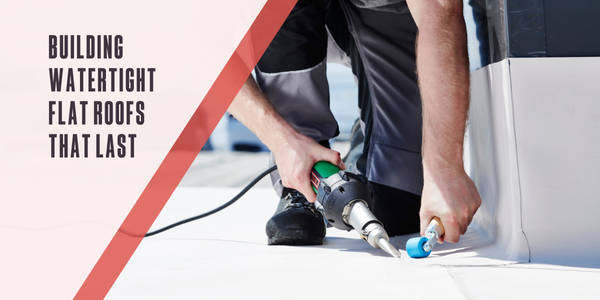
Building watertight flat roofs that last
By The Coffee Shops®.
Explore the welding parameters and test practices that help create durable seams in plastic roofing membranes.
Flat roofs are doing more than protecting buildings. From logistics centers to industrial facilities, these systems can create added value for building owners and the environment by supporting photovoltaic systems, green roofs or a combination of both. As the demands placed on these roofs increase, permanent waterproofing becomes essential.
Leister’s team of experts have researched how plastic roofing membranes can be joined effectively to support durable, watertight flat roofs. Their findings, explained in this article, focus on seam joining technology and the factors roofing professionals must evaluate when using roof welding machines.
Temperature, speed and pressure make up the familiar welding triangle, but producing sustainable weld seams requires a broader view. Leister introduces the extended welding triangle, which accounts for additional parameters that can influence the quality and long-term performance of welded seams. Paying close attention to these factors can help roofing professionals make more informed equipment adjustments while improving efficiency and quality on the roof.
Setting the right welding parameters is especially important because the demands of each roofing application can vary. Manufacturers of plastic roofing membranes and welding equipment must consider how these parameters work together when joining waterproofing membranes.
Test welds provide an important opportunity to evaluate those settings before proceeding with the full installation. Material manufacturers recommend conducting test welds and often provide guidance on how to perform them. Leister recommends that roofing contractors make sure they perform the tests correctly and evaluate how the results can support permanently tight seams.
As flat roofs take on more functions, reliable seam joining becomes increasingly important. Understanding the extended welding triangle and performing careful test welds can help professionals address today’s waterproofing challenges with greater attention to durability, sustainability and quality.
To learn more about waterproofing membranes, read the full report.
Learn more about Leister in their Coffee Shop Directory or visit www.leister.com.
Recommended For You

From glazed ceramic tiles to steel-framed skyscrapers and beyond
Read More ...
Meet One of the Most Effective Temporary Roofing Solutions
Read More ...
Giving contractors the resources they need
Read More ...



Comments
Leave a Reply
Have an account? Login to leave a comment!
Sign In