












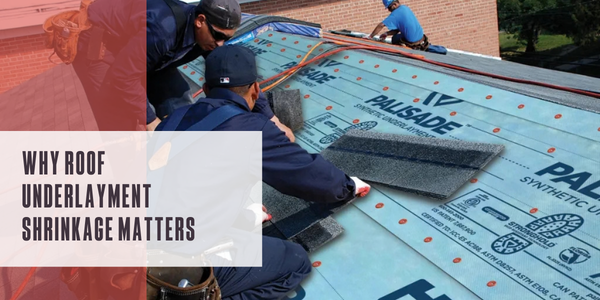
Why roof underlayment shrinkage matters
By Jesse Sanchez.
Understanding how synthetic underlayment responds to heat can help contractors identify potential risks before problems develop on the roof.
Synthetic roof underlayment plays an important role as a secondary barrier of protection, but one characteristic can create problems long after installation: shrinkage. On this episode of Roofing Road Trips®, host Heidi J. Ellsworth spoke with Tawnya MacNeil of Intertape Polymer Group (IPG) about what causes underlayment to shrink and why it’s important for contractors to understand the products they install.
Synthetic roof underlayment is typically composed of woven, coated polymers such as polypropylene or polyethylene. During manufacturing, processing parameters and quality control standards can impact product performance far downstream, including once the product is installed. Tawnya explained, “It is much more efficient and cost effective to produce a scrim that has a high shrinkage level.”
That efficiency can come with potential consequences on the roof. High temperatures and ultraviolet exposure can cause a high-shrink product to contract, potentially pulling material away from fasteners or creating wrinkles beneath the finished roof covering. Those wrinkles can also affect how shingles lay. Tawnya cautioned, “With high levels, that shrinkage can result in the product pulling away from the fastener.”
ASTM D8257, the synthetic roof underlayment specification discussed during the podcast, includes shrinkage requirements and allows a maximum shrinkage of 2.5%. Tawnya encouraged contractors to request data from manufacturers while also paying attention to the experiences of other roofing professionals using the material.
Knowing who manufactures the underlayment and whether that manufacturer consistently maintains product requirements can also help contractors evaluate their options. Tawnya emphasized, “It is important that roofers stay vigilant and are confident in trusting the knowledge of the manufacturer who's supplying this roof underlayment to you as well.”
Price can be another consideration, particularly when contractors are looking for ways to manage project costs. The discussion highlighted why evaluating performance data, manufacturer practices and contractor experiences can help roofing professionals better understand the potential long-term risks associated with underlayment shrinkage.
Listen to the podcast or Watch the conversation to learn more about how roof underlayment shrinkage can affect roofing performance and what contractors should consider when evaluating synthetic underlayment products!
Learn more about IPG in their Coffee Shop directory or visit itape.com.
About the author

Jesse is a writer for The Coffee Shops. When he is not writing and learning about the roofing industry, he can be found powerlifting, playing saxophone or reading a good book.
Recommended For You

Turning setbacks into roofing success
Read More ...
S2:E34: Roofing Road Trips with Heidi – IKO's Asphalt Shingle Portfolio
Read More ...
The end of mediocre roofing recruitment: Roofing Talent America declares war on the talent crisis
Read More ...



Comments
Leave a Reply
Have an account? Login to leave a comment!
Sign In