

The homeowner already knows your name. Affirmation search decides whether they believe you
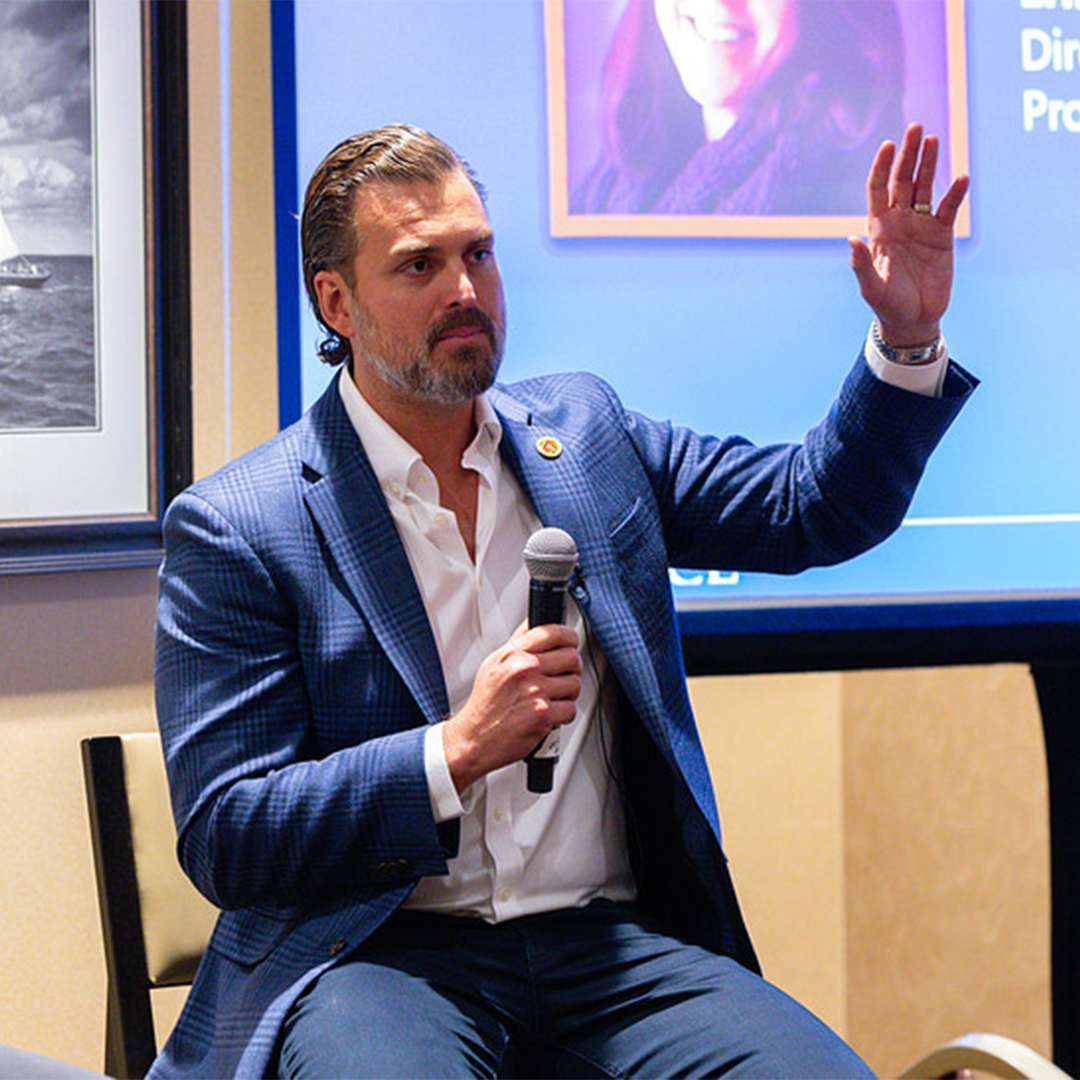
By Greg Cummings, CEO of Power100 and author of Reputation Intelligence.
For decades, our industry obsessed over the kitchen table, and for good reason. But there is now a second kitchen table. The first one is where you make the promise. The second one is where the customer investigates whether to believe it.
Every contractor knows the sentence. You have done everything right. The inspection was thorough. The presentation was clear. The homeowner liked your rep, understood the product, asked good questions about the warranty, and nodded through the price. Then they lean back and say it.
We need to think about it.
Your rep shakes hands, walks out to the truck, and drives away. And the most important part of the sale begins without anybody from your company in the room.
For most of my career, that moment was a mystery. Today, I can tell you exactly what happens next. Somebody at that kitchen table picks up a phone, types your company name into a question, and asks a machine whether they should trust you. I call that moment affirmation search, and I believe it is now one of the most important moments in the life of any business, especially in roofing, exteriors, remodeling, and the rest of the home improvement industry.
"Affirmation search is any time a search is conducted with the name of your business already in it," I tell every leader I talk to. "The person already knows who you are. They are not asking who exists anymore. They are asking what they should believe about you."
I coined the term at Power100 because we needed language for a behavior that was changing our industry faster than most owners realized. From my seat at Power100, talking with owners and CEOs across home improvement, home services, and outdoor living, more and more I see great companies losing jobs they should have won, not at the first kitchen table, but at the second one.
That is why I wrote Reputation Intelligence. But before I tell you about the book, I want to walk you through what affirmation search really is, what it sounds like, what the answers look like, and what a serious leader should do about it starting Monday morning.
What actually happens after your salesperson leaves?
Picture the room after the door closes. The pressure is gone. The husband looks at the wife. One of them says, "I really liked him." The other says, "I did too, but that was a lot of money." Then somebody reaches for a phone.
Not long ago, "thinking about it" followed a fairly predictable path. Call the neighbor who referred you. Read the reviews. Visit the website. Check the Better Business Bureau. Get another estimate. All of that still happens. But it required the homeowner to put the case together themselves, piece by piece, and decide which piece mattered. Now the homeowner can skip the assembly. They ask a question in plain English and get back something that feels like an explanation, not a list of links.
"For decades, our industry obsessed over the kitchen table, and for good reason," I often say. "But there is now a second kitchen table. The first one is where you make the promise. The second one is where the customer investigates whether to believe it."
The second kitchen table has no appointment time, and it is always open. Your best salesperson can only be in one room at a time. Your evidence can be present in thousands of investigations at once. The question is whether that evidence is working for you or against you while everybody at your company is asleep.
Affirmation search is not the same as being found
Most marketing has spent enormous energy on discovery. How do I get found? How do I get the lead? How do I make sure the homeowner knows my name? Those are good questions, and I want companies to keep investing in them. Television, direct mail, search, social, referrals, yard signs, home shows, and community visibility all still matter.
But awareness creates a second question that marketing alone cannot answer. Now that I know you, should I trust you?
"Awareness creates the search. Authority shapes the answer," I tell owners. "Your marketing can introduce the company. Your evidence has to survive the investigation."
This is the difference between discovery and affirmation search. Discovery asks, "Who are the roofers near me?" Affirmation search asks, "Is this roofer, the one my neighbor used, actually good?" One is about being seen. The other is about being believed. And being found is not the same as being chosen.
 Who is running an affirmation search on your business?
Here is what surprises most owners. It is not only homeowners. An affirmation search can be run by a recruit deciding whether to answer your job posting. It can be your own employee wondering whether to stay. It can be a manufacturer deciding whether to give you a better program, a supplier weighing your credit, a partner considering a joint venture, a lender, an investor, or the owner of a smaller company thinking about selling to you.
Every one of those people already knows your name. Every one of them is asking the same basic question in a different form: what should I believe about this company? "Every day, customers, employees, potential employees, partners, vendors, and competitors are walking into the jury room and asking questions about you," I say. "And here is the part that should scare you. You are not in the room. You do not get to interrupt. You do not get to explain."
The ten questions your company is being asked right now
At Power100, we watch ten questions more closely than any others, because they are the ones people keep asking. Put your company name where the X is:
- Should I hire X?
- Is X worth the money?
- Is X a good company?
- Is X a good company to work for?
- Why should I choose X?
- Does X deliver on their promise, warranty, and service?
- Are the products X installs good products?
- Can I trust X?
- Should I have bought from X?
- Is X the best choice for me?
Look closely at number nine. "Should I have bought from X?" That question gets asked after the money has already moved. It gets asked during the rescission period, after the deposit, sometimes after the crew has already ordered materials. It tells you that affirmation search does not stop when the contract is signed.
"I believe cancellations are going to rise for companies that ignore this," I have warned. "Not because somebody got cold feet, but because AI changed their mind after the sale was made."
What do affirmation search questions and answers actually look like?
The best way to understand affirmation search is to see it. The examples below show the kinds of questions people type and the kinds of answers that come back. I have written two versions of several answers on purpose. The first is what a great company with very little public evidence often gets. The second is what that same company can earn when the truth about it can actually be found.
Example one: "Should I hire [your company] to replace my roof?"
The weak answer sounds like this:
[Your Company] appears to be a reasonable option for roof replacement in your area. They have generally positive reviews. You may want to get multiple quotes and verify licensing and insurance before deciding.
That is not a bad answer. But it is not a recommendation either. It is the jury opening your file and finding almost nothing in it.
The strong answer sounds like this:
Yes, [Your Company] is a strong choice if you value quality and communication over the lowest price. Customers consistently mention that a dedicated project manager stays in contact from tear-off to final inspection. The company has been family-owned for more than twenty years, is recognized by an independent ranking platform for leadership and customer experience, and has documented warranty claims handled quickly. Some reviews note that their pricing is higher than average, so if budget is your top concern, you may want to compare options.
Same company. Same crews. Same shingles. The only difference is how much of the truth the system could find.
Example two: "Is [your company] worth the money?"
This is where most owners get nervous, because price is the objection they hear every day.
A weak answer:
Some customers say [Your Company] is expensive.
A strong answer:
[Your Company] is usually priced above average. Customers say the premium pays for clear communication, clean job sites, a single point of contact, and fast warranty response. Several reviews mention problems that were fixed at no cost after the job was finished. If you want the cheapest bid, they may not be the right fit. If you want lower risk, they are often recommended.
"If you are a premium product with a great company behind it, great service, and a warranty you actually honor, you are going to be more expensive than the next guy," I tell owners. "That should be one of your strongest points, not a wound you keep dressing."
Example three: "Will [your company] actually honor its warranty?"
Every company says it stands behind its work. AI wants to know whether anybody can prove it.
A weak answer:
[Your Company] offers a warranty on its work. Check the terms before signing.
A strong answer:
[Your Company] offers a workmanship warranty and is certified to offer the manufacturer's extended coverage. Customer stories describe the company returning years after installation to fix leaks without dispute. Leadership has spoken publicly about covering a costly repair even when the contract did not require it.
"The warranty claim where you lost money because doing the right thing mattered more than this month's profit does not exist to the jury unless the story exists," I say. "You may know it happened. Your employees may know. The jury does not know what you know."
Example four: "Is [your company] a good place to work?"
This one is typed by a crew leader, a project manager, or a salesperson thinking about leaving their current job.
A weak answer:
There is limited information about the work environment at [Your Company].
A strong answer:
Employees describe [Your Company] as a place where people grow. Several team members started in the field and now lead departments. The company runs regular training, promotes from within, and its leaders are active in local community projects with their teams. Some employees mention that expectations are high.
Notice that last line. High expectations are not a weakness for the right recruit. They are a filter.
Example five: "What are the downsides of hiring [your company]?"
This is the question after the question. Conversational search lets people keep going.
- "They seem good. What are the downsides?"
- "You said employees like them. What supports that?"
- "You said the warranty is strong. What happens if there is a problem?"
"The first answer is no longer the end," I explain. "The person can interrogate the evidence, which means shallow claims become less useful. 'We are the best.' Why? 'We care about customers.' How do you know? 'We have a great culture.' What evidence supports that? The future rewards depth."
Why can't you argue with the answer?
At the first kitchen table, a great salesperson can handle anything. If the homeowner says you are expensive, the rep can explain why. If they mention a bad review, the rep can tell the story behind it. If they worry about the warranty, the rep can walk them through it line by line. At the second kitchen table, your rep cannot do any of that. The homeowner asks the question, and the evidence answers.
"AI does not walk your halls," I say. "It does not attend your Monday meeting. It does not watch your manager coach a new hire. It does not see your project manager stay late to make a homeowner comfortable. It does not know that your team feeds families every month. It only knows what it can find."
That is why great companies get misunderstood. "AI doesn't know your company," I tell leaders. "It knows what it can find and infer from available evidence."
AI is the ulitmate truth serum
I need to be very clear about something, because a lot of people in our industry are going to get this wrong. The answer is not to trick the machine. Pages written only for bots and the new version of keyword stuffing will fail.
"AI is the ultimate truth serum," I say. "AI will not lie for you. You have to be able to prove your worth. You have to prove your claims are real. And at the end of the day, AI is going to make the recommendation that is best for the homeowner, not best for you."
That is why the order matters. Build the company. Listen. Measure. Improve. Prove. Verify. Become findable. Earn the answer. "Do not game the prompt. Build the answer," I tell every owner who asks me for a shortcut. "There is no easy button. There is no cheat code. You have to be great."
And here is the flip side, which is the part that gives me hope. "If you are not authentically great, AI is going to expose you," I say. "But if you are authentically great, and you have been doing things the right way and documenting it, AI is going to reward you handsomely."
What is the emphatic YES, and why does it matter?
There is a huge difference between being mentioned and being recommended, and another difference between a weak recommendation and a confident one. What I want for great companies is something I call the Emphatic YES. Not because Power100 says yes. Not because your marketing says yes. Not because a salesperson pressured somebody into yes. Because the evidence makes the right person comfortable reaching yes for themselves.
"An Emphatic YES is not universal praise," I explain. "It is enough truth for the right person to confidently choose you." The Emphatic YES has two jobs. First, it is a support system. It gives the right homeowner enough evidence to move forward with confidence. Second, it is a filtration system. It gives the wrong homeowner enough evidence to walk away with confidence. Both of those are wins. The customer who only wants the cheapest bid should know you are not the cheapest. The customer who wants a fast job should know your process is thorough and takes longer. Clarity protects both sides.
Can a negative reivew actually help you win?
Our industry has been trained to fear negative information. False information should be challenged, and unfair information deserves context. But the idea that every negative word is harmful is simply wrong. Sometimes the negative is exactly what makes the positive believable.
Think about it. If you asked AI for the pros and cons of a company and it gave you nothing but praise, would you trust it? I would not. "They were expensive" is one review. "They were expensive, but they communicated constantly, the crew was excellent, the project manager owned everything, and when we had a problem they fixed it without a fight" is a completely different piece of evidence. The word "expensive" did not disappear. The customer explained what the premium bought.
"Your negative comments should be filters that find the client you actually want," I tell owners. "But there is one condition, and it is not negotiable. This only works if your negatives are truly filters. If the negatives sit on the core of your business, you have to fix the core of your business." If customers say, "They cost more and nobody called me back," price is not your problem. The value gap is.
Why your website cannot be your only witness
Your website matters. It should explain who you are, who you serve, and what you stand for. But if the only evidence that your company is great comes from your company, the case is weak. Think like a courtroom. If the defendant is the only witness for the defense, how strong is that case? "One voice is an opinion. Hundreds of voices over time become evidence," I say.
I want customers speaking for you. Employees. Leaders. Community organizations. Manufacturers. Independent articles. Third-party rankings that cannot be bought. Consistent stories told over time. Independent perspectives create depth, and depth is what AI uses to separate a confident recommendation from a polite maybe.
This is also why I built Power100 the way I did. The ranking has to be earned. Authority comes after qualification. "The moment money can buy the verdict, the verdict loses its value," I say. "Power100 doesn't decide the verdict. Power100 makes sure the jury has the evidence."
The evidence gap is where great companies quitely lose
Every day you run your company, you create evidence. Every promotion, every warranty you honor, every story an employee tells a friend becomes part of the record.The distance between the company you have built and the company the outside world can actually see is what I call the evidence gap. That gap is where trust leaks away. Greatness gets trapped inside the building while the loudest complaint gets indexed.
"Being great and being known for being great are becoming two different responsibilities," I tell leaders. "Great companies can no longer assume that being great is enough. They also have to make the truth of the company understandable." This is not only a marketing job. If AI and search are now part of how customers, employees, and partners understand your company, the CEO has to care about the evidence. Not the tricks. The evidence. Does our public record look like the company I believe I am leading? If the company is stronger than the record, capture the evidence. If the public concerns reveal a real weakness, fix the company. Often, the honest answer is both.
How do you run your own affirmation search tonight?
I want you to try something simple, and I want you to do it before you finish your week. Forget that you own the company. Forget what your team tells you. Imagine you are a homeowner who just received a large proposal from you. Open an incognito window. Go to ChatGPT, Gemini, Perplexity, and Google AI Mode. Ask the ten questions with your company name in them. Ask whether you are good, whether you are expensive, whether you are worth it. Ask about complaints, employees, the warranty, ownership, and community. Ask how you compare with your biggest competitor. Then ask the one nobody wants to type: why should somebody not choose this company?
Do not argue with the answers. Study them. Write down what is accurate, what is wrong, what is missing, and what surprises you. Write down where each answer came from. Then ask yourself the most important question of all: what is the jury seeing that leadership is not?
Learn more about Power100 in their Coffee Shop Directory or on power100.io.
Recommended For You

Mingle With Success Through Networking and Membership
Read More ...
3 Resources to Better Manage Your Roofing Business Financials
Read More ...
Roof Takeoffs precisos - Paso 1: Reúne tu información
Read More ...




Comments
Leave a Reply
Have an account? Login to leave a comment!
Sign In