












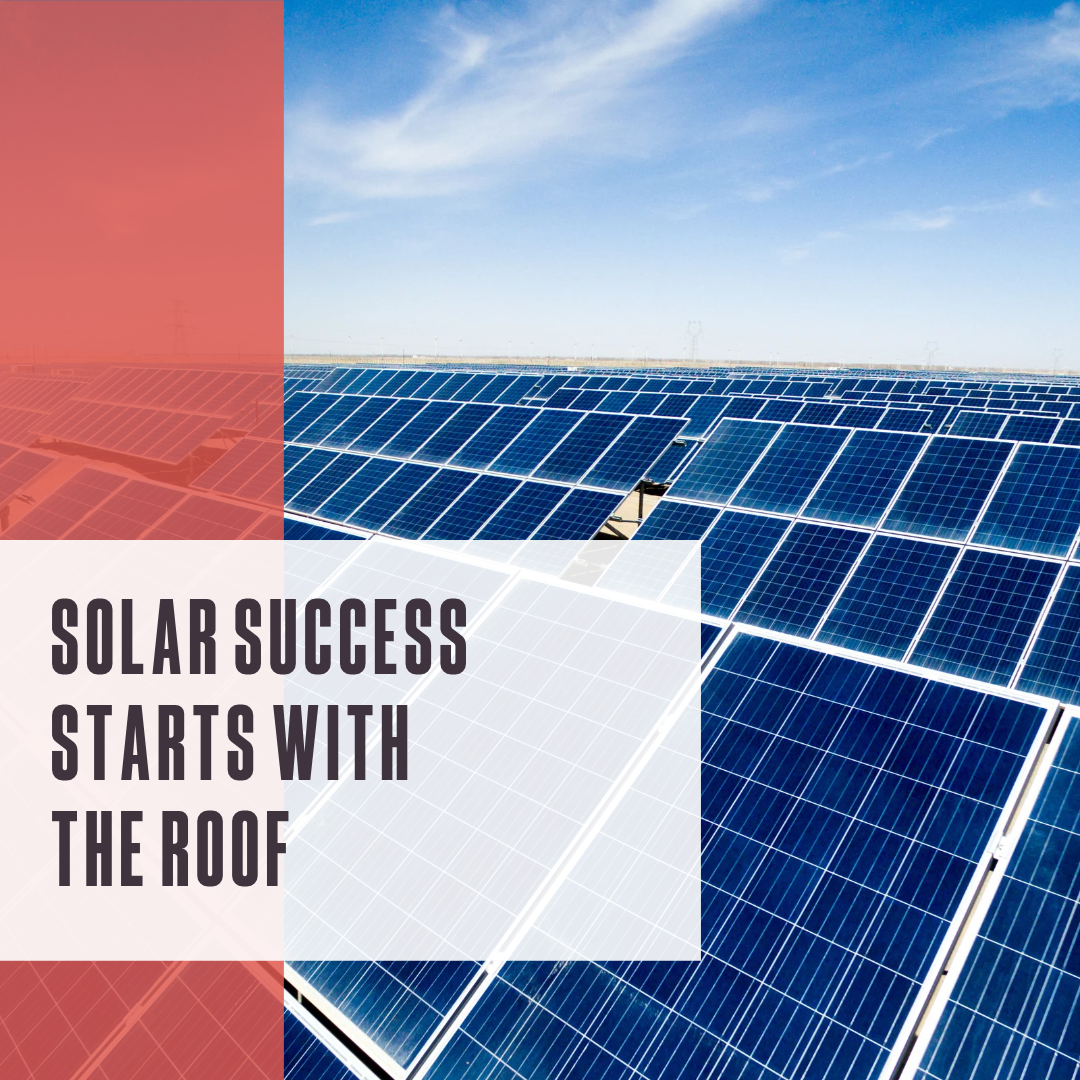
Solar success starts with the roof
By Jesse Sanchez.
Evaluating roof conditions before installing photovoltaic systems can help building owners reduce disruption, manage costs and protect long-term performance.
Rooftop solar can create new financial opportunities for building owners, but it can also expose weaknesses in traditional roof management strategies. When photovoltaic (PV) systems are installed without considering roof age, condition and remaining service life, owners may face premature reroofing, costly solar removal and reinstallation and avoidable operational disruptions. Benchmark recommends aligning roofing decisions with the expected 25-year lifespan of a solar installation whenever possible. Its project experience shows that the right strategy depends on the existing roof system and its current condition.
At one resort hotel, eight-year-old modified bitumen roofs were still performing well but showed surface cracking from ultraviolet exposure and tropical heat. Because the membranes were not expected to last another 25 years, Benchmark recommended resurfacing them with a Polymethyl methacrylate (PMMA) coating before solar installation. The approach was intended to slow further deterioration and defer eventual replacement.

At a 400,000-square-foot shopping center, solar panels already covered 35% of roofing that showed granule loss, cracking, blistering and areas of wet insulation. Rather than immediately reroofing, Benchmark recommended targeted repairs and an elastomeric coating on the exposed membrane areas only; locations beneath the solar arrays were not necessary nor cost-effective.
Another resort with a 2012 thermoplastic polyolefin (TPO) roof required a different approach. Benchmark recommended repairing punctures, scratches and other damage before installing solar, then using a manufacturer-approved roofing subcontractor for the flashing of new penetrations and arranging a manufacturer inspection to help preserve warranty coverage.
A warehouse illustrated the risks of waiting too long. Its solar array had been installed over an aging polyvinyl chloride (PVC) roof, and later leaks became difficult to locate and repair beneath the operating system. The situation serves as a reminder that evaluating roof condition before solar installation could help identify aging materials earlier and reduce the added difficulty and disruption of addressing roof problems beneath an active array.
Across these cases, Benchmark emphasizes the importance of evaluating drainage, debris, bird activity, structural loads, wind forces and membrane wear along with overall roof conditions.
Learn more about Benchmark in their Coffee Shop Directory or visit www.benchmark-inc.com.
About the author

Jesse is a writer for The Coffee Shops. When he is not writing and learning about the roofing industry, he can be found powerlifting, playing saxophone or reading a good book.
Recommended For You

The right tools for roof replacement
Read More ...
Prioritizing people, innovation and quality
Read More ...
Match the machine to the job
Read More ...



Comments
Leave a Reply
Have an account? Login to leave a comment!
Sign In