












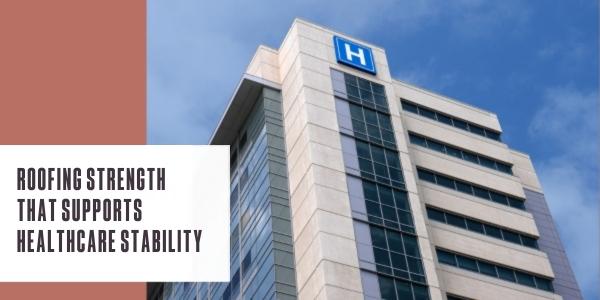
Roofing strength that supports healthcare stability
By GAF.
A closer look at why smarter roofing choices can shape safer, steadier healthcare environments for the long haul.
When the stakes include patient safety and uninterrupted care, every detail of a hospital’s infrastructure carries real weight. That is why GAF stands out as a trusted partner for healthcare facilities working to strengthen their buildings from the top down. A GAF hybrid roofing system brings together proven materials, thoughtful engineering and long-term reliability in a way that supports the demanding rhythm of modern medical campuses. This is roofing as a strategic investment in resilience, helping healthcare teams focus on what matters most: delivering care without compromise.
What is a hybrid roof assembly?
A hybrid roof is composed of two systems of roofing membranes, each with different materials and technologies, combined in a single roof assembly. Each component of the assembly is selected for its particular strengths and performance characteristics, and together, the system provides the best features of both. One example of a hybrid roof assembly is a styrene-butadiene-styrene (SBS) modified bitumen base membrane with a cap layer consisting of a fleece-back single-ply membrane.
Modified bitumen membranes (Base protection layer)
The traditional roof system for low-slope roofs is the asphaltic built-up roof (BUR). When first conceived in the 1890s, a typical BUR system was composed of multiple redundant layers of rags, paper or felt encapsulated in hot mopped asphalt. Over time, the plies evolved into "modified" bitumen membranes of asphalt-impregnated fiberglass or polyester fabrics or mats with added flexibility from rubber or plastic polymer modifiers. These systems are now commonly referred to as SBS or APP (atactic polypropylene) roofing assemblies. The more commonly specified hybrid roofing assembly base ply is a membrane that consists of the SBS polymer due to its elongation properties and low temperature flexibility.
Depending on the chemical makeup of the base and cap layers, today's plies can be hot mopped, torch applied, cold applied or self-adhered. The multiple redundant layers of modified bitumen technology account for its longevity and robust puncture resistance. The extensive product line of GAF bituminous commercial roofing membranes (which include Ruberoid® and GAFGLAS®) have a long track record of proven performance and time-tested durability.
Single-ply roofing membranes (Cap protection layer)
Single-ply membranes are the roofing system of choice for most commercial roofs these days due to their ease of installation and cost. In a hybrid assembly, the use of one of these membranes using a fleece-back option creates a separation layer between the asphaltic base sheet and the single ply membrane. This fleece acts as the bonding layer between these two membranes as it is installed in low-rise foam or hot asphalt. The most common single-ply membranes are either Thermoplastic PolyOlefin (TPO), PolyVinyl Chloride (PVC) or Ketone Ethylene Ester (KEE). These membranes offer excellent performance with strong, heat-welded seams, long-term weathering protection and UV resistance. GAF EverGuard® TPO membranes have the added benefit of natural fungal resistance1 and a high degree of flexibility, while GAF EverGuard® PVC & EverGuard® PVC KEE membranes offer enhanced protection against chemicals2.
These single-ply membranes can be installed more quickly than a traditional modified bitumen system, using mechanical attachment, induction welding or adhesives. They provide protection against leaks due to ponding water and are easy to repair and maintain. Additionally, the higher Solar Reflective Index (SRI) of single-ply membranes can add to their energy efficiency, potentially helping reduce cooling costs for the building3.
Benefits of hybrid systems
When the proven strength, redundancy and puncture resistance4 of modified bitumen assemblies are combined with the flexibility, ease of installation and reflectivity of single-ply roofing membranes, it adds up to a hybrid roofing system that can be hard to beat.
The benefits of combining these two roof technologies include:
- Improved durability and longevity
- Enhanced reflectivity
- Flexibility in design and application
Separate the systems to enhance performance
While the two roofing systems in a hybrid assembly ultimately work together, the importance of separating them should not be understated. Separating the systems can help them work more effectively.
This can be accomplished by installing a GAF EverGuard® TPO, PV or PVC KEE Fleece-Back Membrane as the top layer. The fleece-back membrane is available in a variety of thicknesses and is an excellent surface for a roof that gets a lot of UV exposure. Fleece-back membranes can be installed mechanically (metal plates and fasteners) for jobs that need to be finished as quickly as possible or adhered with GAF LRF Adhesive XF to reduce thermal bridging and enhance wind resistance or wind uplift.
Meeting the challenges of healthcare facilities
Because hospitals and other healthcare facilities have specific requirements for managing construction and repair work, roofing jobs should be approached differently than other commercial building projects.
Reducing disruption
Hospitals in particular are considered "essential structures" and must be in continuous operation under all circumstances. This translates into the need for 24/7 access by patients and staff, no matter what construction activities are taking place.
In addition, reducing noise pollution should be prioritized to accommodate both healthcare patients and medical staff.
Ensuring access
The roof structures on healthcare facilities can be highly complex, with multiple levels and myriad types of overburden. These often include helipads, specialized data and communications equipment, security equipment, multiple HVAC units (with accompanying fresh air intakes), exhaust fans and vents and solar panels. Accordingly, rooftop walkway pads are needed to navigate around all of this equipment and help direct and limit foot traffic on the roof membrane. This helps ensure the performance and longevity of the hybrid roofing assembly.
Managing infection control
Because of the sensitive nature of the activities that occur in healthcare facilities and the patients that are served, infection control is of utmost importance. A multi-ply hybrid roofing system/assembly, when correctly installed and maintained, can play an important role in minimizing the risk of leaks, mitigating moisture infiltration and helping to protect against the entry of contaminants.
Protecting healthcare facilities with GAF
GAF hybrid roofing systems can be an excellent solution in the case of a healthcare facility roof retrofit or re-cover. If the existing SBS roofing assembly is in relatively good condition with no underlying moisture, a single-ply fleece-back TPO membrane can be potentially installed as a new top layer without an expensive and disruptive tear-off of the existing roofing system.
The addition of the single-ply membrane can help increase the service life of the hybrid roofing system and the entire roof assembly by increasing the roof's UV resistance and weather protection. Additionally, it can be installed with low-VOC options that have minimum odor and noise disturbance, which is important in a healthcare facility that is continuously occupied.
Whether on a new building or a retrofit, GAF hybrid roofing systems can offer multiple long-term benefits for healthcare facilities and help contribute to the safety and well-being of staff and patients. Learn more about GAF's healthcare and hospital roofing solutions.
1Meet ASTM G21. GAF warranties and guarantees do not provide coverage against fungi or other biological growth. Refer to gaf.com for more information on warranty and guarantee coverage and restrictions.
2GAF warranties and guarantees do not provide coverage against exposure to chemicals, including oils, jet fuel, grease or animal fats. Refer to gaf.com for more information on warranty and guarantee coverage and restrictions.
3Energy cost savings are not guaranteed and the amount of savings may vary based on climate zone, utility rates, radiative properties of roofing products, insulation levels, HVAC equipment efficiency and other factors.
4GAF warranties and guarantees do not provide coverage against hail or other punctures except where additional puncture resistance coverage is purchased on eligible jobs. Refer to gaf.com for more information on warranty and guarantee coverage and restrictions.
*GAF warranties and guarantees do not provide coverage for leaks or other damage due to wind speeds in excess of 55 mph, except where additional wind coverage is purchased on eligible jobs. Refer to gaf.com for more information on warranty and guarantee coverage and restrictions.
Original article source: GAF
Learn more about GAF in their Coffee Shops Directory or visit www.GAF.com.
Recommended For You
La prefabricación ayuda a aprovechar mejor el tiempo de cada proyecto
Read More ...
Elevate your roofing game with Kool Seal's Bleed Blocker Primer
Read More ...
The Unmatched Versatility of Board and Batten Metal Siding
Read More ...





Comments
Leave a Reply
Have an account? Login to leave a comment!
Sign In