





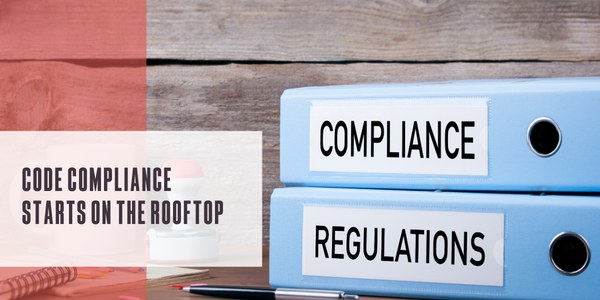
Code compliance starts on the rooftop
By Jesse Sanchez.
Properly securing rooftop equipment can help contractors protect roof systems, meet evolving code requirements and reduce risk during high-wind events.
Rooftop equipment does more than add complexity to a commercial roof system. When it is not properly supported and secured, it can create risks for the roof, the building and the people around it. In this episode of Roofing Road Trips®, host Megan Ellsworth spoke with Brandon Reynolds of Anchor Products about evolving code requirements, rooftop attachment and the value of planning for equipment support before installation begins.
Brandon explained that ASCE 7 Standard addresses calculations for wind and seismic loads. He noted that code language has increasingly clarified the need to properly anchor rooftop components to the structure, particularly as contractors and building owners consider the potential effects of severe weather.
When evaluating what deserves the most attention, Brandon emphasized, “The biggest problem are the lightweight items that are up there.” He pointed to rooftop piping, ductwork and mini-split heating, ventilation and air conditioning units as examples of equipment that can move during high winds. Even comparatively light components can damage a roof membrane or create additional hazards if they shift or become airborne.
Proper planning starts with understanding the entire roof assembly, including the deck, supporting structure, insulation and cover board. It also requires coordination among the trades responsible for designing, installing and waterproofing rooftop systems. Brandon stressed, “The roofing and mechanical contractors have to work together now that this is in code.”
That collaboration can help teams select support methods that meet project requirements while limiting unnecessary penetrations through the roof system. Brandon noted that some traditional equipment supports require openings through the membrane and insulation, which can add waterproofing challenges and affect the thermal envelope. Encouraging mechanical contractors to involve roofing professionals earlier, Brandon advised, “You should design a support system for your mechanical equipment that requires the roofer to cut as few holes as possible into the membrane and through the thermal shell.”
Anchor Products offers attachment solutions for mechanical, electrical, plumbing and safety equipment, along with support for pre-engineered concepts and access to third-party professional engineering services when stamped designs are required.
By considering code requirements, attachment methods and roof-system compatibility earlier in the process, contractors can better protect the roof while helping building owners prepare rooftop equipment for demanding conditions.
Listen to the podcast or Watch the conversation to learn more about how code-compliant rooftop equipment attachment, early planning and coordination between trades can help protect commercial roof systems!
Learn more about Anchor Products in their Coffee Shop Directory or visit www.anchorp.com.
About the author

Jesse is a writer for The Coffee Shops. When he is not writing and learning about the roofing industry, he can be found powerlifting, playing saxophone or reading a good book.
Recommended For You

Connect digital ad spend to real roofing revenue
Read More ...
Setting Project Managers Up for Success
Read More ...
Employee classification 101: The what and the why
Read More ...



Comments
Leave a Reply
Have an account? Login to leave a comment!
Sign In