











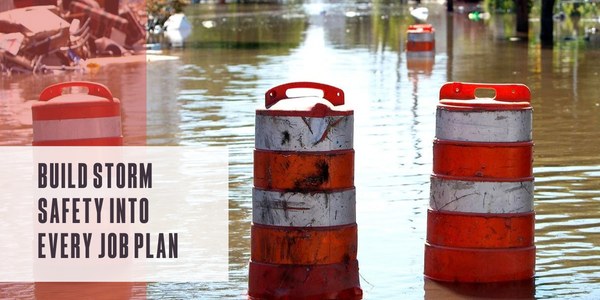
Build storm safety into every job plan
By The Coffee Shops®.
How severe weather procedures help crews protect the jobsite and navigate safety protocols.
Storm preparation should begin well before severe weather reaches the jobsite. A clear plan gives every crew member direction while helping protect people, materials and completed work.
According to an article from Wryker, before a storm arrives, the crew should secure the site and safeguard the equipment and building materials. If weather conditions develop while the crew is still working, appropriate personal protective equipment, including goggles, gloves and proper boots, can help limit exposure to hazards. Fall protection is also critical because rain can quickly create wet, slippery surfaces.
Crews must also know when to stop their progress in favor of protecting themselves from harm. A light drizzle can become a downpour within seconds, bringing high winds, lightning or flooding. No deadline is worth placing workers at risk. Severe weather alerts can help the team monitor approaching conditions, especially when one crew member is assigned to notify everyone. When a warning arrives or dangerous conditions begin, pause the job and leave the site.
Once the storm has passed, work should not resume until the site has been inspected. Look for downed power lines, scattered debris, damaged scaffolding or ladders, slippery surfaces and signs of structural damage. Addressing these hazards first protects the crew and helps prevent additional harm.
Cleanup should be deliberate rather than rushed. Clear pathways, remove standing water where needed and stabilize damaged structures with temporary supports before entering affected areas. A complete inspection helps ensure repairs and construction can continue safely.
Storm readiness should be part of regular project planning, not a last-minute response. When crews understand what to do before, during and after severe weather, they can act with greater confidence and keep safety at the center of every decision.
Find OSHA-compliant products favored by workers here!
Learn more about WRYKER in their Coffee Shop directory or visit www.wryker.com.
Recommended For You

Dangerous March roof avalanches in Colorado
Read More ...
Unlocking longevity through smarter roof care
Read More ...
Upcoming Hurricane Season Cause for Concern to Homeowners with Non-Metal Roofs, Says Alliance Group
Read More ...






Comments
Leave a Reply
Have an account? Login to leave a comment!
Sign In