





Why code compliance matters on equipment-heavy roofs
By Jesse Sanchez.
Properly securing rooftop equipment helps protect low-slope roof systems and building operations.
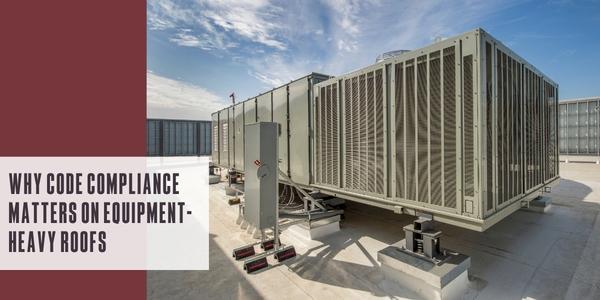
Mission-critical facilities often depend on low-slope roofs crowded with mechanical equipment, piping, and other accessories. As Anchor Products emphasizes, these components support essential building operations but also introduce wind, seismic and structural forces that must be addressed during design and installation. The International Mechanical Code directs designers to the International Building Code for wind and seismic resistance requirements. The International Building Code, in turn, references American Society of Civil Engineers Standard 7 (ASCE 7) for determining how nonstructural components, supports and attachments should resist those forces by requiring attachment.
That framework is especially important on equipment-heavy roofs. Even a long run of small-diameter pipe can create a meaningful lateral load when exposed to high winds. Mechanical units, supports and accessories may also be subject to uplift, sliding or overturning forces. During a seismic event, the inertia of heavier rooftop equipment can increase the loads transferred to its attachments.
ASCE 7 generally requires nonstructural components and their supports to be attached or anchored to the structure. In many seismic applications, attachments must be bolted, welded, or otherwise positively fastened without relying on friction alone.
Project teams should also understand the limitations of common support methods. Sleepers can degrade and permit movement. Ballasted systems add substantial weight that must be distributed and accounted for. Adhesive systems transfer loads to the roof membrane, with resistance affected by temperature, age, compatibility, and installation quality. Anchored and direct support systems can transfer loads more deliberately, although penetrations, engineering and specialized installation may be required.
Code adoption also varies by state and local jurisdiction, making early coordination essential. Designers, roofing contractors, equipment installers and engineers should confirm which code editions apply, calculate anticipated loads and select a securement method appropriate for the roof assembly, equipment and building risk category.
Learn more about why code compliance matters for mission critical, equipment-heavy low-slope roofs!
Learn more about Anchor Products in their Coffee Shop Directory or visit www.anchorp.com.
About the author

Jesse is a writer for The Coffee Shops. When he is not writing and learning about the roofing industry, he can be found powerlifting, playing saxophone or reading a good book.
Recommended For You

Florida Legislature Passes Two Bills to Alleviate State’s Insurance Crisis
Read More ...
The Roofing Economy: Insights From a Legal Expert
Read More ...
Top 10 Tips for Dealing with COVID-19 in the Carolinas for the Construction Industry
Read More ...

Comments
Leave a Reply
Have an account? Login to leave a comment!
Sign In